

72.6 F
Fort Smith
Thursday, June 25, 2026
Home Blog Page 75

“Just Roll with It” Serving up Recipes and Humor

By Sheri Hopkins, Lifestyle Contributor

Hello everyone! We finally got rain at my house. We got two inches. I was so excited to see rain. Won’t be long until I get to start getting ready for Halloween. I have two new skeletons; I am so excited.

I have told y’all before how me and my family members fall a lot. Well, not only do the family members fall but those who have married into the family also get cursed with falling. My niece, Kelly, fell outside the pool store in Fort Smith and about killed herself. Her daughter that didn’t even have a driver’s permit had to drive her home. Tonya, who is married to my nephew has fell multiple times. Now her husband, my nephew, has fell several times also. He has fell backwards in lawn chairs twice lately. Y’all, know I have fell so many times that I cannot keep count. I have even had to have my tailbone x-rayed to see if it was broken. I have fell in the snow, tangled up in a vacuum cord, walking to the dumpster, in the house, on the porch, the list is endless. Now I did fall at the dentist office when I was a kid, but my story is not near as funny as when my cousin fell at the dentist office.

The names have been changed to protect the innocent. Not really, I am telling her name. My cousin, Betty that married into the family had gone to the dentist in Greenwood. My other cousin, Patricia and her mom, Betty’s mother-in-law, was at the dentist with her. Betty is in a nice skirt, and she gets called back and they wait for her in the waiting room. It’s about the time she would be finished, and they hear this noise like something, or someone fell. They look at each other and say, “it has to be Betty.” They get up and go over to the hallway and there she was in the floor, in her skirt with her feet straight up in the air, with the dentist standing over her trying to get her to come too. She had fainted and the dentist had lifted her legs in the air to try to get blood flowing, I guess. I said to her, “I hope you had on your good panties.” I wish I could have been there. My cousin has to tell this story every time we are together so we can laugh at poor Betty. I guess what I am saying is if you marry into our family, be prepared to fall.

Have a great week. Enjoy the cool weather that’s coming. This recipe is easy peasy if you have company coming and need something quick.

LEMON BARS
1 box of angel food cake mix (dry)
1 can (15 oz.) lemon pie filling
In a bowl, mix the lemon pie filling and dry cake mix together. Pour the mixture into a greased 9×13 baking dish. Bake at 350 degrees for 25 to 30 minutes or until golden. Let it cool and dust with powdered sugar. Slice and enjoy.
Timepiece: Vocational Education

By Dr. Curtis Varnell

Vocational and agricultural education has always been a big factor in the Arkansas educational system.  For many years, farming was and perhaps still is, the base for the economy of Arkansas so it is natural so much emphasis is placed on using the best and most scientific methods to increase production.  The University of Arkansas and UAPB were both formed as land-grant colleges and were tasked with offering instruction in agriculture, engineering, and other sciences.  In 1909, the General Assembly created four more colleges (ATU, ASU, SAU, and Monticello) as state agricultural school in order to offer coursework in every corner of the state.

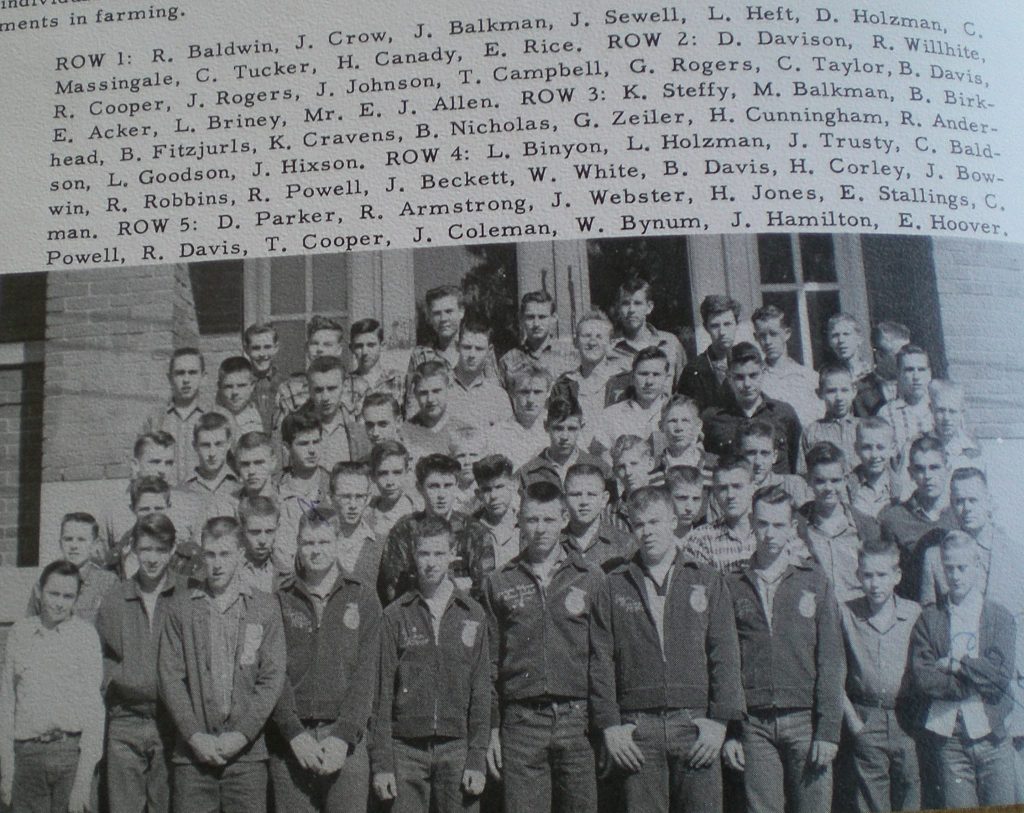
The Cooperative Extension service was created in 1905 to extend the educational arms of the university.  This created the county extension offices as well as the 4H organization to train kids.  The Smith-Hughes Act of 1917 and the George-Barden Act of 1946 financed high-school instruction in farming and resulted in the development of agricultural and vocational studies in public schools.  In schools, the primary focus was in classroom instruction, supervised actual experience in vocational skills, and the involvement in the national Future Farmers of America (FFA).  The counterpart to that was the Future Homemakers of America (FHA) which provided training in home-care, cooking, and other tasks related to providing safe, secure, wholesome households.

By the 1940’s, virtually every rural school in Arkansas hadactive classes in vocational education as well as active clubs participating in the above national organizations.  Most students, regardless of future occupation, took several courses in vocational education. Being more academically inclined, I still took three courses of vocational classes and was an FFA member throughout high school.  During the instruction, my colleagues and I learned valuable lifetime skills.  I can still use most wood-working tools, weld terribly, and can-do minor carpentry.  Some of the best times in life were participating in FFA camps in Hot Springs and judging cattle at the Arkansas and Arkansas Oklahoma state fair.  The key to success in many endeavors is to become a part in a really good group and they can cover for your mistakes.  I had three good friends and I rode their talent in order to participate.  My real goal was to get a day out of school, to ride carnival rides, and try to pick up an FHA girl from one of the area schools.  My success at that was about as awesome as my judging talent.

Both organizations offered kids a chance to test our vocational skills, meet people from throughout the state, and to see the opportunities that might not necessarily be available in our smaller communities.  Who would have ever predicted when I was chosen to represent our county in the state environmental camp that it would become a part of my life-time career.  A list of former successful FFA members include President Jimmy Carter, singers Johnny Cash and Willy Nelson, and NFL members Bo Jackson and Josh Allen.

In recent years, public schools have realized that the best career paths for many of our students is through career and vocational education.  With a slightly over 20% college graduation rate for the state, vocational education offers a faster and often cheaper route to a successful career.  Fort Smith has a very successful concurrent program with schools offering students the opportunity to train and receive certificates in nursing, computer technology, machine shop, and welding.  Logan /Franklin County and ATU have teamed up to offer concurrent courses in welding, nursing, and even electrical applications.  N.W. Arkansas schools offer a wide range of opportunities to obtain life-time training that might not necessarily involve the traditional college routes.  A group from Bentonville recently wrote, filmed, and edited a video of a local historical event.  While one group filmed, others were using drones to study the landscape and survey areas for city development. The educational landscape is changing and our schools are doing a great job of adapting to the current vocational needs of our students.  

Obituary: Billy Lee Reather (1940-2025)

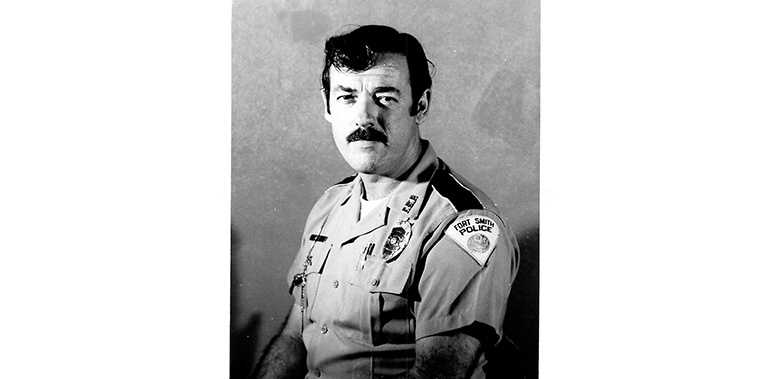
Billy Lee Reather, who resided near Muldrow, Oklahoma, died Tuesday, August 19, 2025, at his home. He was born on June 16, 1940, in Magazine, Arkansas, to the late Thomas K. Reather and Vivian Marie (Roberson) Reather. He was 85 years old. He was preceded in death by his parents; his wife of 64 years, Eula Faye (Elkins) Reather; a daughter, Vicki Reather; a sister, Sue Reather; a brother, Daymon Reather; and an infant brother.

For 34 years, Bill worked for the Fort Smith Police Department. He was a former commander for the Fort Smith Swat Team and Honor Guard Team, and played many different roles while serving in law enforcement. He was a 32nd Degree Mason, and member of Rye Hill Baptist church in Fort Smith.

A family-held memorial service will be at 10:00 a.m., Saturday, August 30th at Rye Hill Baptist Church in Fort Smith.

He is survived by a son, Randall Reather of Muldrow; (7) grandchildren, Richard Rivera, Logan Taylor, Landan Reather, Jessica Gibbs, Quinton Cunningham, Felicia Reather, and Matthew Collins; (6) great-grandchildren, Shianne, Austin, Zane, Hayden, Thomas, and Logan; and (2) great-great-grandchildren, Hadley and Swazee.

Cremation arrangements are under the direction of Brotherton Brothers Cremation Services in Fort Smith, 914 N. 32nd St. Fort Smith, AR  72903. (479) 434-3901 or (479) 965-8202

To place an online tribute, please visit www.brothertonbrothersfuneralhomes.com.

State Capitol Week in Review From Senator Terry Rice

LITTLE ROCK – The inmate population in Arkansas prisons will grow by an estimated two percent a year until 2035, according to an expert’s presentation at a conference of county officials, sheriffs, prison administrators and lawmakers.

There is general agreement that Arkansas needs to add prison space in order to relieve overcrowding in county jails and provide a deterrent to violent offenders. Some elected officials want to build a large, new prison unit while others prefer to expand existing units.

The inmate population grew by 2.4 percent a year from 2010 through 2023, but since 2021 it has grown by an average of 5 percent a year, the expert said. There are now more than 19,400 inmates under state jurisdiction. Those estimates prompted one legislator to call the situation “very alarming.”

Sheriffs are in charge of county jails. Some are full because they house inmates waiting to be transferred to a state prison unit. This creates dangerous interactions if serious offenders are in the same facility with people who commit minor offenses. In some county jails an offender guilty of a misdemeanor may not have to serve time behind bars due to lack of safe space.

Counties have approved local taxes to build more jail space. Since 2021 county jails have added more than 3,000 beds. However, one sheriff told the group that jails were bursting at the seams because of a backlog of about 1,900 state inmates.

Since 2023 the Correction Department has added about 1,400 beds to the state system, according to the head of the department.

One reason the inmate population is growing is that tougher new laws require more serious offenders to serve at least 70 percent of their sentence. Another law passed in 2023 requires the most serious offenders to serve 100 percent of their sentence.

Criminals convicted of rape and capital murder serve 100 percent of their sentences, as do inmates convicted of aggravated robbery, human trafficking, Internet stalking of a child and more serious categories of aggravated residential burglary.

Inmates must serve 85 percent of their sentence after conviction for violent felonies such as second degree murder, negligent homicide, manslaughter, encouraging someone to commit suicide, first degree battery, first degree sexual assault and sexual indecency with a child.

Other felonies on the list include permitting abuse of a minor, serious categories of arson, advocating overthrow of the government, treason, making a terrorist threat, arming a terrorist and exposing the public to toxic, chemical or radioactive substances.

Thanks to the 2023 law, sentencing guidelines more closely mirror those in federal prisons, where inmates generally serve most of their original sentences.

Many county jails are not built to segregate all prisoners, so the presence of violent offenders is potentially dangerous to other inmates and to staff. Another challenge for local jails is the high percentage of people with mental illness who are incarcerated.

The legislature approved Act 733 earlier this year to streamline the process of ordering psychological evaluations for people who have been charged with crimes. It also allows jails to provide medications in a more timely manner, to prevent people from spiraling into a mental health crisis.

Family of Brad Jones Responds to Prosecutor’s Decision: “We Will Not Give Up on Justice”

Charleston, Arkansas – The family of Brad Jones today expressed deep disappointment at the
prosecutor’s decision not to file criminal charges against Kermit Acosta, the man who fatally
shot Brad on July 10, 2025.
“Brad was a loving husband, father, and hardworking member of this community,” said his wife,
Sherry Jones. “His life was taken without cause, and our family deserves justice. The
prosecutor’s decision does not change the truth of what happened, nor will it silence our pursuit
of accountability.”
Brad was unarmed and posed no imminent threat at the time of his death. Witness statements and available evidence show that his killing was unnecessary and unjustifiable.
The Jones family announced that they have retained Kevin Metcalf and Chad Atwell of The
Atwell Law Firm, who will represent them in a civil wrongful death lawsuit against Acosta.
“If the criminal system will not hold him accountable, then we will fight through the civil
courts,” said Brad’s daughter. “Our father’s life mattered, and we will not rest until the truth is
recognized.”
The family also voiced concern over how the investigation was handled, citing potential conflicts
of interest and inconsistent communication. “We ask the community to stand with us and
demand transparency and fairness,” said Sherry Jones.
The family requests privacy as they continue to grieve and prepare for the next phase of their
pursuit of justice.

JR Tigers Scramble Past Bearcats In Scrimmage Showdown

This content is reserved for RESIDENT INSIDER members.

Please or subscribe to view.

Special Prosecutor will not Seek Charges in Shooting Death of a Charleston Man

The Office of Prosecuting Attorney David Ethredge, 14th Judicial District, announced today that no charges will be filed in the July 10 shooting that claimed the life of a Charleston man.

Fort Smith, Arkansas — Special Prosecuting Attorney David L. Ethredge has completed his review of the July 10, 2025, incident in Sebastian County in which Mr. Richard Bradley Jones was fatally injured during a confrontation with Mr. Kermit Acosta. After a diligent investigation conducted by the Sebastian County Sheriff’s Office, and a review of all available evidence —
including the statements of three witnesses and information from the Arkansas State Crime Lab. The facts established are as follows:

Mr. Acosta acted in lawful manner under Arkansas law. The investigation revealed that Mr. Acosta was confronted by Mr. Jones and reasonably perceived an imminent threat of serious physical injury or death. The witnesses interviewed by investigators provided consistent accounts supporting the claim that Mr. Acosta’s actions were necessary to protect himself.

Under Arkansas law (Ark. Code Ann. § 5-2-607), a person is justified in using deadly physical force if they reasonably believe it is necessary to protect themselves from death or serious physical injury. Based on the totality of the evidence — including witness testimony, physical evidence, and investigative findings — the State cannot disprove that Mr. Acosta’s actions were legally justified.

The decision to file criminal charges must reflect the ethical obligation to the victim, the community, and the potential defendant. Prosecutors must never rush to charge an individual without the unwavering belief that, after hearing all the facts and evidence, a jury of twelve citizens in this jurisdiction would find beyond reasonable doubt that an unlawful taking of life had occurred.

“This decision is based solely on the evidence and the law,” said Special Prosecuting
Attorney David L. Ethredge. “While any loss of life is a serious matter, the law
recognizes the right of every individual to defend themselves when faced with an
imminent threat.

Our responsibility is to ensure that justice is pursued fairly, impartially, and only when the evidence supports it beyond a reasonable doubt. We commend the diligence of the investigating officers and the cooperation of the witnesses in ensuring a thorough and fair review. The Office of the Special Prosecuting Attorney thanks the Sebastian County Sheriff’s Office for its professionalism and the community for its patience during the review process.

Ethredge was appointed special prosecutor on July 29 after Sebastian County Prosecutor Daniel Shue recused himself from the case. The incident occurred at the 1500 block of Highway 96 East in Lavaca on July 10, 2025.

SR Tigers Mangle Mena In Scrimmage

This content is reserved for RESIDENT INSIDER members.

Please or subscribe to view.

Dodging Danger in Iraq: Coben’s Story of Survival and Service

This content is reserved for RESIDENT INSIDER members.

Please or subscribe to view.

Roots Run Deep: Edwards Honors Farming Legacy

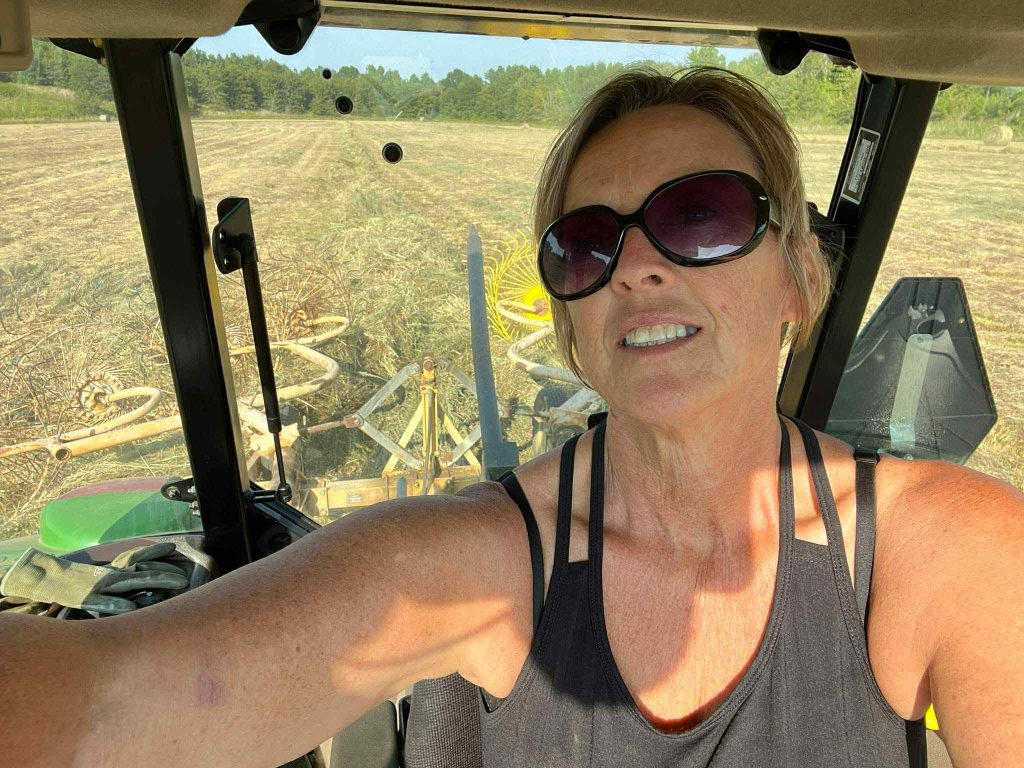
Scott County native Regina Edwards sees farming as more than a livelihood—it’s a calling. Most days, she is hard at work caring for crops and livestock on her family farm. Other times, she can be found volunteering, sharing both the history and the rewards of a life deeply connected to the land.

“I want others to understand where their food comes from, and also the resilience it takes to work the soil,” Edwards said. “It’s not just about farming—it’s about heritage, family, and community.”

That heritage runs deep in Edwards’ bloodline. Her passion for the land is one inherited from generations before her, including her great-grandfather, W.C. Edwards, a Huntington farmer whose life was featured in the Southwest Times Record in 1973.

The article, titled “Wintertime and No Shoes,” told the story of W.C. Edwards, who was born in 1878 near Charleston, the son of an English immigrant. At the time of the feature, he was 95 years old and living in Huntington, still planting a small garden behind the Wilson Nursing Home.

Edwards’ memories, recorded in the article, painted a vivid picture of farm life in the late 1800s and early 1900s. He recalled raising cotton for just a few cents a pound, losing crops to sudden downpours, and selling eggs for 5 or 10 cents a dozen. He remembered hauling timber to the mines in Huntington and being paid in gold, as well as witnessing the devastation of the great Fort Smith tornado.

“Wintertime and no shoes was hard going,” he said in the 1973 interview. “I’ve had more downs than ups, but I’ve tried to live straight all my life.”

Despite hardship, W.C. Edwards raised ten children with his wife, Mabel White, and passed down a philosophy of hard work, patience, and faith—values that remain alive in his descendants today.

For Regina Edwards, history isn’t just something to study—it’s a way of life she, and other members of the Edward’s family work to embody and pass along. Her message highlights how food production has evolved, while emphasizing the timeless lessons of sustainability, resilience, and gratitude.

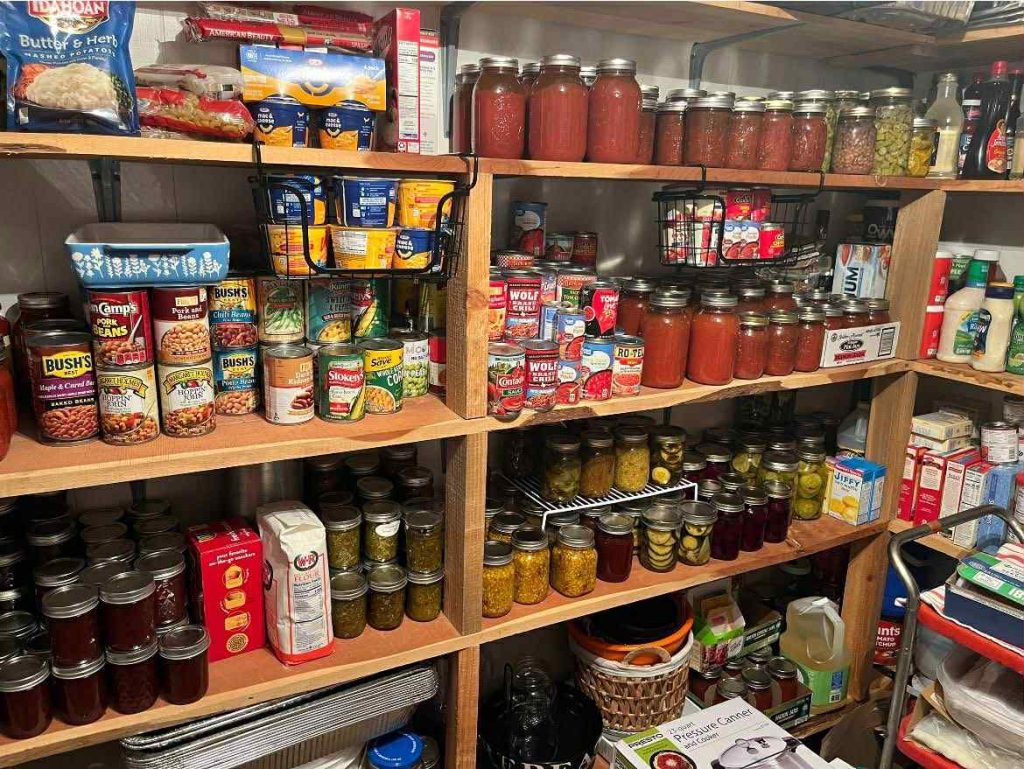
Canning is a way of life for Regina Edwards Oliver…
…As is farming the land!

“Farming has always required creativity and grit,” she explained. “My great-grandfather worked with almost nothing, and yet he built a life for his family. That’s the kind of perseverance I want young people to know they can carry with them.”

Preservation, for Edwards, goes beyond jars of canned goods and hours of labor. She continues to bridge past and present, honoring her family’s heritage while inspiring future generations to cherish the land beneath their feet.

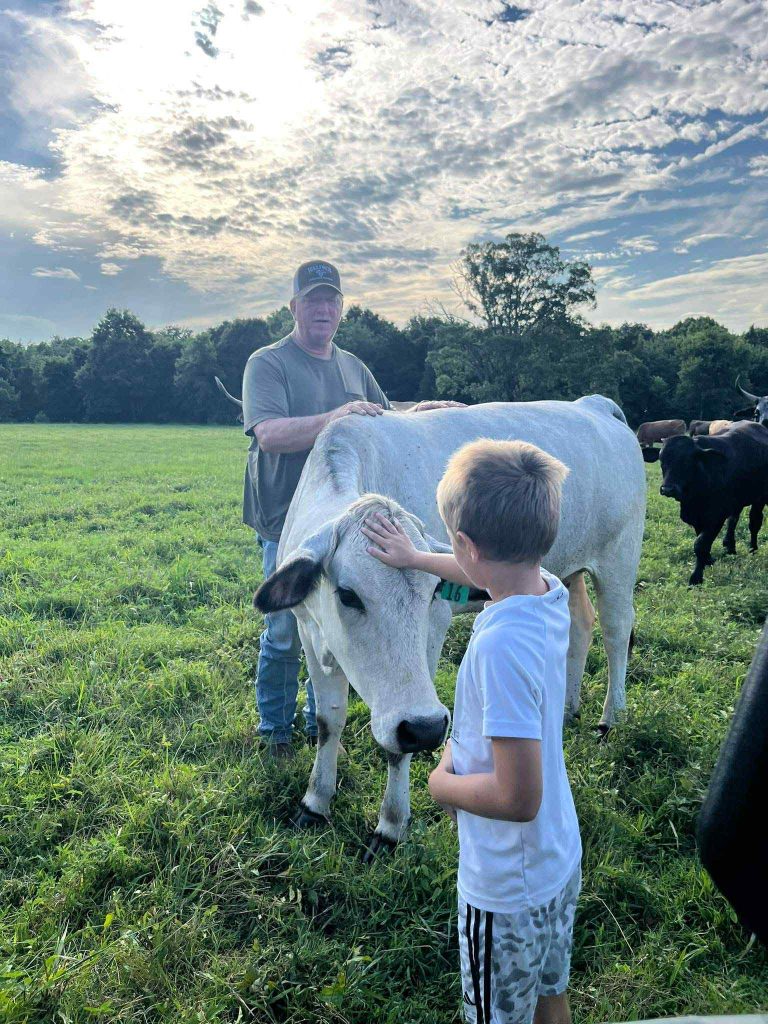
The Olivers are ensuring the next generation knows how important farming is to their way of life.

“It’s more than farming,” she said. “It’s a tradition and legacy…feeding our own families and/or the world.”