91.2 F
Fort Smith
Tuesday, June 9, 2026
Home Blog Page 799

Tariff Avoidance Program

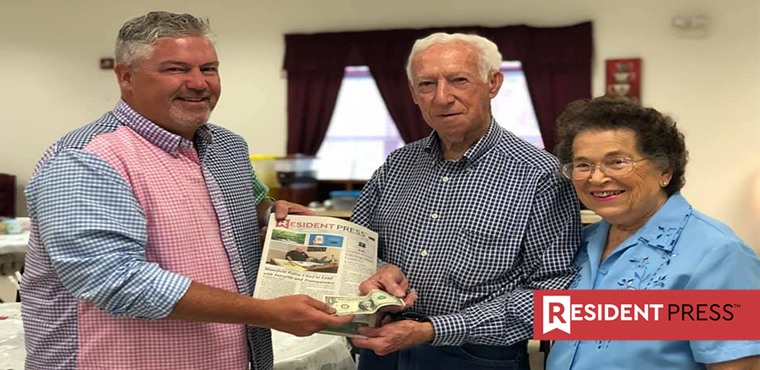
HWY 71 Tire & Service Center is currently in the process of assisting customers in offsetting the cost increases of tires that will be greatly affected by the coming tariffs imposed on products from China. Since the majority of the rubber used to manufacture tires comes from foreign markets, the tire industry expects a 25% – 40% increase to take effect in the next few months. “Our goal is to help our customers avoid these huge increases. We are implementing a program to allow customers to order their tires now, pay a $10 deposit per tire, and then purchase the tires anytime during the next twelve months. Ordering the tires now could easily save hundreds of dollars. The best part of this deal is that we store these tires for you for up to a year and you pay today’s price. Come in today and preorder your tires before the tariffs take effect because this deal will end once they begin.”

Program Key Points

  • Pain point – 25-40 percent increase in cost
  • $10/tire investment – minimal buy in
  • Amicable terms – 12 month versatile payment scheme (Perceived Value-for-Value model)
  • Market hedge – Lock in current tire pricing
  • Urgency

Hwy 71 Tire & Service Center, LLC is located at 1359 W. 2nd Street in Waldron.

Resident Press Newspaper Subscriptions

In following up with those of you who are actively seeking a subscription to our print newspaper, here are some initial details.

We are currently in the process of filing our permit to be able to provide a weekly newspaper mailed directly to your door.

What we need.

In order to sense the overall quota of the mailed print version and to stay in touch with you when we’ve complete the process, we need:

  • Full Name
  • Mailing Address
  • Phone Number
  • Email Address (if applicable)

Please provide the above information sent to us in an email or through our Contact Us page.

DO NOT REPLY with personal information in the comments. Send to us directly!!

Pork In The Park Was Finger-Lickin’ Good

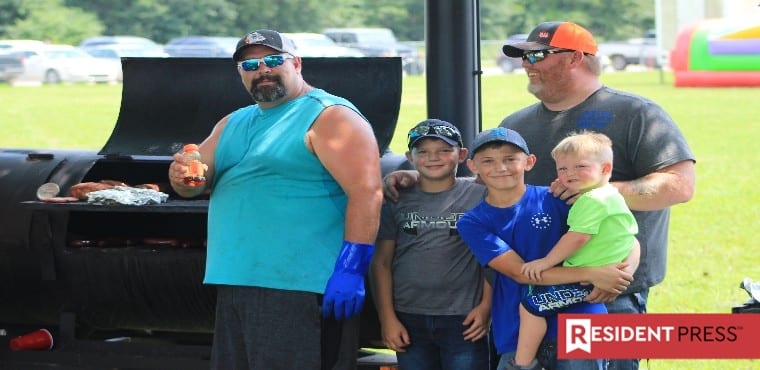
When it comes to BBQ competitions, Sodie Davidson Parks first annual “Pork in the Park” was a smokin’ success. The BBQ competition was hosted by the Waldron Little League Football Program at Sodie Davidson Park. The competition consisted of both an adult division and a youth division for participants to showcase their master grilling skills.

The kids were judged on two meat categories which consisted of pork chops and leg quarters. The adults had four meat categories which consisted of chicken, ribs, pork tenderloin, and a meat of their choice. The lucky dogs who were asked to judge these tasty BBQ delicacies were David Millard, Philip Scantling, Angela Talmadge, Zack Connelly, and Megan Hecox.

Connelly, Scantling, and Millard judging some of the delicious BBQ
Judges Angela Talmadge and Megan Hecox tasting the yummy entries

The youth division had five participants that included Emily Kluthe, Eli Kluthe, Cody Mays, Brayden Mays, and Dawson Griffin. In the pork category, Brayden Mays took third place, Dawson Griffin took second place, and in first place was Cody Mays. In the chicken category, Eli Kluthe earned third place, Dawson Griffin took second place, and Emily Kluthe took home the first place honors.

The participants from the kids division showing off their wins

Showing off their grilling skills in the adult division was Charlie Allen, Jared Kluthe, Derek Yandell, and Daniel Anderson. In the chicken category, Derek Yandell took third place, Jared Kluthe took second place, and Charlie Allen clucked in with first place. In the pork category, Jared wound up in third, Charlie in second, and Daniel Anderson rooted in at first. For the ribs category, it was Charlie who came in third, Daniel with second, and Jared with the first place victory. In the open meat category, Charlie took third, Daniel placed second, and Jared earned first. And the overall Grand Champion for Pork in the Park was Jared Kluthe.

Holding up their plaques and ribbons are the participants from the adults division

Sodie Davidson Park Board President and Bulldog Little League Co-Football Commissioner, Jared Kluthe, had this to say about the event. “For this to be the first year, I was pleased with the overall turnout. We did lose a few people that wanted to participate, due to work, but I hope to see this event continue to grow in the future. We would like to see more local businesses set up booths at next years event to show off some of their merchandise. We have a lot of ideas to add to next years Pork in the Park. I know all of the people involved this year had a blast, but one of our biggest highlights was the kids cooking in their own competition and the fun they had with it. We would also like to thank our judges for their volunteering and support.”

Obituary – Ricky Gene Newman (1958 – 2019)

Ricky Gene Newman of Mansfield, Arkansas went to be with his Lord and Savior, Friday, July 5, 2019 in Mansfield, Arkansas. Ricky was born on April 13, 1958 in Fort Smith, AR to Orville and Etta Bell (Duncan) Newman. Ricky was 61 years old.

Ricky was a hardworking and loving man. His motto was “Always be yourself and do your best to help others in this life”. He was a genuine guy, what you see is what you get. He loved staying busy. He was always doing something, albeit gardening, woodworking or helping someone. Ricky’s true love was spending time with his family and especially his grandchildren.

Ricky leaves behind to cherish his memory, his children: Brittany Hill and husband Carl of Mansfield, Arkansas, Crissy Johnston and husband Matt of Indianola, Oklahoma, and Ricky (Jody) Newman of Mansfield, Arkansas. Papa will forever remain in the hearts of his grandchildren: Alyssa Thompson, Kaleb Johnston, Joshua Johnston, Aaron Johnston and Emily Johnston. Ricky will be missed by all that knew him and the many whose lives he impacted including a host of extended family, friends, neighbors and loved ones.

Ricky was preceded in death by his loving wife of 23 years, Kathern, his father, Orville Newman and his mother Etta Bell (Duncan) Newman and two brothers, Robert and Bobby Joe.

Ricky’s graveside life celebration will be at 11:00 a.m., Tuesday, July 9, 2019 at the Mt. Olive Cemetery in Midland, Arkansas with Rev. Kenneth Elmore officiating. Arrangements are being entrusted to the Heritage Memorial Funeral Home in Waldron, Arkansas.

You may leave words of remembrance for Ricky’s family by visiting: www.heritagememorialfh.com.

Lavaca Home Burns

Lavaca Home Burns

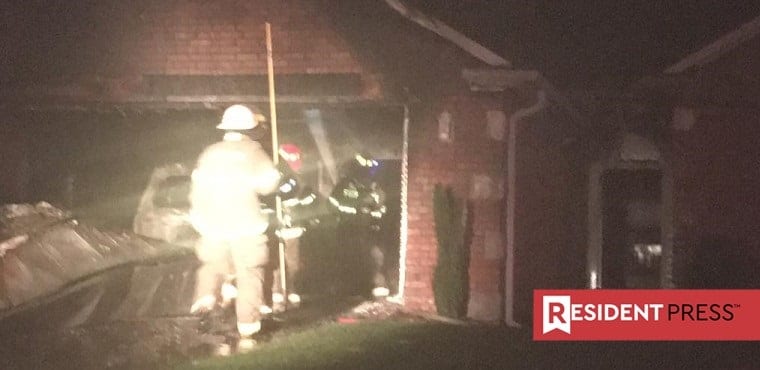
The neighborhoods on and around Joyce Drive in Lavaca were wakened in the early morning on Saturday, July 6 by firetrucks answering the 911 call of a house fire on their street.  The house on 2203 Joyce Drive, owned by Shawn Rush, was in flames.  Fire departments from Lavaca, Riverdale, Big Creek and Barling answered the call somewhere around 1:30 am.  The house suffered severe damage, visible in the darkness, which will be more evident in the daylight.

Local fireman Smith said, “The fire appears to have been caused by his vehicle that was parked in the enclosed garage but the owner is safe. We were on a call from a tree that had been struck by lightning in Barling already.”  Mr. Rush was standing alone across the street, dressed in his night clothes and, of course, was visibly shaken. 

Firemen had pulled the garage door away from the house to fight the burning car and where the fire had moved into the attic and surrounding rooms.

Joyce Drive is a major street in Lavaca’s quiet Berry Ridge addition and connects Highway 255 to North River Road.

Plant of the Week: Garden Lilies

Each week since 1997, Dr. Gerald Klingaman has offered readers a unique window as he chronicles of the social history of plants.

“What always interested me was the background of the plants and how they got there and the people involved in bringing them forward,” he said.

Klingaman, a retired extension horticulturist who is now operations director for the Botanical Garden of the Ozarks in Fayetteville, Arkansas, has created is a library of hundreds of plant histories that run in newspapers across the state and have become a favorite of gardeners in Arkansas and beyond. We hope you’ll enjoy our extensive archive of his works and return each week to see what’s new.  Lilium hybrid groups; Garden Lilies

I try hard not to repeat myself in these columns but sometimes this effort leads to some unexpected omissions. I was sure I had discussed at least some of the true lilies, but I find no evidence of having done so. So, let us consider the lilies of the field.

Lilies are bulbous herbs scattered throughout mountainous regions of the Northern Hemisphere with the greatest number found in Asia (55) and about 20 here in North America. Some authoritative sources claim there are 80 known species; others 120. These species are divided into seven sections for classification purposes that, until recent times, have been impossible to crossbreed.

Lilies – the base species used to develop the enormous lily family – are somewhat unique among the bulbous plants in that their bulb does not develop a covering sheath (the tunic). Instead individual scales are borne naked on the shortened stem. Another difference, because lilies are mostly summer blooming, they initiate flower buds during the spring when the shoots are emerging from the ground, not in late summer like tulips and other spring blooming bulbs.

Most lilies are native to montane conditions that provide cool, moist conditions, sharp drainage and the dappled light of a semi-forested environment. They have been grown in gardens since Biblical times, so many gardeners have kind of always known them though they may not have actually grown them in their own garden beds. As early as the 1600’s lilies were considered “old fashioned” by garden writers of the day. As new species were introduced into cultivation over the next several hundred years, none gained super-star status.

These new lilies were grown in gardens but as straight species. The first hybrid garden lilies did not begin appearing until after 1910 from breeders working in Japan and the United States. After World War II, breeding efforts increased and techniques such as colchicine use to double the chromosome number, embryo rescue and finally inter-sectional hybridization became a reality. Today, mostly hybrid lilies are sold with the most important groups described below.

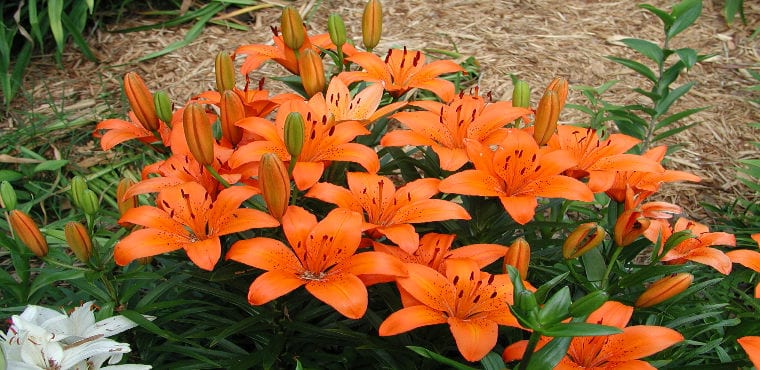
Asiatic hybrid lilies (crosses of more than a dozen Asian species from section Sinomartagon) were the first hybrids to be produced and are the first to bloom in the garden, usually beginning in late May and extending into June. They are mostly short, usually under 30 inches tall and have five to seven up-facing, non-fragrant flowers per stem. Colors are in all shades but oranges, yellows, and maroons are most common with bicolors frequently seen.

Oriental hybrid lilies (crosses of several species from Japan and China in section Archeliron) are large flowered plants three to four feet tall with wide-flaring, outward facing, often pink, white or cherry-colored bicolored flowers. The petals are often marked with a series of dots. Flowers are fragrant with blooms produced in July. At the present time, the Oriental hybrids are the most popular as based on acreage of production, but this is changing as the inter-sectional hybrids become more available.

Trumpet lilies (hybrids of many Asiatic species with elongated blooms) have fragrant, trumpet shaped, sometimes outward or downward facing flowers. Plants are the tallest at up to six feet with blooms appearing from mid-July into early August. They are also the poorest performers in Southern gardens. The Longiflorum hybrids (think of the Easter lily) are a separate group but do better in southern gardens.

Inter-sectional hybrids have been developed over the last 50 years that have allowed the combination of the desirable traits of each section into a single hybrid progeny. Most of these hybrids are sterile triploids, so they have thicker leaf and floral features and great hybrid vigor. Of the inter-sectional hybrids, the Oriental-Trumpet and the Longiflorum-Oriental hybrid groups are being produced in the greatest quantity.

In future columns we will consider specific garden lilies in greater detail.

For more information about horticulture or to see other Plant of the Week columns, visit Extension’s Website, www.uaex.edu, or contact your county extension agent.

Three Escaped Juveniles Apprehended

​On July 3, at around 8:30 p.m. three juvenile males escaped from the Mansfield Juvenile Treatment Center near Mansfield.  Search efforts began in the area of the camp.

​On July 4, at approximately 10 a.m., a car was reported stolen from the vicinity of the camp.  The car was not noticed as missing until the next morning.  Investigators believed at the time that the three missing juveniles were the prime suspects.  The car was entered stolen in NCIC.  

​A “BOLO” was put out to state-wide law enforcement.    

​At around 3 a.m. on July 5, the three were captured in Texarkana, Texas.  They were found to be in the car which was reported stolen from Sebastian County.  Bowie County, Texas is reporting they have felony charges on all three subjects. They also reported a pursuit with police took place before they were apprehended.  They are in custody in Texarkana, Texas awaiting disposition of their pending charges.

​This escape is the third escape within the last year from MJTC.  This is also the third car stolen within the last year by escapees from the Center.  

​Since they are juveniles the SCSO cannot release their identities.  

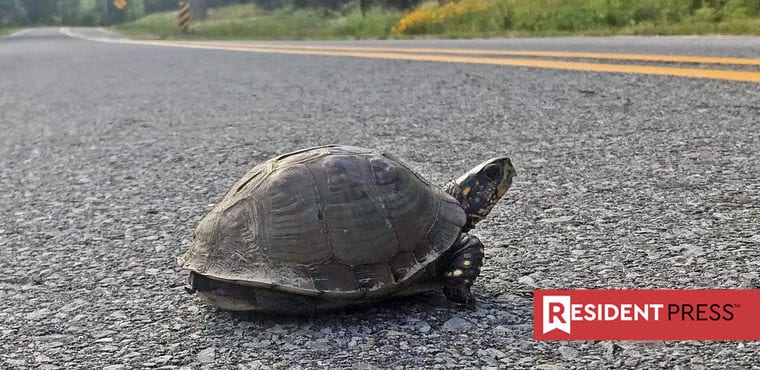
Turtles Taking to the Streets; Don’t Box Them in

Turtles are on the move all over Arkansas, and many can be found alongside roads in rural and suburban areas thanks to a wet, relatively cool spring that created excellent foraging areas in ditches and grassy areas beside the hustle of daily traffic. Many turtles are finishing up their annual breeding and egg-laying cycles, which also puts them on the move.

The three-toed box turtle is one of the most common turtles motorists will encounter in The Natural State. Two species of box turtle occur in the state, the three-toed and the ornate, the latter of which is protected and is illegal to possess or collect. Box turtles get their name from the hinged plastron (lower shell). Many turtles can retract into their shells, but box turtles can lift their lower shell to completely seal out any would-be attackers, forming a snug “box” of protection. Most first encounters people may have with a box turtle they’ve disturbed will be a waiting game until the reptile decides it is safe to open up and take a look around. 

This ingenious defense makes adult box turtles impervious to attacks by many small predators, leaving disease and automobiles as the top causes of an individual turtle’s demise. It also endears it to curious children and adults, who often pick them up and bring them home as a wildlife pet. 

While no current data is available to support any declines in three-toed box turtle populations in Arkansas, biologists at the Arkansas Game and Fish Commission say movement of these animals may have impacts on population dynamics on a small scale. 

Kelly Irwin, herpetological program coordinator for the AGFC, says three-toed box turtles often will stay within the same 10- to 25-acre range for their entire life and have a strong homing instinct. If they are moved outside of this area, they may spend the rest of their lives wandering, trying to reorient themselves, especially if turtles are already present in the area where they are placed.

“One recent study moved a number of box turtles to a new location and tracked their movements,” Irwin said. “Only 47 percent of those moved established a home range in the new area. The rest wandered away or died.”

Irwin says the issue is compounded by the turtle’s relatively long time to reach sexual maturity. 
“Box turtles can take between 5 and 10 years to become sexually mature, depending on their sex and the conditions where they live,” Irwin said. “They can have multiple clutches of 2 to 6 eggs per year, but the nest and young are susceptible to raccoons, skunks, foxes, snakes and many other small predators.” 

Research by Kurt Buhlmann and Gina Coffman at the University of Georgia’s Savannah River Ecology Laboratory in 2001 also indicates that fire ants can have detrimental effects to turtle hatchlings as they emerge from their eggs. According to the research, ants could not penetrate turtle’s eggs unless there were imperfections on the egg’s surface, but did swarm on hatchlings as they began to break free of the egg. 

Dr. Jenn Ballard, state wildlife veterinarian for the AGFC, says moving or concentrating turtles also can introduce or distribute diseases or parasites to new areas, which can have far-reaching impacts on populations of turtles.

One such type of disease, Ranavirus, is particularly deadly to many species of amphibians and reptiles, including box turtles. This disease has no treatment or vaccine, and quarantine of infected animals is the only current form of slowing its spread in the U.S. 

“Moving them around the state can increase the spread of a disease, but having them captive with other wildlife pets can exacerbate the issue,” Ballard said. “If one animal has the disease, you’ve just increased the chances for all of them to contract it, and if they’re later released, you may be infecting a new area.”

If someone wants to release a turtle they’ve held in captivity, they must find a permitted rehabilitator to ensure the turtle is able to survive and does not pose a risk of spreading disease or parasites it may have picked up during it’s time as a pet. Ballard says there are some rehabilitators who specialize in turtles among the ones listed on the AGFC’s website at www.agfc.com/rehab.

“I’d advise anyone to please contact these folks before trying to release a turtle on their own,” Ballard said. “Or better yet, think about this before they decide to take in a turtle from the wild to begin with. It’s just as enjoyable to watch them in their natural setting than to bring them home.”

Another common practice by budding nature lovers is to mark or cover a turtle’s shell in paint so it will be recognized upon future visits. Ballard says such practices may seem like harmless fun, but they can impact the turtle greatly. 

Painting a turtle a bright color not only makes it easier for you to see, it makes it easier for predators to locate. Although most small mammals cannot get into a box turtle’s shell a persistent coyote can eventually work its way through to the turtle underneath. 

“You’re really painting a target on the turtle’s back,” Ballard said. 

Paints also can be toxic to turtles, depending on the type used. They can block UV light needed by the turtle throughout its life cycle. 

“The shell is a living part of the turtle,” Ballard said. “Hindering UV light absorption impacts Vitamin D production, which is vital to the turtle for bone and shell development.”

Irwin says enjoying reptiles and amphibians in the wild is one of the experiences that led him on the path to being a part of their conservation, and he encourages people to continue enjoying them in their natural setting.

“With the exception of venomous snakes, reptiles and amphibians are one of the few groups of animals someone could get close to and observe without fear or danger to them or the animals,” Irwin said. “I think it’s great that people enjoy these animals, and picking up an occasional box turtle, bullfrog or speckled kingsnake isn’t going to hurt things, but they do need to think about any consequences of moving them from the habitat where they were found. And doing things like painting them or marking them can only cause stress or make them more vulnerable to predation or disease.”


Mailman Goes Above and Beyond

Today, I was honored to help a man whom I call a friend. This friend has helped me countless times and rarely asks for help of any kind. He’s the person who is the first to help in any situation and then quietly disappear.

About 4:00 pm my phone rang and from the tone I knew it was my buddy, Richard Henson who has worked for the United States Postal Service for as long as I can remember.

I can still see him driving up in a late 70’s Ford Bronco to my Dad’s store in deep snow to make sure the mail was delivered, and delivered in a timely fashion.

“Hey, Jase my boy, got time to help a friend?” Henson asked in his quirky and kind demeanor. I simply replied, “You bet!” After a short exchange we agreed to meet in 15 minutes.

Patiently Waiting

I’ve waited to tell this story for quite awhile. It’s not something that comes easy as Henson doesn’t do selfies, could care less about pictures, and he’s extremely quiet in his work around his route in and around the area. In fact, he probably won’t like the fact that this story will be published and draw attention to him.

The pictures you see here took some precision not to be noticed and defend the spark of suspicion.

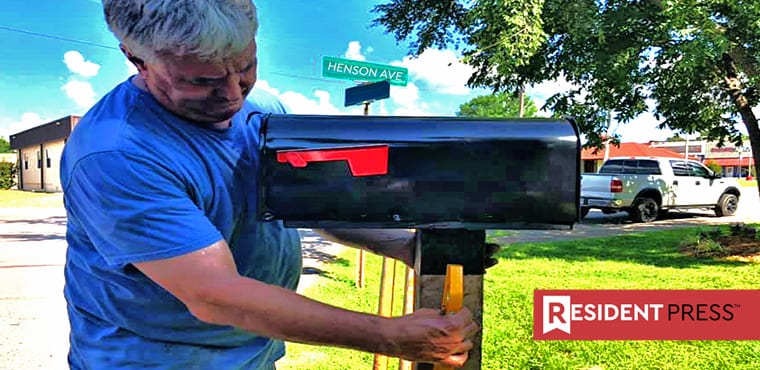
Richard Henson puts the finishing touch on a perfectly set mailbox.

An Overlooked Gesture

For some time now, Henson has repaired and set mailboxes for those who need the staple in rural areas, or to assist those who can no longer perform the duty.

It’s not easy work. In fact, it’s time consuming from the first coat of paint, to the final check of the level. Always finished with concrete, set to the appropriate depth, and roadside height measurements.

His shop is lined with remnants of battered and time tested mailboxes, endless parts, and posts that were at one time new, and carried the honor of holding family memories, and the dreaded bills we all must pay.

Number 12

The mailbox we set today, was number twelve. This number marks the second one I’ve assisted with over the past year. It’s done with honor, humility and I get to spend time with my buddy.

As we began setting #12, the property owner sat in the shade and offered no advice as he smiled with a sense of pride. When done, the job was finished with a handshake, a “thank you so much,” and a look of tearful joy.

God Bless you, Richard” the man declared as we approached the mailbox to ensure proper alignment to the street and the postal carriers vehicle. Henson waved goodbye, and stated “That was number 12, Jase.”

Henson (Left) gets help from Bruce Hainley preparing to set one of the many mailboxes he has done over the years. (Photo credit: Mallory Bordelon / 2017)

A Quiet Humility

Henson has set mailboxes for many people along his mail route and for some who just need the extension of help outside his coverage area.

I’ve never looked at a mailbox the same since the first one I help set with Henson. The humility and kind gesture he bestows is still strong in today’s society. His pride and workmanship gives me hope that their may be others who do the same, in different capacities that go unnoticed.

If you look close, and know what to look for, you’ll see the handy work of Richard Henson along the roads, standing proud and always level.

Thank you, Richard for calling me to help and for the help you’ve given to many people over the years. I’m sure the landscape has a better view with a proudly painted and level mailbox.

Can Thumping Help You Pick the Perfect Watermelon?

By Mary Hightower, U of A System Division of Agriculture

Fast facts

  • Stem, ground spot color, skin all provide clues
  • Webbing, or scar tissue, can be an indicator

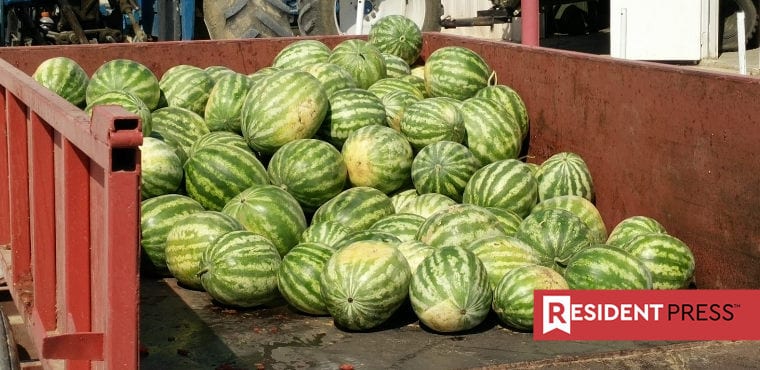
You’ve seen them. Buyers thumping, listening, sniffing, lifting and peering, all in the quest for the perfect watermelon.

How do horticulture experts size up their watermelons?

Vic Ford, who heads up the agriculture and natural resources section of the Cooperative Extension Service, has developed some criteria over the years. After all, Ford spent many years as director of the Southwest Research and Extension Center in Hope, a city famous for watermelons and its annual celebration of the summer sensation.

Here are Ford’s factors: 

  1. Dryness of the stem.
  2. Yellow to orange color of the bottom – called “the ground spot,” and
  3. Darkness of the webbing. Webbing looks a little like tan or grayish/brownish scar tissue on a melon’s skin.

“If the melon has a green stem, white bottom and light webbing, it is not ripe,” Ford said. “I can’t hear the difference between a ripe and unripe watermelon by thumping.”

Matthew Bertucci, a research scientist for the University of Arkansas System Division of Agriculture running several watermelon demonstrations this summer, said that what he’s learned in the field, doesn’t always apply in the produce aisle.

He agreed with Ford, that “a well-developed ground spot of tan or yellow indicates that the melon stayed in the field long enough to fully ripen. That’s the part of the melon that is in contact with the ground prior to being picked.”

“I’ve got a good protocol for picking a ripe melon in the field, looking for dried tendrils, breakdown of the waxy layer, ridging along the stripes, and development of a distinct ground spot,” Bertucci said. “But I find it difficult to tell the quality of the melons at the grocery or at a farmer’s market.”

However, fruit left in the field too long or stored in direct sunlight can get sunscald, which will diminish quality. 

“The tricky thing for me is that you can look for all the field indicators for ripeness, so you don’t accidentally get an underripe watermelon,” he said. “But they don’t tell you anything about storage quality or sweetness, so they won’t help if a fruit is overripe or a watermelon wasn’t stored properly. And no one is happy to get a mealy watermelon.”

Bertucci said there are researchers who measure watermelon quality with near-infrared imaging or by measuring its dielectric properties from outside the skin, but he takes a more direct approach: “In my experiments, we always just cut them open to check for quality directly.”

What about the acoustic qualities of the melon?  

“As Dr. Ford said, thumping has never been helpful for me,” Bertucci said. “But I still do it. It’s a watermelon purchasing tradition.” 

To learn more about the horticultural research and extension work being done by the Division of Agriculture, visit www.aaes.uark.edu and www.uaex.edu, or call your county extension office.

Follow us on Twitter at @ArkAgResearch or @UAEX_edu, and on Instagram at ArkAgResearch.