
72.2 F
Fort Smith
Friday, June 19, 2026
Home Blog Page 802

Turtles Taking to the Streets; Don’t Box Them in

Turtles are on the move all over Arkansas, and many can be found alongside roads in rural and suburban areas thanks to a wet, relatively cool spring that created excellent foraging areas in ditches and grassy areas beside the hustle of daily traffic. Many turtles are finishing up their annual breeding and egg-laying cycles, which also puts them on the move.

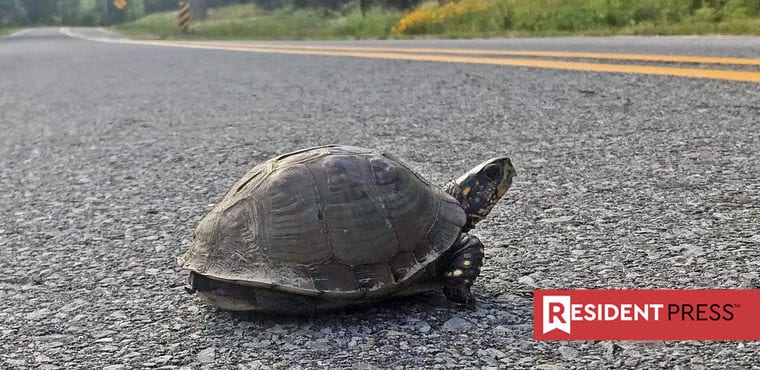
The three-toed box turtle is one of the most common turtles motorists will encounter in The Natural State. Two species of box turtle occur in the state, the three-toed and the ornate, the latter of which is protected and is illegal to possess or collect. Box turtles get their name from the hinged plastron (lower shell). Many turtles can retract into their shells, but box turtles can lift their lower shell to completely seal out any would-be attackers, forming a snug “box” of protection. Most first encounters people may have with a box turtle they’ve disturbed will be a waiting game until the reptile decides it is safe to open up and take a look around. 

This ingenious defense makes adult box turtles impervious to attacks by many small predators, leaving disease and automobiles as the top causes of an individual turtle’s demise. It also endears it to curious children and adults, who often pick them up and bring them home as a wildlife pet. 

While no current data is available to support any declines in three-toed box turtle populations in Arkansas, biologists at the Arkansas Game and Fish Commission say movement of these animals may have impacts on population dynamics on a small scale. 

Kelly Irwin, herpetological program coordinator for the AGFC, says three-toed box turtles often will stay within the same 10- to 25-acre range for their entire life and have a strong homing instinct. If they are moved outside of this area, they may spend the rest of their lives wandering, trying to reorient themselves, especially if turtles are already present in the area where they are placed.

“One recent study moved a number of box turtles to a new location and tracked their movements,” Irwin said. “Only 47 percent of those moved established a home range in the new area. The rest wandered away or died.”

Irwin says the issue is compounded by the turtle’s relatively long time to reach sexual maturity. 
“Box turtles can take between 5 and 10 years to become sexually mature, depending on their sex and the conditions where they live,” Irwin said. “They can have multiple clutches of 2 to 6 eggs per year, but the nest and young are susceptible to raccoons, skunks, foxes, snakes and many other small predators.” 

Research by Kurt Buhlmann and Gina Coffman at the University of Georgia’s Savannah River Ecology Laboratory in 2001 also indicates that fire ants can have detrimental effects to turtle hatchlings as they emerge from their eggs. According to the research, ants could not penetrate turtle’s eggs unless there were imperfections on the egg’s surface, but did swarm on hatchlings as they began to break free of the egg. 

Dr. Jenn Ballard, state wildlife veterinarian for the AGFC, says moving or concentrating turtles also can introduce or distribute diseases or parasites to new areas, which can have far-reaching impacts on populations of turtles.

One such type of disease, Ranavirus, is particularly deadly to many species of amphibians and reptiles, including box turtles. This disease has no treatment or vaccine, and quarantine of infected animals is the only current form of slowing its spread in the U.S. 

“Moving them around the state can increase the spread of a disease, but having them captive with other wildlife pets can exacerbate the issue,” Ballard said. “If one animal has the disease, you’ve just increased the chances for all of them to contract it, and if they’re later released, you may be infecting a new area.”

If someone wants to release a turtle they’ve held in captivity, they must find a permitted rehabilitator to ensure the turtle is able to survive and does not pose a risk of spreading disease or parasites it may have picked up during it’s time as a pet. Ballard says there are some rehabilitators who specialize in turtles among the ones listed on the AGFC’s website at www.agfc.com/rehab.

“I’d advise anyone to please contact these folks before trying to release a turtle on their own,” Ballard said. “Or better yet, think about this before they decide to take in a turtle from the wild to begin with. It’s just as enjoyable to watch them in their natural setting than to bring them home.”

Another common practice by budding nature lovers is to mark or cover a turtle’s shell in paint so it will be recognized upon future visits. Ballard says such practices may seem like harmless fun, but they can impact the turtle greatly. 

Painting a turtle a bright color not only makes it easier for you to see, it makes it easier for predators to locate. Although most small mammals cannot get into a box turtle’s shell a persistent coyote can eventually work its way through to the turtle underneath. 

“You’re really painting a target on the turtle’s back,” Ballard said. 

Paints also can be toxic to turtles, depending on the type used. They can block UV light needed by the turtle throughout its life cycle. 

“The shell is a living part of the turtle,” Ballard said. “Hindering UV light absorption impacts Vitamin D production, which is vital to the turtle for bone and shell development.”

Irwin says enjoying reptiles and amphibians in the wild is one of the experiences that led him on the path to being a part of their conservation, and he encourages people to continue enjoying them in their natural setting.

“With the exception of venomous snakes, reptiles and amphibians are one of the few groups of animals someone could get close to and observe without fear or danger to them or the animals,” Irwin said. “I think it’s great that people enjoy these animals, and picking up an occasional box turtle, bullfrog or speckled kingsnake isn’t going to hurt things, but they do need to think about any consequences of moving them from the habitat where they were found. And doing things like painting them or marking them can only cause stress or make them more vulnerable to predation or disease.”
Mailman Goes Above and Beyond

Today, I was honored to help a man whom I call a friend. This friend has helped me countless times and rarely asks for help of any kind. He’s the person who is the first to help in any situation and then quietly disappear.

About 4:00 pm my phone rang and from the tone I knew it was my buddy, Richard Henson who has worked for the United States Postal Service for as long as I can remember.

I can still see him driving up in a late 70’s Ford Bronco to my Dad’s store in deep snow to make sure the mail was delivered, and delivered in a timely fashion.

“Hey, Jase my boy, got time to help a friend?” Henson asked in his quirky and kind demeanor. I simply replied, “You bet!” After a short exchange we agreed to meet in 15 minutes.

Patiently Waiting

I’ve waited to tell this story for quite awhile. It’s not something that comes easy as Henson doesn’t do selfies, could care less about pictures, and he’s extremely quiet in his work around his route in and around the area. In fact, he probably won’t like the fact that this story will be published and draw attention to him.

The pictures you see here took some precision not to be noticed and defend the spark of suspicion.

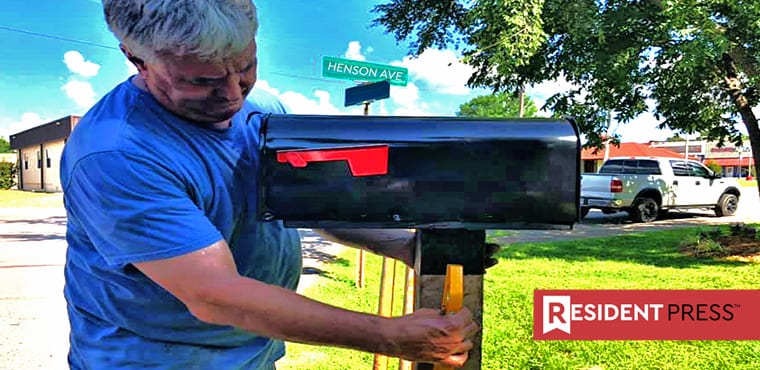
Richard Henson puts the finishing touch on a perfectly set mailbox.

An Overlooked Gesture

For some time now, Henson has repaired and set mailboxes for those who need the staple in rural areas, or to assist those who can no longer perform the duty.

It’s not easy work. In fact, it’s time consuming from the first coat of paint, to the final check of the level. Always finished with concrete, set to the appropriate depth, and roadside height measurements.

His shop is lined with remnants of battered and time tested mailboxes, endless parts, and posts that were at one time new, and carried the honor of holding family memories, and the dreaded bills we all must pay.

Number 12

The mailbox we set today, was number twelve. This number marks the second one I’ve assisted with over the past year. It’s done with honor, humility and I get to spend time with my buddy.

As we began setting #12, the property owner sat in the shade and offered no advice as he smiled with a sense of pride. When done, the job was finished with a handshake, a “thank you so much,” and a look of tearful joy.

God Bless you, Richard” the man declared as we approached the mailbox to ensure proper alignment to the street and the postal carriers vehicle. Henson waved goodbye, and stated “That was number 12, Jase.”

Henson (Left) gets help from Bruce Hainley preparing to set one of the many mailboxes he has done over the years. (Photo credit: Mallory Bordelon / 2017)

A Quiet Humility

Henson has set mailboxes for many people along his mail route and for some who just need the extension of help outside his coverage area.

I’ve never looked at a mailbox the same since the first one I help set with Henson. The humility and kind gesture he bestows is still strong in today’s society. His pride and workmanship gives me hope that their may be others who do the same, in different capacities that go unnoticed.

If you look close, and know what to look for, you’ll see the handy work of Richard Henson along the roads, standing proud and always level.

Thank you, Richard for calling me to help and for the help you’ve given to many people over the years. I’m sure the landscape has a better view with a proudly painted and level mailbox.

Can Thumping Help You Pick the Perfect Watermelon?

By Mary Hightower, U of A System Division of Agriculture

Fast facts

  • Stem, ground spot color, skin all provide clues
  • Webbing, or scar tissue, can be an indicator

You’ve seen them. Buyers thumping, listening, sniffing, lifting and peering, all in the quest for the perfect watermelon.

How do horticulture experts size up their watermelons?

Vic Ford, who heads up the agriculture and natural resources section of the Cooperative Extension Service, has developed some criteria over the years. After all, Ford spent many years as director of the Southwest Research and Extension Center in Hope, a city famous for watermelons and its annual celebration of the summer sensation.

Here are Ford’s factors: 

  1. Dryness of the stem.
  2. Yellow to orange color of the bottom – called “the ground spot,” and
  3. Darkness of the webbing. Webbing looks a little like tan or grayish/brownish scar tissue on a melon’s skin.

“If the melon has a green stem, white bottom and light webbing, it is not ripe,” Ford said. “I can’t hear the difference between a ripe and unripe watermelon by thumping.”

Matthew Bertucci, a research scientist for the University of Arkansas System Division of Agriculture running several watermelon demonstrations this summer, said that what he’s learned in the field, doesn’t always apply in the produce aisle.

He agreed with Ford, that “a well-developed ground spot of tan or yellow indicates that the melon stayed in the field long enough to fully ripen. That’s the part of the melon that is in contact with the ground prior to being picked.”

“I’ve got a good protocol for picking a ripe melon in the field, looking for dried tendrils, breakdown of the waxy layer, ridging along the stripes, and development of a distinct ground spot,” Bertucci said. “But I find it difficult to tell the quality of the melons at the grocery or at a farmer’s market.”

However, fruit left in the field too long or stored in direct sunlight can get sunscald, which will diminish quality. 

“The tricky thing for me is that you can look for all the field indicators for ripeness, so you don’t accidentally get an underripe watermelon,” he said. “But they don’t tell you anything about storage quality or sweetness, so they won’t help if a fruit is overripe or a watermelon wasn’t stored properly. And no one is happy to get a mealy watermelon.”

Bertucci said there are researchers who measure watermelon quality with near-infrared imaging or by measuring its dielectric properties from outside the skin, but he takes a more direct approach: “In my experiments, we always just cut them open to check for quality directly.”

What about the acoustic qualities of the melon?  

“As Dr. Ford said, thumping has never been helpful for me,” Bertucci said. “But I still do it. It’s a watermelon purchasing tradition.” 

To learn more about the horticultural research and extension work being done by the Division of Agriculture, visit www.aaes.uark.edu and www.uaex.edu, or call your county extension office.

Follow us on Twitter at @ArkAgResearch or @UAEX_edu, and on Instagram at ArkAgResearch.

Get early start on Greenwood school supplies

Yes, it’s only July, 6 weeks until school starts on Tuesday, August 13th in Greenwood.

However, it’s not too early to start shopping. Some households are budgeting their shopping. It is estimated that it will cost at least $45 to buy required school supplies and backpack for each child and that is not including clothing and shoes.

Of course, now may also be the time to start reintroducing earlier bedtimes as well as freshening up the learning since the children and teens have had an enjoyable break.

The Greenwood schools have been pro-active in providing the supplies needed for each grade. Of course, it is always good to have extra on hand. This contributor has personally witnessed kids breaking pencils, chewing on them, breaking crayons, doodling in notebooks … so yes, extras are necessary.

Sales are already going on at the office supply stores, but the biggie for parents will be the tax-free weekend starting Friday, August 3, 2019 and ending at 11:59pm Saturday, August 4, 2019.

View the lists and get the supplies ready.

Greenwood East Point school supplies

Greenwood Westwood school list
Greenwood East Hills school supply

Hartford Boots & Badges Blood Drive!

Hartford’s first responders are looking for citizens to support their efforts through blood donation with Arkansas Blood Institute.  Those who give at the Boots & Badges blood drive on Wednesday, July 17, will provide blood needed to save local lives, such as those that firefighters and law enforcement officers rescue. 

Anyone 16 years or older* is urged to stop by the Hartford Fire Station Training Room between 1 and 6 p.m.  All donors will receive special-edition Boots & Badges T-shirts, and a voucher for free admission to their choice of Frontier City, Science Museum Oklahoma, or Safari Joe’s H2O Water & Adventure Park in Tulsa.  Donors will also receive a Voucher for 2 Reserved Premium Dugout tickets to any Northwest Arkansas Naturals home game in July.   

By giving blood at this drive, donors will show their support for the firefighters and law enforcement officers who save lives in their community. “Hartford’s first responders see the daily need for blood first-hand when the people they rescue require life-saving treatment,” said John Armitage, M.D., President & CEO of Arkansas Blood Institute.  “We can’t say enough about the service our police officers and firefighters provide, and we owe it to them to do our part in making sure blood is available in emergency situations.”

Appointments for the blood drive may be made by calling 877-340-8777 or visiting arkbi.org. 

* 16 year olds must weigh at least 125 and provide signed parental permission; 17 year olds must weigh at least 125 pounds, 18+ year olds must weigh at least 110 pounds

AGFC Operation Dry Water

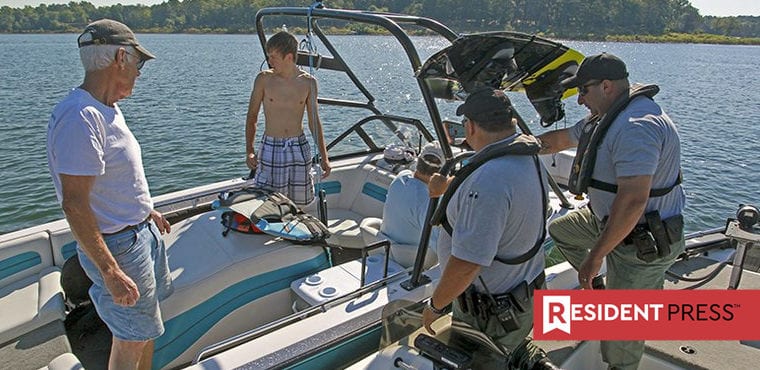
With Independence Day falling on a Thursday this year, many people are taking full advantage of an extended stay at their favorite lakeside retreat. The Arkansas Game and Fish Commission is asking that everyone enjoying the revelry be aware of the dangers brought about by drinking while aboard a boat. To help make the weekend safe, wildlife officers throughout Arkansas are gearing up for Operation Dry Water July 5-7. 

Operation Dry Water is a weekend of increased enforcement throughout the nation to prevent instances of boating under the influence of alcohol or drugs. Last year’s boating enforcement efforts resulted in 202 warnings and 103 citations, which may have prevented serious accidents while on the water or the drive home. 

Capt. Stephanie Weatherington, AGFC boating law administrator, says not only does being caught boating under the influence of alcohol or drugs carry a stiff fine, it also is grounds for a person to lose their driver’s license just as though they were ticketed for driving under the influence. 

According to the U.S. Coast Guard’s Recreational Boating Statistics 2017, alcohol use is the leading known contributing factor in fatal boating accidents. Boating while intoxicated can be even more dangerous than driving a car while intoxicated, as most boaters have less experience operating a boat. Boats don’t have brakes, and slower responses to a sudden danger can be the difference between life and death.

Weatherington says the effects of alcohol also are magnified by the conditions boating creates.

“The sun, heat, wind and motion all intensify alcohol’s impact on a person,” Weatherington said. 
The added impact of alcohol can be a danger to passengers as well as drivers. Although not illegal, passengers who consume too much alcohol can make poor judgements that can lead to injuries and death as well. 

Weatherington says she receives calls every year asking if it’s okay to have alcohol on a boat at all. In most cases it’s fine to have an alcoholic beverage onboard, but people should pay attention to the county they are boating in.

“Dry counties are still dry, even on the water,” Weatherington said. “Sheriff’s departments can and will enforce those regulations just as if they were on land.” 

Operation Dry Water was launched in 2009 by the National Association of State Boating Law Administrators, in partnership with the U.S. Coast Guard and other federal, state and local law enforcement agencies. Since its inception, the campaign has helped remove 3,532 operators who were boating under the influence from America’s waters, making them safer for all to enjoy.

Free, Fun Activities For the Kids at Janet Huckabee Nature Center

Free Admission

Now until Aug. 9 | Daily – Weekly – Special Programs
Sept. 21, Noon-2 p.m. | Youth Marksmanship Challenge

Event Flyer


Daily
2 p.m. Critter crunch

Weekly Programs
Thursday
9 a.m. Fishing
9 a.m.-noon Target casting*
Self-guided event.
11 a.m. Animal hour

Friday
9 a.m. BB guns and slingshots*
10 a.m.-noon Canoe and kayak
3:45 p.m. Nature break
For 3- to 7-year-olds.

Saturday
9 a.m. Guided hike
10 a.m.-noon Canoe and kayak
3 p.m. Laser Shot

Sunday
2:30 p.m. Archery*


Special Programs
July 2, Aug. 7
Nature arts and craft project
Call for event times and to register.

July 3, 10, 17, 24, 31
Arkansas River barge tours
Call for event times and to register.

July 4, 10 a.m.-2 p.m.
Wells Lake family fun day

July 13, 1-3 p.m.
Snakes of Arkansas

Aug. 6, 6 p.m.
Duck decoy painting
Call to register.

Aug. 16, 6 p.m.
Becoming a conservationist


Youth Marksmanship Challenge
Sept. 21 | Noon- 2 p.m.
Take aim at events marked with an asterisk then demonstrate your skill in the Youth Marksmanship Challenge next fall. The challenge will include archery, 3D archery, BB gun shooting, target casting and slingshot shooting.


There is no fee for this program thanks to your support of the 1/8 Cent Conservation Sales Tax.

For more information, please contact the Janet Huckabee Arkansas River Valley Nature Center at 479-452-3993.

July 4 Holiday Drivers Beware: “Drive Sober or Get Pulled Over”

Celebrating the Fourth of July typically means travel plans for Arkansans and others who will be crisscrossing the state on every highway and many local streets.  The holiday is also one of the deadliest because of drunk drivers who make the choice to get behind the wheel and drive.

Beginning today (Friday, June 28th) law enforcement officers will devote additional time and resources patrolling to find and arrest drunk drivers.  Their special assignments will continue through Sunday, July 7th.  The added patrol work is one part of a statewide Drive Sober or Get Pulled Over operation designed to spread the lifesaving message that drunk driving is unacceptable, deadly, and illegal behavior.

 “There will be zero tolerance for impaired drivers,” said Colonel Bill Bryant, Director of the Arkansas State Police and the Governor’s Highway Safety Representative.  “We want to be very clear about the consequences of drunk driving; it’s illegal and incredibly deadly and it’s a risk we don’t want anyone to take”.

During the 2017 Fourth of July holiday period, 237 people were killed in crashes involving at least one driver or motorcycle operator with a blood alcohol concentration (BAC) of .08 or higher. These deaths accounted for 39 percent of the total motor vehicle traffic crashes that occurred over the holiday period. The deaths also represent a 23 percent increase from 2016, during which time 192 people were killed during the same holiday period.

 “The consequences are serious.  If we catch you driving under the influence of alcohol, we will arrest you, and you’ll go to jail,” said Colonel Bryant.

On average, the cumulative costs of a DUI arrest can range upwards of $10,000 or more. Drunk drivers who are arrested face jail time, vehicle towing and impoundment fees, attorney fees, court costs and fines, and lost wages from employment. A conviction routinely leads to the loss of a driver’s license and higher vehicle insurance costs once driving privileges are restored.

For those individuals who may consider the idea of driving after consuming alcohol beverages, the Arkansas State Police Highway Safety Office recommends these options:

  • It’s never okay to drink and drive. Even if you’ve had one intoxicating beverage, designate a sober driver or plan to use public transportation to get to your destination safely.
  • If you’ve been drinking, call a taxi or someone who is sober to get you home.
  • If you see a drunk driver on the road, call 911.
  • If you know someone who is about to drive or operate a motorcycle or any other vehicle while impaired, take their keys and help them make other arrangements to get to their destination safely.
  • Buckle up, always.  Your seat belt is your best defense against the drunk driver.

More information about the “Drive Sober or Get Pulled Over” campaign can be obtained at www.trafficsafetymarketing.gov or contact the Arkansas Highway Safety Office at (501) 618-8136. Information about Arkansas’ ongoing “Toward Zero Deaths” campaign to eliminate preventable traffic deaths can be found at www.TZDarkansas.org.

YOI Takes Over Operations at Mansfield Juvenile Treatment Center

On Monday, July 1, the Indiana based company, Youth Opportunity Investments, assumed operations at the Mansfield Juvenile Treatment Center, as well as three other locations in the state.

Earlier this year YOI was awarded the $15.8 million dollar contract for services. Originally, the state had awarded the contract to a competitive bidder, Rite of Passage. However, ROP was ultimately disqualified and the contract was granted to YOI.

Since that time, ROP has filed a complaint with the Pulaski County Circuit Court. In that filing, ROP claims the state procurement director wrongly disqualified them, basing their decision on prejudicial information.

Currently, ROP operates the facility in Alexander, AR. It serves as the main processing location for youth that have been taken into state custody.

The shake up comes as a result of Governor Asa Hutchinson’s plan to overhaul the juvenile justice system. Part of that plan included converting Mansfield to an all male facility, and closing two locations, Dermott and Colt.

Greenwood City Council Meeting July 1, 2019

Mayor Doug Kinslow called the meeting to order at 7:10pm and asked for prayer to be led by Pastor Dewey Hickey of the Westwood Baptist Church.

In attendance were also council members Lance Terry, Tim Terry, Ralph Meeker, A.C. Brown, Daniel McDaniel, Mike Hamby (City Attorney) and Sharla Derry (City Clerk/Treasurer).

Senator Mathew Pitsch was in attendance, as well as CARDS representative Jason Fitzgerald and other city officials.

Among the business discussed:

  • Highway 71 Corridor Water/Sewer Extension – lowest bid by M Phillips Construction out of Magazine has been reviewed and unanimously accepted by the council.
  • Police COPS Grant Resolution – monies will flow through the City of Greenwood account but will be a wash and not affect income or expenses. This will be used to finish converting over to key cards for students to leave or enter the school. The school system will provide maintenance after the installation.
  • James Fork Water – property offer
  • Milltown/Washburn water supply issues – Greenwood has lines there since 1980’s, but the issues with a subdivision does not affect the city of Greenwood
  • Financial reports – City tax: even though the tax revenue is 50% of the expected for the first 6 months, it will not be an issue; County tax: 2% increase over prior month, expected to be higher due to home repairs of flooded properties; Balance Sheet showing $32 million in assets with some long-term debt for the Fire Department pumper which is currently being outfitted and will be delivered in the near future; Revenue and Expenses: anticipated Revenue is more than Expenses for the first 6 months, so there is a surplus right now that will even out as the months progress. There are some future capital expenditures coming, one being the Highway 71 Corridor Water/Sewer Extension project.
  • Trash collection by new company CARDS out of Little Rock. Jason Kirkpatrick was in attendance, spoke and answered questions about the “additional” trash cart for $60/yr (seen as $4.95 per month). This expense to the citizens who want the additional cart is not for the cart, but for the contents of the cart. Effective Monday, July 8, all trash must be placed inside a CARDS cart and if any resident would like them to dispose of their old trash container, paint a white X on the container and they will dispose of it. Also, the Mayor has received some complaints from citizens whose trash has been missed in pickup and he admitted, “We’ve had a few hiccups in this transition, but all in all, it’s going really good. We appreciate being informed so we can fix it. In hindsight, we could have done better by informing the citizens of Greenwood in a letter to their home of the changes to both the trash and recycling.” Anyone who would like an additional cart should contact CARDS directly. The Mayor also said there has been suggestions on social media that the old trash containers can be donated to folks living in the country.
  • Cameras placed on Main Street at the stop signs in the very near future as there have been many safety concerns.
  • Ridgecrest sidewalks – one of them has been fixed and the other has been repaired time and again, to no avail. For safety reasons, it is closed off and will be fixed very quickly so the children will not have to walk around the area out into the street, which the Mayor is very concerned for their safety.
  • Arvest bank account was set up last year to provide the City of Greenwood with credit cards for necessary business expenses that are much easier to track, set up, cancel and verify business only purchases, even on a daily basis. For example, gas cards can only be used for gas and there is a much stricter logging for verification purposes. Along with these better services, there is a rebate for all purchases, which will assist the general budget.

For the City’s new business, continuing talks of the I49 bypass through Greenwood with the Arkansas Department of Transportation, Mayor Kinslow and Senator Pitsch. They are meeting again with ARDOT soon. Mayor Kinslow stated, “There are safety issues when the new bypass is built, and we want to make sure there are sufficient emergency services in that area.”

Mayor Kinslow announced that Danielle Smith has been named the new Director of Human Resources with no pay change. He said he is very pleased with this move. There is an $80/yr expense for insurance bonding. Danielle will be taking over the drug testing and entry-level new hires.

Finally, the Mayor asks everyone to pray for people in this area and their families going through cancer.