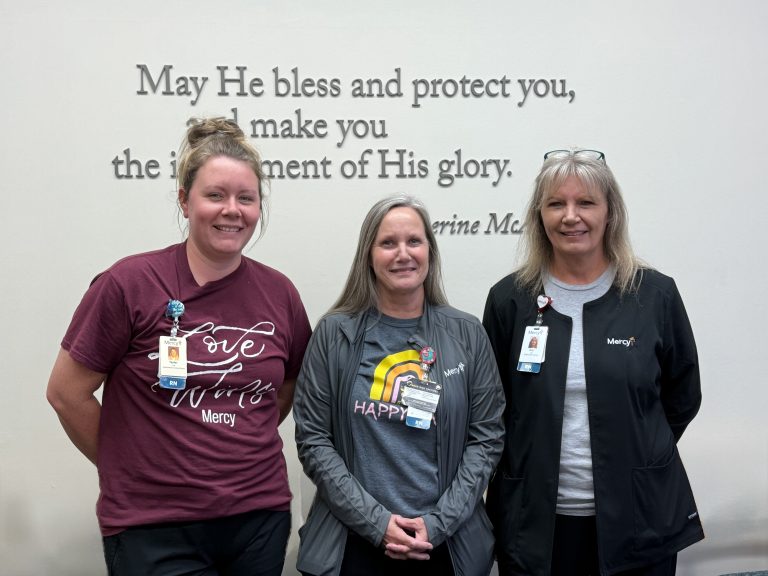
After 32 years of inspiring young minds in Mansfield classrooms, Mary Jane Brewer is embarking on a new chapter — one that keeps her close to the students and community she loves. Brewer has accepted the position of Wellness Center Coordinator for Mansfield Schools.
“I feel truly blessed for this opportunity to continue serving our students, staff, and community in a new capacity,” Brewer said.
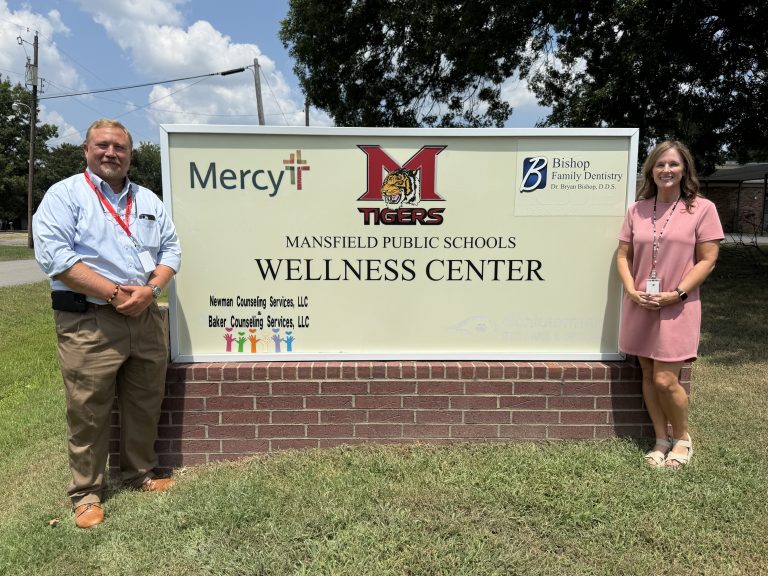
Located on the Mansfield Elementary campus, the Wellness Center is a vital resource that offers a wide range of health services through trusted partners including Mercy Clinic, Bishop Dentistry, Newman Counseling Services LLC, and Baker Counseling Services LLC.
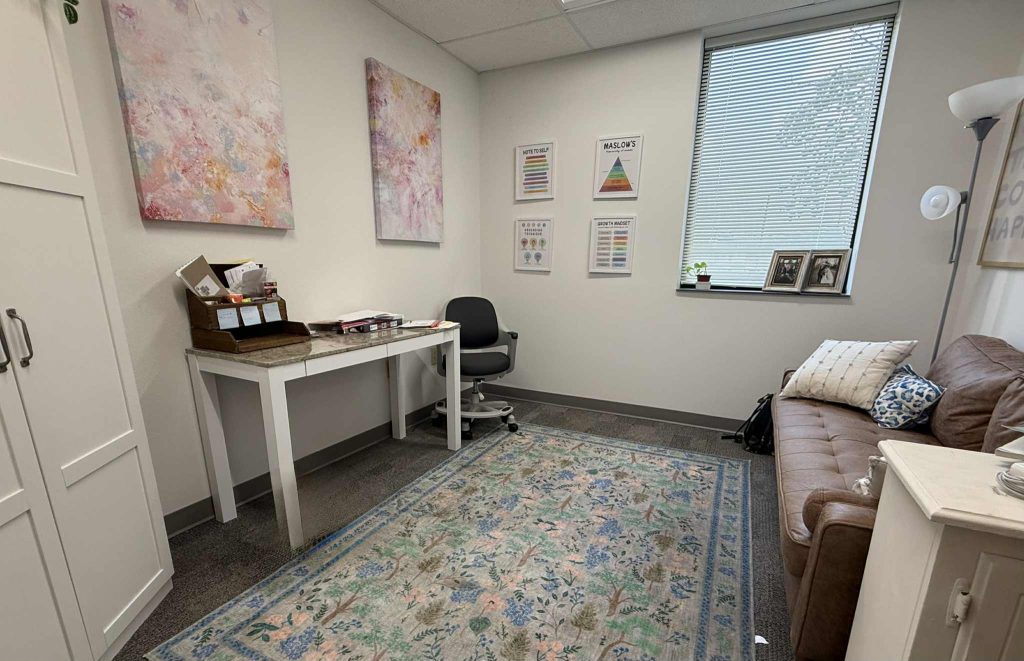
Session room for Newman Counseling Service LLC, located at the Mansfield Elementary campus – MSD Wellness Center.
“The Wellness Center is a tremendous asset to our school and community, and I’m passionate about helping it grow to support even more families,” Brewer shared.
The district first allocated space for mental health services at the Wellness Center in 2013, and in 2020, providers were given permanent offices. Newman Counseling Services, LLC, and Baker Counseling Services, LLC, each maintain an office on campus, providing mental health support to students and families. “We are open to referrals from all providers,” said Meghan Newman, LPC.
Superintendent Joe Staton noted that when he came to the district, outside providers were already seeing patients, but that it became a priority to give them a permanent, dedicated office space.
“Our mental health providers are invested in this community. Both Meghan and Tara have children in Mansfield Schools, and they want to see our kids succeed,” Brewer added.
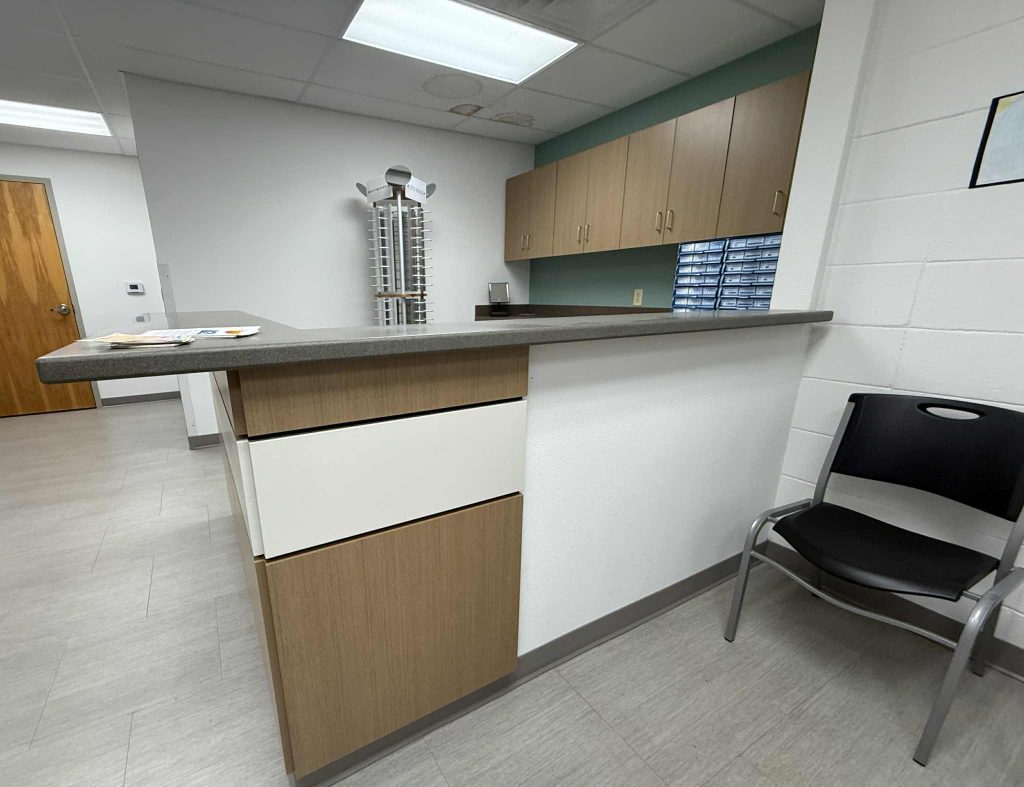
Current unoccupied vision center located on the campus of the Mansfield Elementary School, inside the Wellness Center.
Brewer’s plan for the Wellness Center includes adding an on-site vision care provider to serve students. “At other district campuses, providers often share space,” Staton noted. “Here at Mansfield, they’ll have their own dedicated offices.”
Office Space of Dr. Bryan Bishop, DDS.
The district-owned facility already includes dedicated office space for an optometrist with three exam rooms. Dental provider Dr. Bryan Bishop has also made the Wellness Center his professional home, with three exam rooms and a dedicated orthodontics room.
Mercy Clinic’s nurse practitioners, Carmen Oxford, APRN, CNP, and Loretta Smithson, ARPN, offer general practice services including well-child exams, sports physicals, immunizations, acute illness treatment, and chronic disease management.
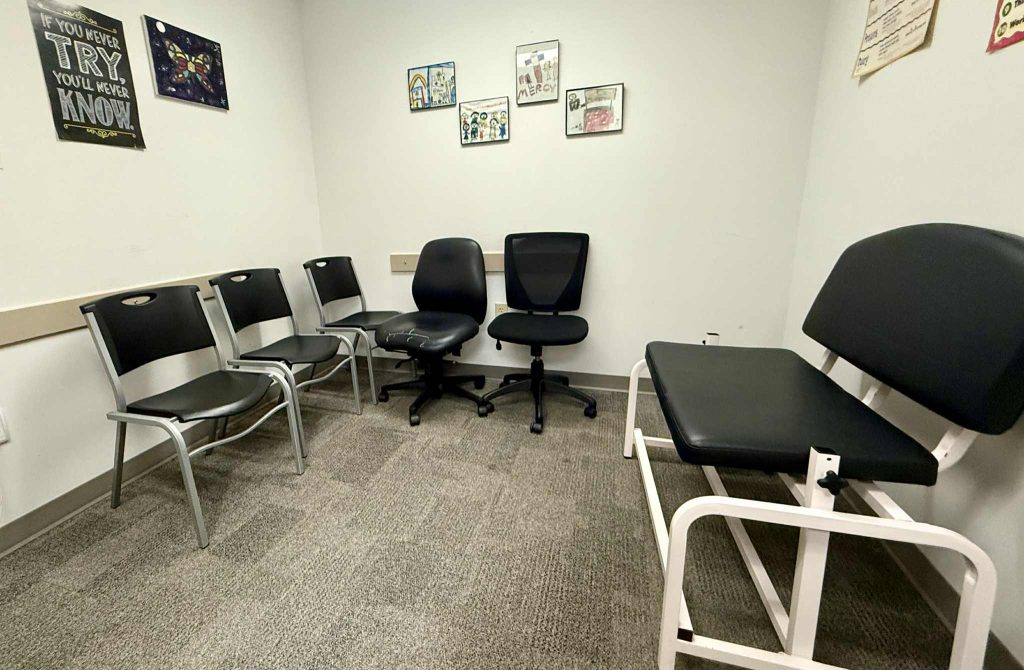
An isolated waiting room is available for MSD students who need to be seen by a general practitioner.
Leona Skaggs, practice manager, explained the center’s layout: “We have five exam rooms, provider offices, a nurses’ station, lab, and reception area. We even have an isolated waiting room reserved for students so they don’t have to wait with the general public. Again, it’s all about the students.”
Skaggs added that Brewer’s role will help coordinate care, ensuring students get from the school nurse to the clinic quickly and efficiently.
Brewer herself has seen the benefits of having a school-based clinic. She recalled being stung by a wasp last year on the playground: “I didn’t have to leave work to go wait at a clinic. I was able to come over here, get a shot, and get back to class.”
The same convenience applies to parents, she said. “If a mom suspects her child has an earache, they can still send them to class. We can have them seen, treated, and back in the classroom without parents missing work or kids missing school.”
Future plans for the Wellness Center include extending services to the district’s new preschool addition.
“It’s all about the kids,” Staton said. “The more we can do to remove barriers to learning, the more successful our students will be.”
Joyce P. Tinsley, lovingly known as “Granny Bear” to many, passed away peacefully on July 31, 2025, at the age of 85. Born in Lawrence, Oklahoma, Joyce’s life was a reflection of the strong, steady, and compassionate spirit she inherited from her Oklahoma beginnings.
A proud and accomplished professional, she served as Superintendent at Queen Wilhelmina State Park, where she led with vision, dedication, and a deep respect for the natural world.Her leadership and commitment left a lasting mark, not only on the park itself but on the people she mentored and inspired. Joyce’s love of Rich Mountain never faded-where she began her career as a pastry chef, baking with the same warmth and care that she carried throughout her life.
Joyce also served as a first responder, offering care and calm in times of crisis. After her retirement she and her beloved husband “Bob” traveled extensively even bringing their grandchildren along at times. She often taught life lessons and practical skills, such as folding a fitted sheet and patching jeans with elegance and precision. She found joy in simple moments and turned tem into memories that her family will carry forever.
Joyce was deeply proud of starting her own business, Promotions of Sunshine Mall, where she channeled her creativity, resourcefulness, and entrepreneurial spirit. She was also a cherished member of the Otters, a sisterhood of life long friends who stood beside her through many eras of life, offering laughter, strength, and unwavering companionship.
She was the kind of person who always had a seat at her table and an open heart. Always ready to share conversation and a sweet treat.
When it came time for big decisions, she was famously prepared-always ready with a pencil and paper to draft a pros and cons list. Her thoughtful, practical approach helped guide not only her own choices, but often those of the people who turned to her for advice and support.
Joyce was preceded in deth by her beloved husband Bob Tinsley, her father Burl Phillips, mother Velma Phillips, brother Dibrell Phillips and granddaughter Shelby Tinsley.
She is survived by her children: Sheryl Edwards (Jim), Bob Tinsley (Laura) and Bruce Tinsley (Peggy). She also leaves behind her cherished grandchildren: Demisha (Robert) Taylor, Darcy (William) Neal, Brandy Tinsley, Bruce (Diana) Tinsley, Lacey (Brandon) Calsing, Kelley (Trevor) Mortimore, and Sandy Steidl; her nephew Dibrell “Spud” Phillips (Gail) and several great grandchildren, who brought her so much joy and pride.
Her presence will be deeply missed but forever remembered by all who knew her-in the parks she loved, the meals she made, the drumbeats she followed and the many lives she touched.
The family will have a private memorial service at a later date.
Arrangements and cremation are being entrusted to the Heritage Memorial Funeral Home & Crematory in Waldron, Arkansas.
In 2007, Mansfield’s track program finally broke through with a state title. After a couple of fourth place finishes, two thirds, and a pair of runners-up; Mansfield kept inching closer to the big trophy but never stood atop the podium. Then, it happened! Followed by another and another and another until the Lady Tigers were a bona fide dynasty.
Mansfield’s senior girls track and field team went on an incredible 4 year run from 2007 through 2010. Trophies stacked up, records fell, and 8 different rings filled the fingers of some mighty hungry track athletes. With this historic timeline reviewed, directors of the Mansfield Wall of Fame selected this combined era of Lady Tiger track for induction into this year’s WOF Class.
EPSON MFP image
The players, coaches and managers making up the 2007 – 2010 track collective will join 9 individual inductees at this year’s upcoming WOF Induction Ceremony. A reception along with a public introduction of the WOF Class of 2025 will take place on October 17 at Mansfield High School.
As this date approaches, we offer a deeper look into the profiles of each of the new members. This week the spotlight will shine on the Mansfield track teams that raised the bar for future generations. This is a look at the MHS senior girls state championship track teams from ‘07, ‘08, ‘09, and ‘10.
The productivity of the Lady Tiger track program was making a lasting impression across the state during this special time of Mansfield athleticism. Most notably, the group won 4 consecutive indoor and outdoor state titles, 4 straight conference titles, and countless regular season meets.
The 2007 track team was the first Mansfield collaboration to hoist a state championship trophy since the 1986 girls basketball team. Although they had gotten close in previous campaigns, the group never had the numbers to take them over the top. Finally, the addition of a couple of strong classes with emerging talent joined an otherwise experienced few. Now armed with an ability to dispense a larger wealth of skill sets across a wider range of events, the crew climbed to the top and never looked back.
Meagan Graves (Clark) was an All-State sprinter and one of three seniors on that first title team. Some 18 years after the fact, she framed the experience this way.
“It was an honor to compete alongside a team whose dedication, perseverance, and unity led us to our first state championship,” Graves (Clark) announced.
“Being inducted into the Wall of Fame is more than a recognition of past achievement. It is a lasting symbol of the legacy we built together and the inspiration we hope to pass on to those who follow.”
Mansfield went undefeated at home, at conference and at state during those four consecutive seasons. Individual Lady Tigers collected 40 All-State awards, 50 All-District plaques, 16 state records, 17 school records and 8 state championship trophies and rings. If “bona fide dynasty” needs a description, let this be the illustration.
This initial group proved a state title was possible. The ‘07 team won the combined 1A-4A ATCA indoor title in Fayetteville by 34 points behind the comforts of a full squad. The tougher outdoor state finals they won by only 8.75 points.
The outdoor state finals have long been recognized as a tougher task because a team can only send those athletes that make the advancer file out of conference play. Also, outdoor has 3 extra events (2 back then) to cover. In contrast, a team can send its entire roster to the indoor state finals which carries only a 14 event schedule, although that’s now restricted to 2 athletes per event (3 back then).
Mansfield fought back the charge of a stubborn and favored Green Forest squad at the ‘07 outdoor finals hosted by Harding University in Searcy. Remarkably, MHS carried only 10 athletes and competed in only 12 of the 16 events for the close contested victory.
A suddenly more confident 2008 team crushed the competition the following season. They scored 124 points indoors through all 14 events and 176 at outdoor in all 16 qualifying events. Both state titles were won by more than doubling the point totals of their nearest opponents.
Danielle Clem (Godwin), one of three seniors on that second state title team, was recently asked to think back to her time as a Lady Tiger track athlete.
“In 2007 and 2008, I earned All-State honors as a Mansfield Tiger,” she noted with a discernible hint of joy reflecting from her face, “an achievement that still fills me with pride.”
She went on to say. “More than a title, it was about being part of a legacy built on grit, discipline, and heart. Mansfield girls track wasn’t just a team; it was, and still is, a tradition of excellence that I’m honored to be a part of.”
By the 2009 season, MHS was firmly in control averaging a whopping 175 points per meet. Sporting its largest roster in decades, the 32 person roster was deep and dominant. In fact, at the district finals that year, the team won all 17 events and accumulated a staggering 342 total points in the single meet.
Reflect upon one distinguishable fact to gain a perspective as to how dominant that particular 342 point total was. Mansfield would have still won the ‘09 conference championship had all the other six district schools combined their point totals.
Perhaps the most complete team in Tiger track history, the ‘09 squad was beyond good. Historically unheard of, this team qualified in every single event to the prestigious Meet of Champs, basically the All-Stars of all classifications. With that many MOC qualifiers, it would be no surprise to know that this particular MHS lineup could have left the 3A outdoor state finals after the conclusion of field events and still come away comfortable winners.
Olivia McKay (Smith), an All-State and Meet of Champs qualifier that season, was one of 9 seniors on Mansfield’s third title team. A team pillar for three straight years, McKay expressed much the same sentiments as the previous team leaders upon hearing the WOF news.
“The ladies on the 2007 – 2010 track teams worked incredibly hard and were able to achieve amazing accomplishments,” McKay (Smith) sent by text from her home in Hoover, Alabama. “The people on those teams will forever be special to me and it’s such an honor to be recognized alongside them.
“Thank you to the coaches for recognizing our abilities and putting us in a position to be successful,” she would go on to write. “It’s an honor being recognized as a team and going on the MHS Wall of Fame!”
By 2010, Mansfield was traveling to some of the biggest meets in the state. Regular season meets at Van Buren, Southside, Bentonville, Fayetteville, a combined college and high school meet at the University of Arkansas were intentionally scheduled for the challenge.
By this time, Mansfield had made the cover of VYPE High School Magazine twice. Team members modeled GTM uniform styles in a promotional sports equipment catalog. The Arkansas Track and Field Hall of Fame proclaimed Mansfield as the Lewis McCollum Track Program of the Year. And, the United States Congress awarded the team national recognition by flying an American Flag over the Capitol in the team’s honor.
In 2010, the Lady Tigers scored 1,755 points over the course of the season. They produced 6 state records, 5 school records, won 6 regular season meets, district, and both state finals. The class of 2010, with 8 highly recognized and decorated seniors, had completed a perfect four year run.
Danielle Fry (Overton), an All-State Lady Tiger relay runner, saw her fair share of state titles in high school. The current Mansfield assistant track coach and head cheer coach not only collected all 8 track and field state rings, but she also won 2 more on Mansfield’s top rated cheer squad. That’s an astonishing total of 10 state championships by her 2010 graduation date.
Uniquely suited to carry on the traditions of both sports, Fry (Overton) returned home to Mansfield to coach. As success follows success, she had coached 2 state championship cheer squads and 5 state runner-ups at Lavaca High School before coming home to her alma mater.
She explained her time in a Lady Tiger uniform like this.
“Some of my greatest memories from high school were being a member of the Lady Tiger Track team. It was an honor to be a part of the team from 2007 – 2010, and it is an honor to know my team is being inducted into the Wall of Fame in Mansfield.
“Being a part of those teams has shaped so much of who I am today, and as a coach myself, I aspire to have the same leadership qualities that my coach demonstrated to us.”
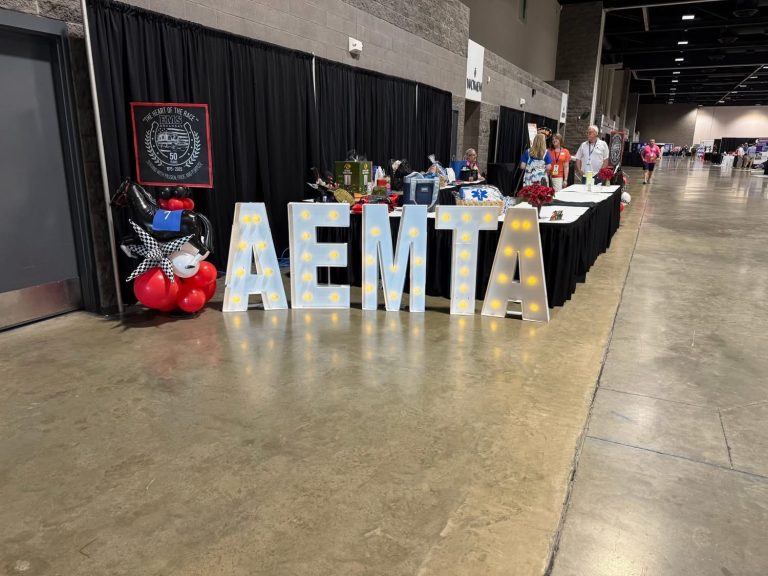
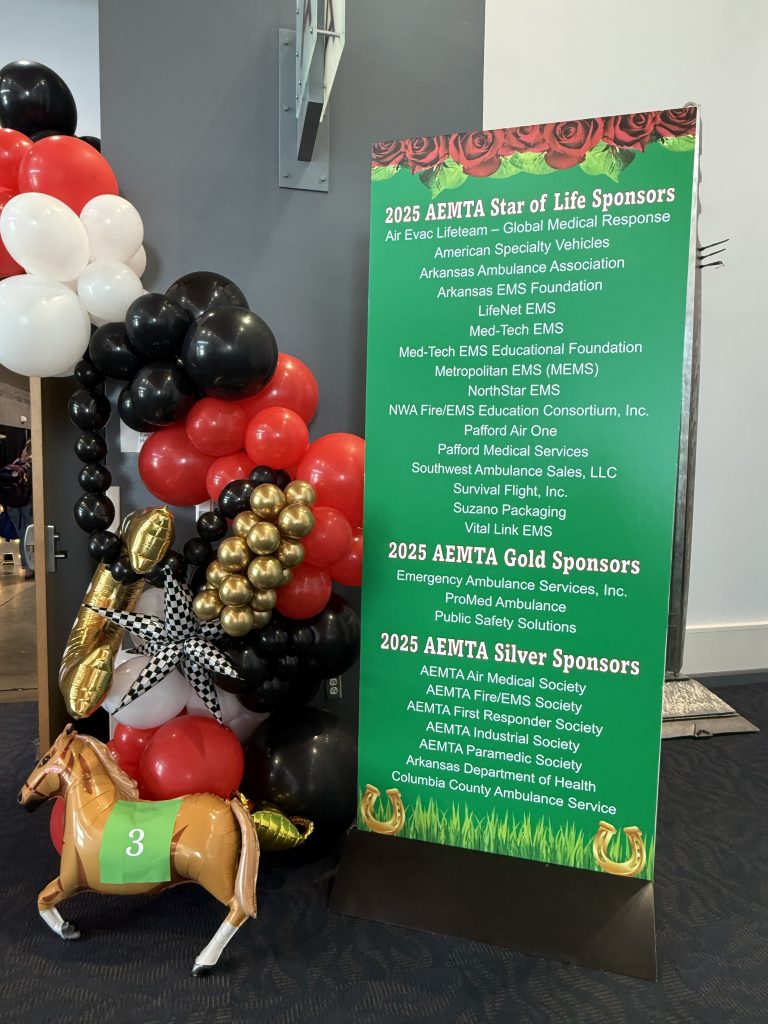
EMS providers from across Arkansas came together this weekend for the annual Arkansas EMT Association (AEMTA) Conference, a premier educational event dedicated to advancing emergency medical services in the state.
Hosted in Hot Springs, the multi-day conference brought together EMTs, paramedics, and EMS leaders to participate in training sessions, workshops, and networking opportunities. Educators from across the United States — as well as experts from right here in the Natural State — shared their expertise on new treatments, updated procedures, and essential skills that are critical to delivering high-quality emergency medical care.
The AEMTA Conference focuses on building an educational foundation for EMS providers, ensuring they remain current on advancements in the field while maintaining proficiency in skills that may not be used daily but are vital in life-saving situations.
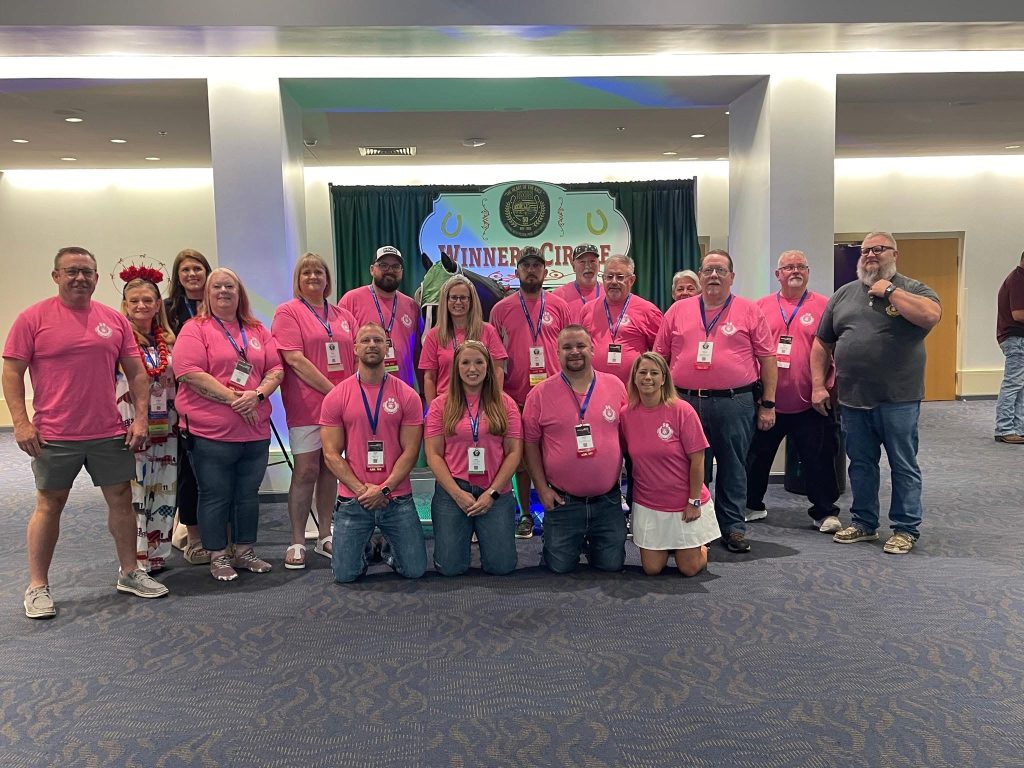
A special thanks was extended to the Arkansas EMT Association Conference Planning Committee and Board for their hard work and dedication in making this year’s event a success.
Arkansas EMT Association Conference Planning Committee and Board 2025 (photo courtesy of Nikki Kitchens Morphew)
This year also brought special recognition to Southwest EMS’ Brooke Hines, who was nominated to serve on the AEMTA Board beginning in 2026 — a testament to her leadership and commitment to the profession.
The annual conference continues to serve as an invaluable opportunity for EMS providers to learn, grow, and prepare for the ever-evolving challenges of emergency medical response.
AWARDS: ALS & BLS Services of the Year BLS: EASI Clarendon ALS: Spring River
2025 AEMTA EMT of the Year Diamond Lowe (EASI) 2025 First Responder of the Year Terrance Boston (EASI) 2025 Fire Team of the Year (EASI)
Fire/EMS Personnel of the Year Gary Kirby (Searcy Fire Dept.)