




State Capitol Week in Review From Senator Terry Rice

LITTLE ROCK – Arkansas colleges and universities will spend about $279 million on athletics during the upcoming school year.
State law requires all state-supported institutions of higher education to certify their budgeted revenues and expenditures for athletics. The results are submitted every summer to the state Higher Education Coordinating Board.
State law also requires that institutions must clearly define all student fees used to pay for athletic programs. On statements to students, institutions must list athletic fees separate and distinct from tuition and other student fees.
The University of Arkansas at Fayetteville is one of 11 institutions that do not charge athletic fees. According to their submissions to the Board of Higher Education, they expect to meet the costs of their athletic programs without assessing fees.
The Razorback athletic program is by far the largest in Arkansas, with budgeted expenditures for next year of about $181 million.
The smallest athletic program is at Arkansas State University in Newport, which will spend about $195,000 on athletics next school year. The second smallest is at Phillips community College of the University of Arkansas, which has budgeted about $215,000 for athletics.
The second largest athletic program is at Arkansas State University in Jonesboro, which has a budget of $24 million for next year. The third largest is at the University of Central Arkansas in Conway, with a budget of $17 million.
The University of Arkansas at Little Rock will have an athletic budget of almost $13 million. The University of Arkansas at Pine Bluff budgeted $7 million for athletics. South Arkansas University at Magnolia budgeted $6.8 million for athletics and Henderson State University in Arkadelphia budgeted $6.7 million. The athletic budget at Arkansas Tech in Russellville is $6.2 million.
The Razorback program generates revenue from ticket sales, licensing fees, concessions and contributions that no other campus in Arkansas can match. Besides not assessing student athletic fees, the campus does not transfer into its athletic program any money from its state educational and general funds.
If the University at Fayetteville is excluded from the calculation, student fees generate 29.4 percent of the athletic program budgets for 22 two-year colleges and nine four-year universities.
Workforce and Career Education
At a recent meeting the Higher Education Board heard a presentation on the status of workforce education in Arkansas at colleges and universities. Students do not get credit for taking the courses, but they learn skills in demand at the top companies in Arkansas.
The most popular course is in business, management and marketing. The second most popular is in engineering and related technologies. The third most popular is in health professions.
In the 22 two-year colleges in Arkansas, only half the courses are open enrollment for any student registered at the college. The other half are limited to employees of specific industry partners.
Union Bank Announces Opening of Full-Service Branch in Russellville

Union Bank is proud to announce the official opening date of its new full-service branch in Russellville. Building on the success of its Loan Production Office (LPO) established in 2022, the bank has expanded its presence within the historic 500 Building on Main Street in downtown Russellville to offer a full suite of banking services.
Jason McGee, Russellville Market Leader, shared his enthusiasm:
“As a smaller community bank, Union Bank brings the power of local decision-making to Russellville—and the response has been overwhelmingly positive.”
Earlier this year, McGee welcomed Jeff Smith as Branch Retail Manager and Consumer Lender. A seasoned local banker, Smith joins the team with a shared commitment to community-focused service.
“Union Bank takes tremendous pride in our relationship-based business model,” McGee added. “We’re not just your bankers—we’re your neighbors. Your success is our success.”
Headquartered in Mena, Arkansas, Union Bank holds the distinction of having the longest financial heritage in Polk County. The Russellville branch marks the bank’s 10th location, joining others in Hatfield, Wickes, Waldron, and River Valley communities including Paris, Caulksville, Booneville, Ozark, and Clarksville. The almost $600 million bank is under the leadership of CEO Jarrod Yarnell.
Steven Sosebee, River Valley Market President, praised the team:
“With McGee and Smith’s deep roots in the area and their extensive banking expertise, we truly have a banking dream team in place.”
Smith emphasized the bank’s dual strengths:
“While our foundation is built on strong customer relationships, we’re also proud to offer a full range of modern, integrated banking tools designed to meet the needs of today’s fast-paced world. The bank has invested heavily in optimizing the customer’s digital experience.”
Looking ahead, Sosebee hinted at an upcoming initiative:
“Investing in the communities we serve is a core value at Union Bank. We’ll soon be announcing a series of donations that reflect our ongoing commitment to making a meaningful impact.”
The bank is officially now open as a full-service location offering both deposit and lending services. The location also now features an ATM with deposit taking features as well. Another grand opening event is scheduled for October 1 with more details to come.

Five hot tips for summer boaters and anglers from the AGFC
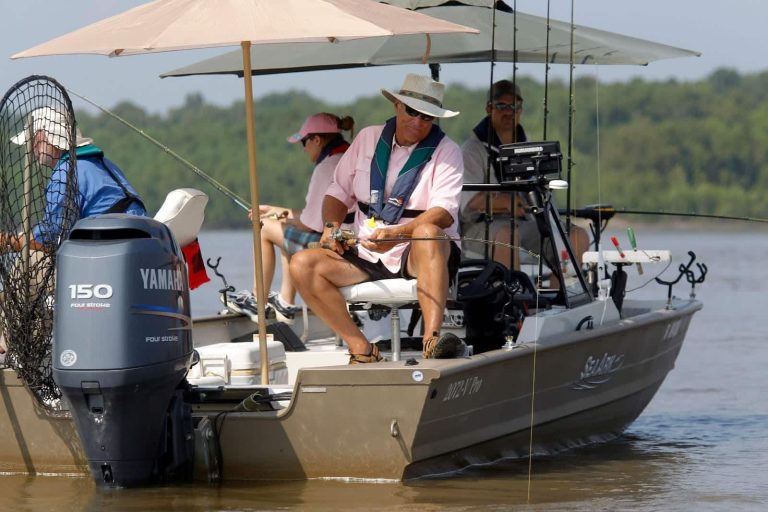
Bring your own shade if you know you’ll be fishing in the open. AGFC photo by Mike Wintroath.
By Randy Zellers
When the heat index pushes into the triple digits on a regular basis, many Arkansans pack up and head to the lake for a day on the water. Whether you’re catching fish or catching rays, the added stress and fatigue of the sun and waves can sneak up on you if you don’t come prepared.
Overexposure to the sun and indulging in too many alcoholic beverages top the list of dangers that can turn an otherwise relaxing trip to the lake into a nightmare. Each year, game wardens and other first responders are called to boat ramps and shorelines throughout the state in response to someone who’s had a little too much of either.
Dodge high noon
The simplest way to beat the heat is to avoid fishing and boating when the overhead sun is blazing down. Summer fishing is best during the first few hours of daylight and dusk, leaving a lot of time to bake in the sun between. Instead of slogging through a sweaty day on the water, get to the lake early and pack up for a nap on shore or at home once the sun is high. If you’re not an early bird, plan to be on the water an hour or two before sunset and enjoy that end of the fishing day. Just be sure your navigation lights work properly so you can make your way back to the ramp safely if the fishing picks up and you stay out a bit later than planned.
Screen time
Most people remember running around during the heat of summer in a bathing suit or T-shirt and shorts, catching that “healthy tan” as a side effect of a day on the lake. Now, we know better. Not only can too much sun cause a nasty sunburn, but it can also cause long-term damage to the skin and even skin cancer.
Pay attention to a product’s sun protection factor. The higher the SPF number, the longer it lasts, but it isn’t a direct correlation to time. The number indicates the amount of shielding from UV radiation. An SPF of 30 allows 1/30th of the sun’s radiation through, meaning it would take 30 times longer to receive the same effects as unprotected skin.
The highest SPF in the world won’t work if it washes off. Even water-resistant sunscreens won’t last long if your skin stays damp from sweat or swimming. Make it a point to reapply every two hours, whether you think you need it or not.
Chase the shade
Stay in the shadows if you want to keep cool. Surfaces exposed to direct sunlight can reach well beyond the ambient temperature. That hot vinyl boat seat can even cause some first- and second-degree burns if you plop exposed skin down on it after allowing it to preheat in direct sunlight. Not only does shade protect from sunburn, but it also prevents those surfaces from absorbing and holding heat.
Some rivers and lakes have backwaters where you can find some overhanging trees for shade, but most fishing action is going to be out deeper, where you’re in the open. A sunbrella, canopy or bimini top on the boat offers shelter, and placing a towel or T-shirt over any hot surfaces you’re likely to sit or stand on can go a long way to cooling those scalding surfaces.
Cover up
Tank tops and cotton T-shirts may feel comfortable for short stays in the sun, but covering up with thin, long-sleeved clothes offers more protection for long days on the water.
Light-colored, lightweight fabrics can block some UV rays, and lightweight facemasks, hoods and gloves help cover more surface area of your skin. A wide-brimmed hat in place of the usual baseball cap also helps provide more shade around your ears, neck and shoulders to reduce exposure to the sun.
Just like with sunscreen, most clothes made for outdoor activity have labels offering their SPF value. Ultraviolet rays can still penetrate through fabrics, so you still must be mindful of the time spent in direct sunlight.
Water, water everywhere
Sun not only stings the skin, it saps your body of moisture. Sugary or carbonated drinks can magnify the drying effect of UV rays. According to the Centers for Disease Control and Prevention, try to drink a cup (8 ounces) of water every 20 minutes or so, but don’t drink more than one-and-a-half quarts (48 ounces) of water each hour. Guzzling too much water all at once can be just as harmful as not having enough. Drink slowly throughout the day, even if you don’t feel thirsty.
It’s best to stick to plain water, without flavor enhancers, electrolyte boosters or other additions when out in extreme heat. These products are meant to rehydrate quickly after you’ve already depleted your system of water through rigorous exercise. When fishing or conducting lower-intensity activities, water works best and your body won’t need those extra salts and sugars packed into hydration additives.
Alcohol also isn’t the answer for rehydrating. A cold beer or alcoholic beverage may seem refreshing, but the alcohol actually works against your body’s ability to absorb water into the cells that need it.
Aside from contributing to dehydration, alcohol impairs judgment and can cause very dangerous situations for boaters and their passengers. The effects of alcohol are more potent when out in the summer heat because of natural stress factors like the sun, wind and waves rocking the boat.
This summer, be safe. Take the simple steps that could save your life. Summer heat and alcohol are such mundane things that their dangers are easily overlooked. Bring plenty of water, wear sunscreen or protective clothing and pay attention to what your body is telling you. If you decide to drink, be aware of the added effects of the sun and don’t operate the boat. A designated driver is just as important on a boat as he or she is in a car.
Prepare for the plunge
OK, we said there would be five tips, but a boating safety story isn’t complete without a mention to wear a properly fitting U.S. Coast Guard-approved life jacket when enjoying Arkansas waters. A quick dip can be just the ticket to cool off on a hot day, but it’s always best to wear a life jacket, even if you’re a good swimmer. Three of the most recent boating fatalities in Arkansas occurred when a boater jumped overboard to swim and didn’t bring their life jacket. Let the life jacket do its job and keep you at the surface while you take that cooling swim. Arkansas law requires each boat to have a life jacket onboard and within reach for each person in the vessel, but they don’t work if you don’t wear them. The AGFC wants everyone to enjoy the water this summer, and we want everyone to make it home safely to share the experience with friends.
Visit www.agfc.com/boatered for more information on boating safety in Arkansas.
ASPSF Accepting Fall ScholarshipApplications From Single Parents

ASPSF Recipient Brian Boen hangs out with her kids at the Arkansas Tech University-Ozark Campus.Briana is working toward a bachelor’s degree in business at ATU.
Single parents enrolling in school for the Fall 2025 semester can apply for a scholarship from nonprofit Arkansas Single Parent Scholarship Fund (ASPSF) beginning Aug. 1.
To apply, single parents must to go to aspsf.org/apply and fill out an online form with supporting documentation. Both new students and current ASPSF recipients can apply for a scholarship up to $1,600. The deadline is Sept. 1.
If awarded, single parents directly receive the financial aid and can use it to meet their real-life needs, such as rent, child care, gas, or groceries, while they go to school. Along with the scholarship, ASPSF staff and volunteers provide mentoring, career coaching, and workshops to help recipients balance school, work, and parenting.
“This scholarship has been a huge blessing to me,” said ASPSF Summer 2025 recipient Briana Boen of Franklin County. “I have been able to receive the scholarship almost every semester if not every semester since I’ve started college. The scholarship has helped me by worrying less about the extra things that I can do for my kids.”
Applicants must have a GED or high school diploma but have not yet earned a bachelor’s degree. ASPSF awards scholarships to single moms and dads working toward skilled-trade certificates, associate degrees, and bachelor’s degrees that lead to professional careers with family-supporting wages.
Recipients must be enrolled in at least one three-hour class online or in-person. They must also have a 2.0 GPA, earn medium to low income, and participate fully in the ASPSF scholarship program by attending workshops and communicating with their local program manager.
A full list of ASPSF’s eligibility guidelines is available at aspsf.org/eligibility. ASPSF accepts scholarship applications three times a year: spring, summer, and fall. The next application will open for the Spring 2026 semester in January.
These single parent scholarships are made possible thanks to generous donors, organizations, schools, businesses, and foundations who believe in the incredible power of education. Thanks to community support, ASPSF awarded over 800 scholarships totaling $1.1 million last year.
For more information, visit aspsf.org or contact Jen Lawrence at jlawrence@aspsf.org or 501.550.6304.
About Arkansas Single Parent Scholarship Fund: Statewide nonprofit Arkansas Single Parent Scholarship Fund (ASPSF) is dedicated to ending single parent poverty through higher education. Since 1990, ASPSF has awarded more than $50 million in scholarships and provided services that empower single parents to complete their education and pursue higher-paying careers. With the help of volunteers and community support, ASPSF creates multigenerational change, transforming lives for both single parents and their children. Learn more at aspsf.org.

COSL Announces Regional Tax Auction Results

The recent auction of tax-delinquent properties in Crawford, Franklin and Logan counties raised over $625,800, the Commissioner of State Lands announced.
The regional auction drew 105 registered bidders, who purchased 51 of 53 available parcels for $628,843.85 Results were as follows:
Crawford County: 31 parcels offered; 30 parcels sold; $308,943.85 total; $28,625.50 taxes collected
Franklin County: 5 parcels offered; 4 parcels sold; $58,500 total; $6,849.62 taxes collected
Logan County: 17 parcels offered; 17 parcels sold; $258,400 total; $19,021.69 taxes collected
The auctions offered real estate parcels with taxes delinquent since 2020.
“Most owners redeem their property by paying the delinquent taxes; we only auction a fraction of the parcels certified for delinquent taxes,” Commissioner Tommy Land said. “Of course we hope property is redeemed if the owners want to keep it, but it is vital that the parcels return to the county’s active tax rolls.”
The COSL office disburses taxes and interest to the county, whether that money is collected through redemption or sale.
“Last year, the Commissioner of State Lands Office sent more than $18.7 million to school districts and county governments,” Land said. “Of that, $553,388.75 went to these three counties, helping fund everything from roads to schools.”
Those turnback amounts were:
Crawford County: $308,847.02
Franklin County: $128,865.85
Logan County: $115,675.88
Auction sales are final.
Unsold parcels may be redeemed online at www.cosl.org, using a credit or debit card, or owners can call 501-324-9422 to request a Petition to Redeem. Redemption does not grant ownership; it simply makes the taxes current.
Parcels that did not sell at the public auction will be available after 30 days and can be purchased through an online auction by viewing the Post-Auction Sales List at www.cosl.org.