


Arkansas 4-H Star Camp a summer tradition for more than 50 years
By Rebekah Hall
U of A System Division of Agriculture
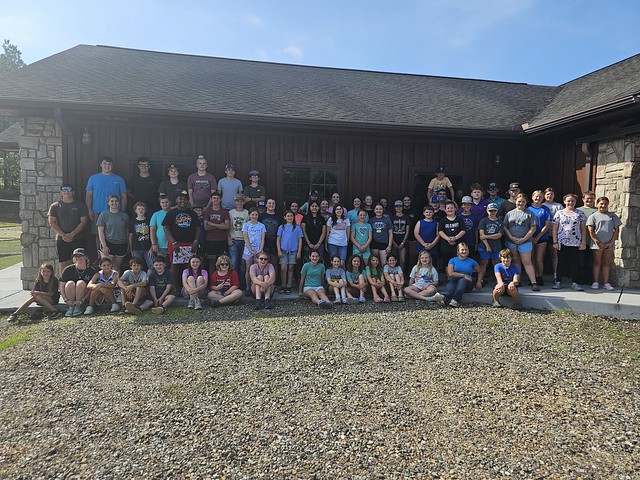
AMITY, Ark. — Nestled among towering pines and a glittering 40-acre lake, Arkansas 4-H members from five counties gathered at Timber Lodge Ranch for the 4-H Star Camp, building pool noodle boats, coming out of their shells and living the camping experience.
Seventy 4-H members from Howard, Miller, Montgomery, Pike and Sevier counties joined 20 adults, including extension county agents, summer interns and parent volunteers, for three days of outdoor recreation and team-building activities from June 18-20.
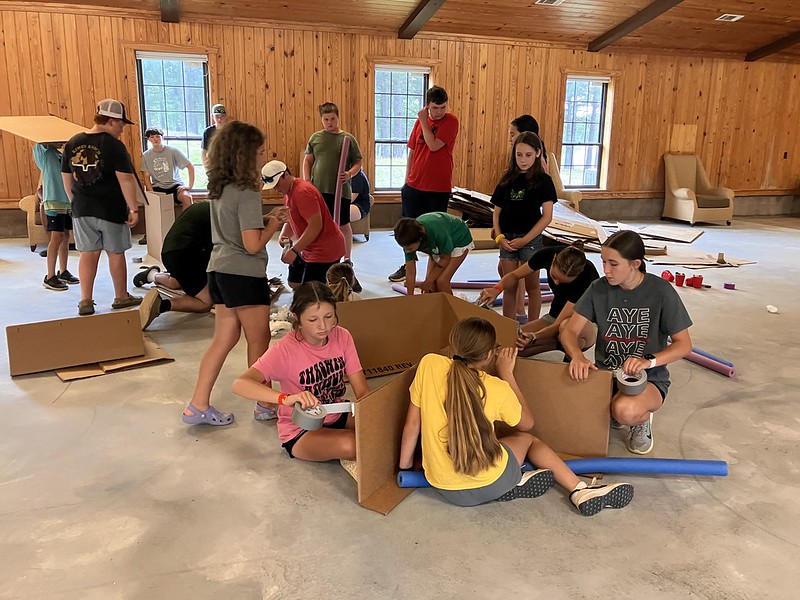
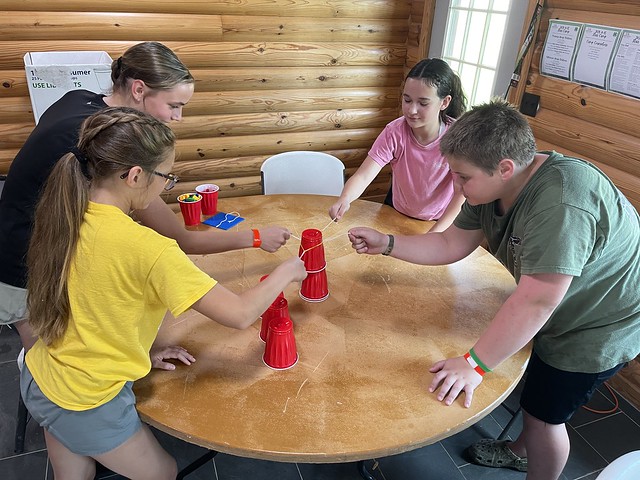
Campers faced off in a water balloon Battleship-style game, created abstract art using paint-filled water guns and built boats from cardboard, duct tape and pool noodles, which they put to the test on the lake.
“For years, this program actually involved camping in tents and cooking everything outside,” said Eva Langley, Pike County extension staff chair for the University of Arkansas System Division of Agriculture. “They really got the true camping experience. We’ve been coming here for several years now, and even though the kids are staying in air-conditioned bunks, we still want it to feel authentic, because not every kid goes camping.”
The 4-H Star Camp, named after its five participating counties, has gone by a few different names since its inception more than 55 years ago. Originally called Quad County Camp for its partnership among Sevier, Howard, Miller and Little River counties, the program has welcomed generations of 4-H members and their families.
“We work very hard to keep this camp a tradition,” said Rex Herring, Sevier County extension staff chair, who has been involved with Star Camp for the past 21 years. “You’ve got kids coming here whose moms and dads and grandparents have come through this camp. Our theme every year incorporates educational elements, but we have a lot of fun — otherwise, they wouldn’t want to come back.”
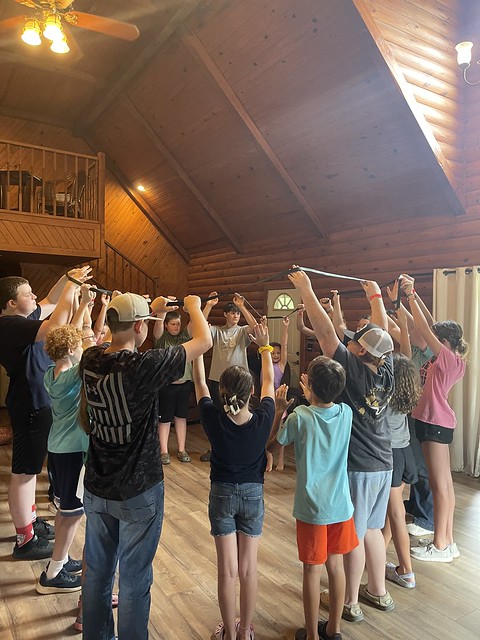
The camp brings together extension family and consumer sciences, agricultural and 4-H agents, as well as extension summer interns, who lead the activity rotations for the 4-H members.
“One of my favorite parts of Star Camp is the way we get to collaborate on it as agents,” said Samantha Horn, Howard County extension staff chair. “We put a lot of time and effort into planning this and making sure our kids get the best experience out of it.”
Children must be nine years old by the first day of camp to participate. Kim Frachiseur, Sevier County extension 4-H agent, said this threshold gives the Cloverbuds 4-H members, who range from five to eight years old, “something to look forward to.”
“We like that this makes participating in Star Camp feel like a right of passage for our Cloverbuds,” Frachiseur said. “They look up to all the older kids and hear them talk about how much fun they had at camp, then they get to come and see what it’s all about.”
Gayle Herring, 7, daughter of Rex Herring, was able to participate in camp a couple of years early because she attended with her father.
“My favorite thing so far has been swimming,” Gayle said. “And that lake is really, really deep.”
On the first night of camp, 4-H members were tasked with hunting for “the Cropster” — Howard County extension agriculture agent Dawson Bailey, dressed in a lobster costume — while navigating the dark using only glow-in-the-dark necklaces and bracelets. Some extension agents hid along the road with water guns to thwart campers, and other agents gave out dry beans to successful teams.
“We got to run down the road last night until 10:00,” Gayle said. “We had this thing called the Cropster, and we had to go get beans, and whoever got the most beans got prizes. It was really fun.”
Star Camp costs $100 per camper, which makes it relatively affordable compared to other summer camp fees. To help teach responsibility, campers from each county were assigned to help serve meals and clean up the dining area afterward. On the last night of camp, homemade ice cream — churned by campers and their family and consumer sciences agents — was on the menu.
“You want the kids to leave here with fun memories, a new friend and maybe a new interest,” Horn said. “I feel like that’s what 4-H is all about: helping our members grow in their confidence, their curiosity, and in their relationships with each other.”
Connecting members, strengthening 4-H
Herring said the camp is an opportunity for 4-H members to interact with their peers, and for county agents to strengthen their relationships with 4-H clubs.
“These kids get to commingle with others, and I love it from a county agent standpoint,” Herring said. “I’ve been with extension for nearly 28 years, and in the past, people have asked me, ‘What do you think about camp? Is it worth doing?’ And I say, ‘Absolutely.’ This is a big rapport-building experience with my 4-H’ers. They get to see me as a human being instead of just their county agent. You grow a better bond with the kids, and I really think that helps the success of our county programs.”
For shy or introverted 4-H members, Herring said the camp is also a chance to find their voice and practice social skills.
“What I love about it is that these quieter kids, I call them ‘shelled up,’ those are the ones I’m encouraging the most,” Herring said. “The way I evaluate myself is if next year, whenever those same kids come back, the first thing they say is ‘Hey Mr. Rex,’ when the year before, you had to stomp their foot to get them to say anything. That’s how you know you’ve left a positive mark.”
Herring said he hopes that 4-H members’ experience at Star Camp helps keep them involved with the 4-H program.
“The camp is very important,” Herring said. “I hope to make an impact on all the kids, to where they’ll stay in 4-H. We’ll do this as long as we can to provide this for the kids of southwest Arkansas.”
To learn more about the Cooperative Extension Service’s youth development program, visit 4h.uada.edu or contact your local county agent.
To learn about extension programs in Arkansas, contact your local Cooperative Extension Service agent or visit www.uaex.uada.edu. Follow us on X and Instagram at @AR_Extension. To learn more about Division of Agriculture research, visit the Arkansas Agricultural Experiment Station website: https://aaes.uada.edu. Follow on X at @ArkAgResearch. To learn more about the Division of Agriculture, visit https://uada.edu/. Follow us on X at @AgInArk.
About the Division of Agriculture
The University of Arkansas System Division of Agriculture’s mission is to strengthen agriculture, communities, and families by connecting trusted research to the adoption of best practices. Through the Agricultural Experiment Station and the Cooperative Extension Service, the Division of Agriculture conducts research and extension work within the nation’s historic land grant education system.
The Division of Agriculture is one of 20 entities within the University of Arkansas System. It has offices in all 75 counties in Arkansas and faculty on three campuses.
Pursuant to 7 CFR § 15.3, the University of Arkansas System Division of Agriculture offers all its Extension and Research programs and services (including employment) without regard to race, color, sex, national origin, religion, age, disability, marital or veteran status, genetic information, sexual preference, pregnancy or any other legally protected status, and is an equal opportunity institution.
Obituary: JD Graham (1942-2025)

JD Graham of Waldron, Arkansas went to be with his Lord and Savior peacefully, Thursday, June 26, 2025 in Waldron, Arkansas surrounded by his loving family. JD was born April 27, 1942 in Jones Creek, Arkansas to Arvel and Irene Graham. He was 83 years old.
JD grew up in and around the Waldron area. He married the love of his life Bobbie Woodall and together they raised their family of three boys and then became cherished grandparents and great grandparents. JD worked at several things throughout his life starting when he was just a youngster. Everything from working at the pole yard to maintenance for Waldron Housing Authority and then becoming a licensed plumber. JD served the community in still yet other capacities by being member of the Waldron City Council for 14 years and he preached at Pleasant Grove Church for many years. JD loved his family and looked forward to spending time with each of them making treasured memories.JD leaves behind to cherish his memory, his loving wife of 64 years, Bobbie of the home, sons Chris Graham and wife Christy, Carlton Graham and wife Meredith and daughter in law Tammy Graham. Grandpa will forever remain in the hearts of his grandchildren: Larissa (Dylan) House, Danielle (Whit) Jameson and Jacob (Rachel) Graham as well as great grandchildren: Weston, Raygan, Cannon, Harper and Gunner. JD will be missed by all that knew him and the many whose lives he impacted including a host of nieces, nephews, extended family, friends and neighbors he loved dearly.
JD was preceded in death by his parents Arvel and Irene, one son Clinton Graham and one granddaughter Macy.
JD’s graveside celebration of life service will be 10:00 a.m., Saturday, June 28, 2025 at the Sehorn Cemetery near Waldron with Rev. Donnie Wagner and Rev. Bart Graham officiating. Interment will follow. Arrangements are being entrusted to the Heritage Memorial Funeral Home in Waldron, Arkansas.
JD’s visitation will be Friday, June 27, 2025, from 4:00 p.m. until 6:00 p.m. at the Heritage Memorial Funeral Home Chapel in Waldron, Arkansas.

Apply and qualify for an Arkansas urban archery deer hunt
By Randy Zellers
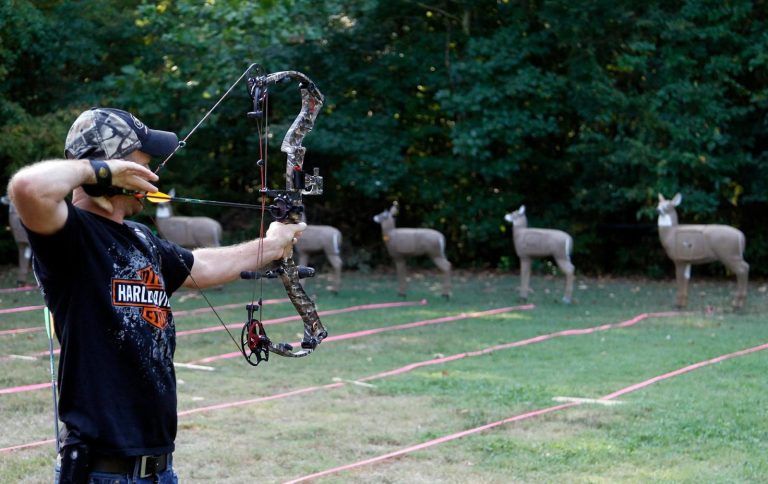
Arkansas deer hunters looking to add some opportunities to hunt and give back to their communities should pick up their bows and register for the 2025-26 Urban Archery Deer Hunts. The hunts begin on Sept. 1, but hunters must register and qualify to participate now.
Urban archery hunts are held in nine communities in Arkansas to help control deer populations and manage human/wildlife conflicts. The meat provided through these hunts also helps feed less fortunate families.
Ralph Meeker, the deer program coordinator for the Arkansas Game and Fish Commission, says certain wildlife populations have flourished in the last five decades, but you can have too much of a good thing, especially when too many deer and people try to coexist in the same area.
“Urban hunts are the best tool wildlife managers and cities have to reduce these deer populations to acceptable social levels,” Meeker said. “Most deterrents devised for wild animals don’t work in the long term, and the few methods that do work can be very expensive to a community or landowner. Hunting is safe, efficient and effective.
All urban hunts follow stringent guidelines to ensure the safety of hunters and local landowners. All hunters must have passed the International Bowhunters Education Program course, attend an orientation to go over the added regulations and pass an archery proficiency test with the bow they intend to hunt with in order to participate.
In addition to helping control wildlife populations, all hunters participating in urban archery hunts must donate their first adult deer to Arkansas Hunters Feeding the Hungry.
“We’ve been able to supply thousands of families over the years with fresh protein through these venison donations,” Meeker said. “The first deer any hunter harvests is required to go to the program, and many hunters donate even more.”
Deer harvested during urban hunts do not count toward a hunter’s seasonal limit. There are no limits to the number of deer that can be harvested in urban hunts and all antler restrictions are lifted. All deer harvested must still be checked to the appropriate urban deer zone.
Visit www.agfc.com/urbanhunt for more information on Arkansas’s Urban Archery Deer Hunts.
The following areas will have urban hunts for the 2025-26 season:
Visit the Arkansas Bowhunters Association to get details about and register for the following cities:
- Cherokee Village
- Fairfield Bay
- Heber Springs
- Helena-West Helena
- Horseshoe Bend
- Russellville
Contact Joseph Gentry at 870-733-4343 or email [email protected] with the Bull Shoals Urban Bowhunters Association to register for
- Bull Shoals
- Lakeview
Contact David Harper at 501-356-5880 or email [email protected] with the Hot Springs Village Property Owners Association for information about the Hot Springs Village Urban Deer Hunt.
Timepiece: Vietnamese Culture
By Dr. Curtis Varnell
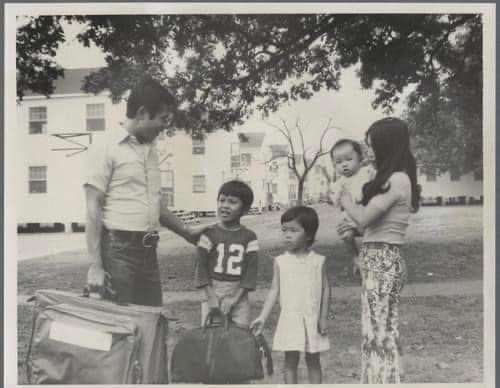
The media was flooded with images and stories of the horrific events occurring in South East Asia as former allies, Cambodia and South Vietnam, were over-ran by their communist counterparts. The U.S. signed the Paris Peace Accords in 1973, effectively removing our fighting forces from the countries but leaving hundreds of advisors, military aides, and humanitarian groups in place to assist the South Vietnamese in continuing the war. That effort lasted less than two year and, by April of 1975, the communist forces were pouring into the south and preparing to take over Saigon. Americans began a rapid evacuation of all personnel. Thousands of Vietnamese, anti-communist and allies to America, knew they would receive little sympathy and probably death if they remained in their homeland.
Determined to assist and avoid wide-scale slaughter, President Ford and congress acted to assist the refugees in relocating. One of the most endearing but forgotten efforts was called Operation Babylift, a program that would eventually bring more than 2,500 refugee babies to America for adoption. Operation New Life evacuated more than 50,00 adults through airlifts, many literally clinging to helicopters as the communist poured into the airports. As the communist took over the country, others fled by boat, hoping and praying to be picked up and delivered to safety. Eventually, more than 130,000 Vietnamese escaped and made their way to America.
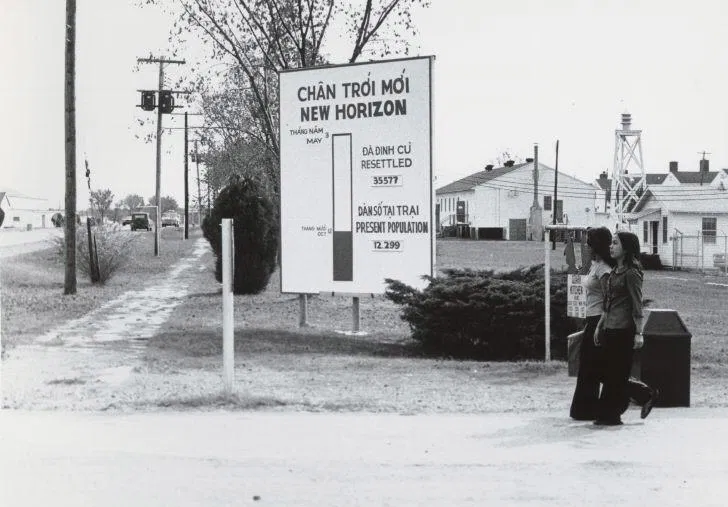
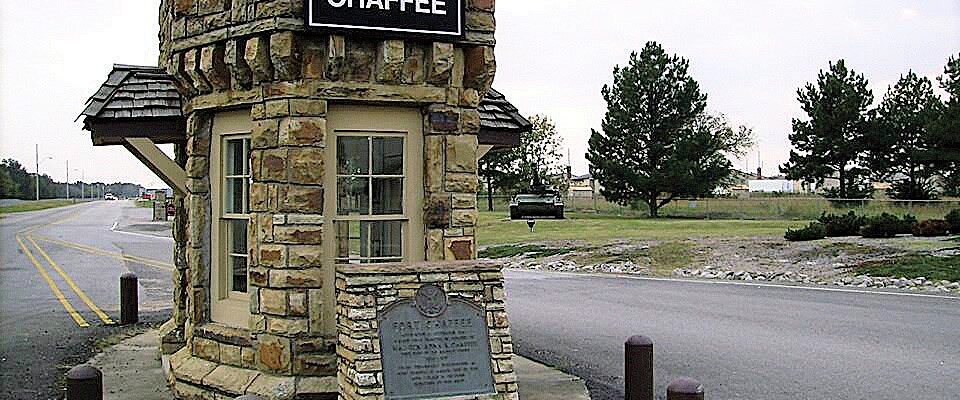
There were four points of entry for refugees into the United States; Camp Pendleton in California, Eglin Air Force Base in Florida, Fort Indiantown Gap in Pennsylvania, and Fort Chaffee in Arkansas. Notified in late April that the Vietnamese were on their way, Governor David Pryor and other dignitaries were on hand on May 2, 1975 when the first plane carrying 70 refugees arrived at the Fort. By the end of that month, 25,812 refugees had arrived. More than 6,000 people were employed to assist in the processing and preparing the grounds for the influx of refugees, making the fort one of the biggest employers in the state and creating an economic windfall for the area.
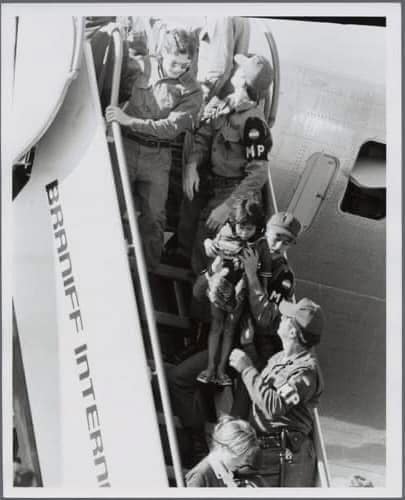
Not all individuals were happy with the situation and rumors abounded. Locals feared the refugees would never leave the area and would be future competition for jobs. Others felt that secret communists and perhaps even criminals would eventually be loosed on the local communities. Eventually 50,809 refugees were processed through Chaffee and most of the fears proved groundless.

The normal procedure was to gradually acclimate the refugees to American culture and to teach them the basics of English. Classes were set up at near-by West-Ark colleges to assist in the process. Little did most people working with the refugees realize that they were not a homogenous population with one religion, culture, or even language. Included in the group were Vietnamese, Cambodians, Hmong, and Laotian. The majority were probably Buddhist in faith but with a large per-centile of Catholic. After a period of acclimation, people from across the U.S. would “host” a family and help them to become a part of the American culture.
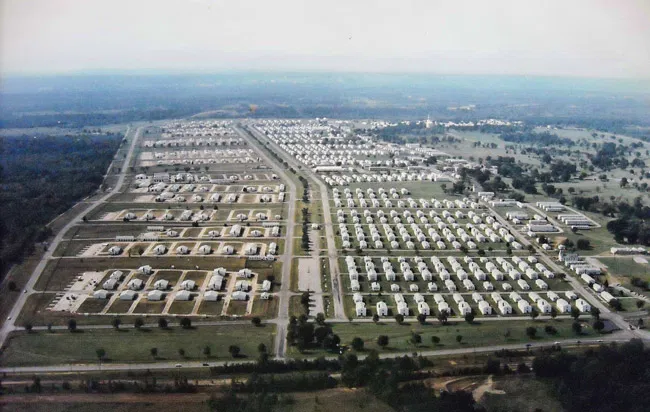
The transition sometimes created “cultural shock” for the new comers. One family described the first Halloween, a tradition unknown in S.E. Asia. To go to an unknown home, knock on a door, and demand candy or a trick was completely alien to the children. Christmas and Thanksgiving were just as strange and required some getting used to. Kevin Tran described his experiences as a four-year old refugee. “I remember the flight from Guam to the U.S. because it was my first time drinking a Coca-Cola,” recalls Tran. “It was one of those first memories of my life.” He recalls landing at Fort Chaffee, spending time at the fort, and then later growing up with his host family. He is now Lt. Col Tran, the Director for the Pacific Air Force in Hawaii.
Like Tran, most of the former refugees have established themselves successfully into the American system. According to the 2000 census, about 4,000 people of Asian descent live in Sebastian County, some 3.5% of the population. A trip through down-town Fort Smith reveals several businesses and some of my favorite restaurants ran by Vietnamese families. When teaching at the local schools, I run across a few of the names I can’t pronounce but the students just smile and try to assist me in pronouncing their names correctly. More than 50 years has elapsed since their parents and grandparents arrived and enriched our culture and state with their presence.

Commission approves 2026 turkey season changes
By Randy Zellers
The Arkansas Game and Fish Commission unanimously approved regulations to modify turkey season dates and zones for the 2026 turkey hunting season at Thursday’s official meeting, which was held at Golden Glo Studio in Camden.
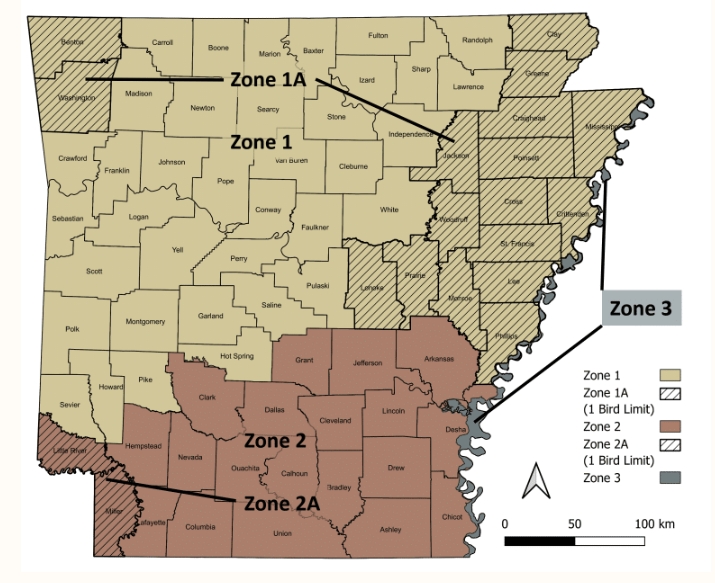
The regulation creates five turkey zones, offering slightly different opening days in various regions of the state.
The 2026 Turkey Hunting Season will be as follows:
- Zone 1: April 20-May 10, 2026
- Zone 1A: April 20-28, 2026
- Zone 2: April 13-May 3, 2026
- Zone 2A: April 13-21, 2026
- Zone 3: April 6-26, 2026
The Special Youth Turkey Hunt will be available April 11-12 in zones 1, 1A, 2 and 2A. No Special Youth Turkey Hunt will be available in Zone 3.
Exiting Commission Chairman J.D. Neeley noted that the change is an effort to offer a slightly better experience for hunters in portions of the state where gobbling may peak earlier while remaining conservative and maintaining a season that allows turkeys to begin their nesting cycle before disturbance from hunting pressure. During Neeley’s 7-year term as a Commissioner, the Arkansas turkey harvest has shown steady growth, thanks to habitat management, conservative hunting seasons and a little help from Mother Nature. Earlier this year, the harvest hit a 10-year high, encouraging commissioners to look into a slightly earlier opening day for some areas of the state.
The Commission unanimously passed a regulation that enables bass tournament directors to receive a waiver from the AGFC’s Fisheries Division to allow anglers fishing in their tournaments on lakes Poinsett, Barnett and Brewer to temporarily keep more than one fish over 16 inches per day. The anglers must adhere to strict catch-and-release fishing requirements and report their tournament’s success after their fishing day is complete to receive the permit.
Commissioners also passed regulations concerning hunting and boating conduct on wildlife management areas. Obstruction or Harassment of Hunting, Fishing or Trapping Activities and Public Disorder are now a Class 4 violation with a possible fine up to $7,500 and a jail sentence up to 180 days if physical confrontations occur. If no physical confrontation occurs, the penalty is a Class 3 violation with up to $5,000 in fines and up to 90 days’ jail sentence.
Additionally, anyone convicted of these violations who has their license and WMA access revoked would not be allowed to have that period reduced through later court decisions.
The Commission unanimously elected Commissioner Anne Marie Doramus of Little Rock as chairman for the next fiscal year and chose Commissioner Rob Finley of Mountain Home to serve as vice chairman.
“I can’t say enough about the support of all the commissioners as well as the staff during this last year,” Neeley said. “And it’s not just the current Commission, but we all build on the work of former commissioners and learn from each other. We all work together to make this a better place, a better state. I’m going off the Commission, but I’m not going anywhere. You’ll always have my support, and I plan to be busy working with [the Arkansas Game and Fish] Foundation.”
In other business, the Commission:
- Heard from Arkansas Game and Fish Foundation President Deke Whitbeck, who presented Neeley a specially commissioned knife and commissioner’s journal in memory of Marshall Hughes, a former AGFF board member;
- Heard a presentation from Benjamin Babst, Ph.D. at the University of Arkansas at Monticello, who updated them on his research into the timing and cues of tree root dormancy in red oak species and their implications for future management of greentree reservoirs in Arkansas;
- Approved the 2026-2031 Chronic Wasting Disease Management Plan, which was revised to adapt to evolving knowledge about the disease and its spread in The Natural State;
- Approved a grant of one 2025 public land youth elk hunting permit to the Arkansas Game and Fish Foundation to be used for fundraising purposes at the upcoming annual Arkansas Outdoors Hall of Fame Banquet;
- Awarded Neeley his service sidearm after seven years of voluntary service to the AGFC and the natural resources of Arkansas;
- Approved the AGFC’s 2026 Fiscal Year Maintenance and Operation budget totaling $133,430,402;
- Approved the 2026 Fiscal Year Black River Restoration Fund budget totaling $1,780,894;
- Approved the 2026 Fiscal Year Gas Lease Funds budget totaling $360,200;
- Approved the agency’s 2026 Wetland Habitat Restoration Budget totaling $5,042,847;
- Approved the agency’s 2026 Marine Fuel Tax Budget totaling $5,478,467;
- Approved the agency’s 2026 Continuation Budget totaling $464,067 to pay for four capital improvement projects that will not be completed by the end of the 2025 Fiscal Year;
- Approved a minute order to remove $5,478 worth of assets from agency inventory stolen from the Ed Gordon Point Remove WMA workshop;
- Approved a minute order authorizing merit pay increases effective July 1, 2025, for staff who received favorable reviews during their annual performance evaluations, and
- Approved a change to authority delegations to authorize the agency director and chief of staff to act on behalf of the Commission with purchases and personnel matters.
A video of the meeting is available on the AGFC’s YouTube Channel.


Obituary: James Earl Wetherington (1956-2025)
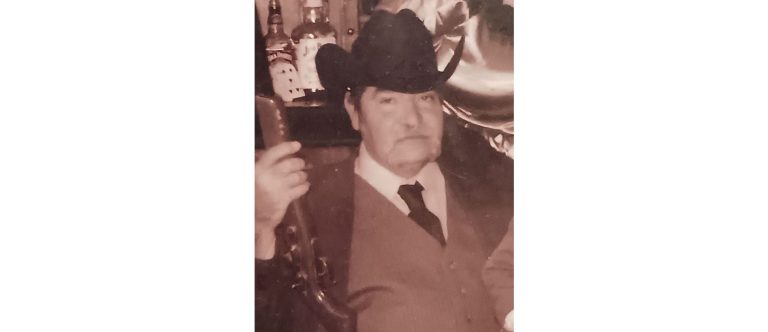
James Earl Wetherington of Mansfield, Arkansas passed from this life on Monday, June 23, 2025, in Waldron Arkansas. James was born on March 04, 1956, in Denver, Colorado to Robert William Wetherington and Dorothy Louise Wetherington. James was 69 years old. James was an airplane mechanic for the United States Navy for eight years.
James enjoyed the great outdoors. He found immense joy in hunting, fishing, and camping with family and friends. James spent a great deal of time in his garden. He enjoyed canning the fruits of his labor to share with others.
James leaves behind to cherish his memory, his children: Merlyn Wetherington of Mansfield, Arkansas. Patrick Wetherington of Washington, and Christine Gonzalez of Alaska. James will forever be in the hearts of his siblings: Tina Shuffleburger, Mary Hopper, Tom Wetherington, William Wetherington, Margie Heath, Edward Wetherington, and Catherine Wilhoit. James will be missed a host of grandchildren and great grandchildren and by all that knew him and the many whose lives he impacted including his extended family that he loved dearly.
James is preceded in death by his parents, Robert William Wetherington, and Dorothy Louise Wetherington, his wife, Dana Wetherington, and one son, David Wetherington.
A private family Celebration of Life will be held at a later date.
Memory of Me
I’d like the memory of me to be a happy one. I’d like to leave an afterglow of smiles when life is done. I’d like to leave an echo whispering softly down the ways. Of happy times and laughing times and bright sunny days. I’d like the tears of those who grieve, to dry before the sun of happy memories that I leave when life is done.
Helen Lowrie Marshall