

79.6 F
Fort Smith
Friday, June 26, 2026
Home Blog Page 86

BACK TO SCHOOL: Parents should model healthy screen time habits, encourage off-screen activities

By Rebekah Hall
U of A System Division of Agriculture

Excess screen time harms children and adolescents’ social skills, but it also affects their behavior similarly to dementia, presenting as distractibility and memory deficit. To help combat this, an extension expert says parents should limit screen time, encourage children’s off-screen interests and closely monitor online activities.

Brittney Schrick, extension associate professor and family life specialist for the University of Arkansas System Division of Agriculture, said junior high and high school students are expected to manage study materials in a way that is not developmentally appropriate.

“They’re being expected to constantly multi-task in way that’s not really even possible for adults, but especially not for a developing brain,” Schrick said. “They’re learning that that’s how you function in the world, and then the same adults who are asking them to do these things get frustrated when they get distracted.”

For example, if a student is working on algebra homework, they may be using a paper worksheet, but their textbook is an eBook, so they have that open in a browser for reference. Often, they use their phone as a calculator, and they are using another internet tab to review their teacher’s notes. Then, the moment a notification pops up on their phone, the distraction loop begins.

No going back

“Unless you’re somebody who has an excellent ability to delay gratification, or you are exceptionally strong-willed for a kid, you’re going to go check that notification, and then scroll on your phone,” Schrick said. “There’s no scenario in which we can ‘go back’ to the old ways. All the money that used to be spent on textbooks is now being spent on eBooks and other programs. But it’s not developmentally appropriate for kids to manage things that way.”

Schrick said that in addition to phone and screen use eating up time that children used to spend outside, doing physical activity or socializing with friends, the impact is “even deeper than that.”

“A lot of the effects of screen time look similar to the effects of dementia, at least behaviorally,” Schrick said. “This presents as distractibility, executive function loss, or lack of executive function development, and memory deficit, especially short term and working memory.”

According to a study by the Centers for Disease Control over a two-and-a-half-year period, approximately one half of teenagers had four or more hours of daily screen time, and these youth were more likely to recently experience a higher rate of anxiety or depression. 

Related to schoolwork, Schrick said students are “missing out on aspects of memorization, such as their multiplication tables, and improving handwriting, making sure that you can communicate in more than one way.”

“It’s just like anything else: there are pros and cons, but we do have to acknowledge that it’s not going anywhere,” Schrick said. “If parents are able to at least provide encouragement and opportunities for their kids to explore academic topics or their own curiosity about different things without it being entirely on a screen, they’re probably going to be doing more good for them than they realize.”

Schrick said it’s important for parents to actively engage with their kids, including while they are using their devices.

“You don’t necessarily have to wrestle it from their hands, but ask them about what they’re watching or doing,” she said. “Find out what they’re playing in Roblox, or what they’re building in Minecraft. Who is this influencer, and what are they talking about? That way, you’re going to get a window into what they’re doing.”

Implementing changes, modeling good behavior

For parents with younger children who want to raise them away from screens as much as possible, Schrick said implementing this lifestyle as early as possible is key.

“It is much easier to start out that way than it is to take it away,” she said. “If you already have a lifestyle as a family that really lends itself to having limited access to screens, it’s going to be simpler.”

Schrick said it is critical for parents to model healthy screen and phone use.

“You have to do it. If you are sitting there on your phone telling your kids to get off their phones, what’s the point?” she said. “Modeling is absolutely crucial, and that includes alternate activities. What else are you going to be doing in the time you are not spending on your phone?

“By doing this, you are teaching kids how to spend their time,” Schrick said. “If you want them to spend their time in other ways that being on screens, you need to teach them to do that.”

For parents with older children who want to intervene and change their access to screens and phone habits, it’s important for both parents — or both households, if families are co-parenting — to first be on the same page about their own expectations and values.

“Parents need to have that conversation with each other when they are both calm, because if you try to talk about it when somebody is mad, or is saying ‘See, I told you this was going to happen!’ then it’s going to go badly,” Schrick said. “It will end up being a power struggle, not only with the kids but between the grownups.”

In addition to approaching the change as a united front, parents should be prepared for pushback from the child — stick to it anyway, Schrick said.

“It takes work to implement such a big change,” Schrick said. “You have to maintain it consistently, and you have to be willing to revise your plan if something doesn’t work. You can’t give up after the first bump in the road. It takes persistence, insistence, and determination. You have to be willing to stay firm and strong about it.”

Use available parental tools, resources

Schrick said the Cooperative Extension Service plans to launch a new program for parents, Smart Phone Smarts, over the next year. In the meantime, she suggested the program Wait Until 8th, which encourages parents to wait until after eighth grade to give their child a smartphone. The program includes educational resources and guides for recruiting other families to delay the smartphone.

Schrick also recommended using parental controls whenever they are available, including options such as setting screen limits on certain apps or setting up devices to only be used during certain hours of the day.

“It also comes down to building a trusting relationship with your kids and being somebody who they feel comfortable coming and talking to, and to where they feel a little guilty about going behind your back,” Schrick said.

For more extension family life resources, visit thePersonal & Family Well-Being page on the Cooperative Extension Service website or contact Schrick at bschrick@uada.edu.

To learn about extension programs in Arkansas, contact your local Cooperative Extension Service agent or visit www.uaex.uada.edu. Follow us on X and Instagram at @AR_Extension. To learn more about Division of Agriculture research, visit the Arkansas Agricultural Experiment Station website: https://aaes.uada.edu. Follow on X at @ArkAgResearch. To learn more about the Division of Agriculture, visit https://uada.edu/. Follow us on X at @AgInArk. 

About the Division of Agriculture

The University of Arkansas System Division of Agriculture’s mission is to strengthen agriculture, communities, and families by connecting trusted research to the adoption of best practices. Through the Agricultural Experiment Station and the Cooperative Extension Service, the Division of Agriculture conducts research and extension work within the nation’s historic land grant education system. 

The Division of Agriculture is one of 20 entities within the University of Arkansas System. It has offices in all 75 counties in Arkansas and faculty on three campuses.  

Pursuant to 7 CFR § 15.3, the University of Arkansas System Division of Agriculture offers all its Extension and Research programs and services (including employment) without regard to race, color, sex, national origin, religion, age, disability, marital or veteran status, genetic information, sexual preference, pregnancy or any other legally protected status, and is an equal opportunity institution.


State Capitol Week in Review from Senator Terry Rice

Arkansas tourism continued to grow last year, generating $17.4 billion to the state’s economy and supporting almost 72,000 jobs.

Every year the state Department of Parks Heritage and Tourism commissions an analysis of the economic impact of tourism. In 2024 about 52 million visitors were welcomed in Arkansas, an increase over 2023 of 2.6 percent.

Every day, visitor spending in Arkansas is about $28.2 million, which supports 71,633 jobs directly. Visitor spending indirectly supports an additional 31,034 jobs, thus the visitor economy helps maintain one out of every 18 jobs in Arkansas.

Of the various spending categories within the tourism industry, food and beverage grew the most in 2024. It totaled about $3 billion, which was 6.5 percent over the previous year.

Retail grew by 5.8 percent in 2024, while recreation grew by four percent. Short-term rentals grew 3.3 percent in 2024.

Arkansas tourism traditionally relied on outdoor activities such as hunting, fishing and camping. Marketing efforts were focused on neighboring states, and on persuading Arkansas residents to remain in state for their vacations.

About 20 years ago advertising and promotion efforts broadened their appeal, to emphasize the availability of historic, cultural and artistic destinations. Marketing emphasized activities such as a spa day in Hot Springs, a visit to the presidential library in Little Rock, a weekend at the blues festival in Helena-West Helena, a day at the art gallery in Bentonville, opportunities for geocaching in state parks or an educational stroll through a Civil War battlefield.

Arkansas tourism campaigns targeted specific demographics, such as motorcyclists who want to ride along mountain highways or groups of senior citizens who charter buses. In addition to advertising in media that caters to sportsmen who like to hunt and fish, ads for Arkansas tourism were placed in media for bird watchers.

In recent years Arkansas tourism promoters have been getting back to basics, but with a modern twist. Recognizing the importance of outdoor activities, the state has created an Office of Outdoor Recreation. Within the annual economic analysis is a separate measure of outdoor recreation as a component of the state’s overall tourism industry. It is huge and growing, and it is based on much more than hunting and fishing.

For example, in April the New York Times published an article on how Bentonville has become an “epicenter” for cycling. Growth in outdoor recreation has been boosted by more than building miles of trails. It also comprises manufacturing, warehousing and transportation of kayaks, bikes, fishing gear, boats, ammunition and hunting supplies.

Measured as a separate category within tourism, outdoor recreation contributed $7.3 billion to the Arkansas economy last year, supporting 68,000 jobs. According to the Department of Parks Heritage and Tourism it represents 2.5 percent of the state’s gross domestic product (GDP), and has surpassed farming.

Arkansas tourism officials have broadened their efforts to appeal to a nationwide audience, and they use a dizzying array of digital media platforms to spread their message. One advantage they have is that Arkansas is a year-round destination, not just a seasonal one.

“Just Roll with It” Serving up Recipes and Humor

This content is reserved for RESIDENT INSIDER members.

Please or subscribe to view.

Scott County Quorum Court Discusses EMS Transition, Approves Ordinance

This content is reserved for RESIDENT INSIDER members.

Please or subscribe to view.

Mansfield City Council Discusses Fire Dues, Grants, and Personnel Policy

This content is reserved for RESIDENT INSIDER members.

Please or subscribe to view.

Scott County Man Pleads Guilty in 2023 Death of Infant

A Scott County man has pleaded guilty to second-degree murder in the 2023 death of 2-month-old Kyzer Fry, avoiding a scheduled jury trial.

Rodger Sorg, 24, was originally charged with first-degree murder following the infant’s death on August 2, 2023. He initially pleaded not guilty and was set to stand trial in July 2025. Instead, Sorg entered a guilty plea to a lesser charge of second-degree murder.

According to court documents, Sorg was sentenced to 25 years in prison, with a three-year suspended sentence. He had remained in custody at the Scott County Detention Center throughout the proceedings and had acquired 711 days of jail credit at the time of his plea.

The tragic case began on August 2, 2023, when the Mansfield Police Department responded to a call at a home on Huntington Avenue. Samantha Dotson, the child’s mother, told authorities she had returned from work to find her son, Kyzer Fry, unresponsive. At the time, Kyzer and two other children were in the care of Sorg.

The Arkansas State Police were brought in to investigate, and Sorg was arrested days later on August 8, 2023.

Tigers Senior High Is Leading Mansfield’s Little League By Example

This content is reserved for RESIDENT INSIDER members.

Please or subscribe to view.

Timepiece: Arkansas Ancestors

This content is reserved for RESIDENT INSIDER members.

Please or subscribe to view.

Extension to host Southern Chow-Chow relish workshop, part of preservation demo series

At the upcoming Southern Chow-Chow workshop, hosted by the Cooperative Extension Service on Aug. 23, attendees will learn to combine green tomatoes, bell peppers and cabbage to make the classic relish recipe.

The event is part of extension’s Preserving Arkansas summer series, which aims to teach food lovers and home cooks about the basics of food preservation and value-added foods.

“Whether you’re a beginner or looking to grow your food business, this is a great opportunity to learn, connect and preserve something delicious,” said Amanda Philyaw Perez, extension associate professor of food systems and food safety specialist for the University of Arkansas System Division of Agriculture. The Cooperative Extension Service is the outreach arm of the Division of Agriculture.

The workshop will take place from 11 a.m.-4 p.m. at the C.A. Vines Arkansas 4-H Center in Ferndale. The cost to attend is $10, and participants must register at uada.formstack.com/forms/preserving_arkansas.

David Hill, extension program associate for food systems and safety for the Division of Agriculture, said Southern Chow-Chow is an ideal recipe for learning about food preservation techniques, including pickling.

“In the South, Chow-Chow is a dish traditionally made of chopped vegetables pickled in a vinegar-based brine with sugar and spices,” Hill said. “Known for its sweet and tangy flavors, it’s used as a condiment for many classic southern dishes.”

The Division of Agriculture’s Local Food and Preservation teams, along with family and consumer sciences staff, will lead the demonstration. They will also be joined by local chef Margie Raimondo.

Raimondo, author, filmmaker and owner of Urbana Farmstead, helped lead a hands-on jam-making workshop for the Division of Agriculture earlier this summer. Hill said Raimondo is a perfect pick to help attendees develop their skills.

“Chef Margie is incredibly passionate about using fresh, local produce to create delicious food,” Hill said. “Lucky for us, she also loves to share her knowledge and help people build their cooking confidence. We’re excited to work with her again for this demonstration.”

Perez said the workshop will walk attendees through the essentials of safe, legal value-added food production in Arkansas. Value-added products, such as jarred vegetables, jams or jellies, are defined as food products that are not fresh, and they can be produced by home-based or commercial manufacturers.

“With the Preserving Arkansas summer series, we’re hoping to engage with people who love food and enjoy learning new things,” Perez said. “By introducing attendees to the basics of food preservation, we want to spark some ideas for passionate home cooks and inspire potential home-based food entrepreneurs.”

The Preserving Arkansas series will include one more workshop in September, with the date to be announced on the extension Local, Regional and Safe Foods Facebook page.

Ingredients for the workshop are sourced from the Arkansas Farm Trail, a program of Arkansas Farm Bureau. The program was created to promote direct-to-consumer farms and teach consumers about where their food comes from.

For more information, contact Amanda Philyaw Perez at aperez@uada.edu.

To learn about extension programs in Arkansas, contact your local Cooperative Extension Service agent or visit www.uaex.uada.edu. Follow us on X and Instagram at @AR_Extension. To learn more about Division of Agriculture research, visit the Arkansas Agricultural Experiment Station website: https://aaes.uada.edu. Follow on X at @ArkAgResearch. To learn more about the Division of Agriculture, visit https://uada.edu/. Follow us on X at @AgInArk. 

About the Division of Agriculture

The University of Arkansas System Division of Agriculture’s mission is to strengthen agriculture, communities, and families by connecting trusted research to the adoption of best practices. Through the Agricultural Experiment Station and the Cooperative Extension Service, the Division of Agriculture conducts research and extension work within the nation’s historic land grant education system. 

The Division of Agriculture is one of 20 entities within the University of Arkansas System. It has offices in all 75 counties in Arkansas and faculty on three campuses.  

The University of Arkansas System Division of Agriculture is an equal opportunity institution.  If you require a reasonable accommodation to participate or need materials in another format, please contact Amanda Perez at aperez@uada.edu as soon as possible.  Dial 711 for Arkansas Relay.

Pursuant to 7 CFR § 15.3, the University of Arkansas System Division of Agriculture offers all its Extension and Research programs and services (including employment) without regard to race, color, sex, national origin, religion, age, disability, marital or veteran status, genetic information, sexual preference, pregnancy or any other legally protected status, and is an equal opportunity institution.
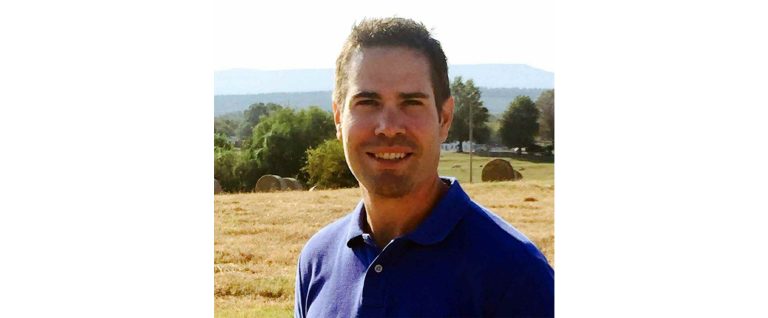
Simon Announces Candidacy for State Representative, District 46

Brad C. Simon, a small business owner, family man, and lifelong conservative, proudly announces his candidacy for the Republican nomination for State Representative in Arkansas District 46, encompassing portions of Logan, Franklin, Scott, and Sebastian Counties. With a campaign slogan of “Faith, Freedom, and Family First”, Simon positions himself as the steadfast conservative choice to replace the term-limited incumbent, Jon Eubanks, whose dedicated service to the district is deeply appreciated.

Raised in Paris, Arkansas, by educators James and Linda Simon, Brad learned the values of hard work, faith, and community early on. A graduate of the University of Arkansas with a degree in Business Economics, he married his high school sweetheart, Stephanie, at 19 and built a life centered on family, faith, and service. Together, they have three children-Andrew, Emily, and T.J.— and are active members of St. Joseph’s Catholic Church in Paris, where Brad has served on the Parish Council. His leadership in the Knights of Columbus, raising funds for charities like CASA and the Boys & Girls Club, and his role as former Vice President of the Paris Area Chamber of Commerce, reflect his commitment to strengthening local communities.

Simon’s entrepreneurial spirit shines through his small business, started from scratch in 2013, now employing over 20 Arkansans statewide. His firsthand experience navigating government regulations fuels his passion for limited government and economic freedom. “As a conservative, I believe in unleashing the power of Arkansas’ workers and businesses by cutting red tape and lowering taxes,” Simon said. “I’ll fight for jobs and a thriving economy by protecting small businesses from overreach and ensuring our tax dollars are spent wisely.”

On immigration, Simon takes a firm stance: “We must secure our borders and enforce our laws to protect Arkansas communities and resources. Illegal immigration strains our economy and public services, and I’ll support policies that put Arkansas citizens first.” He also pledges to safeguard Arkansas from foreign influence, particularly from China. “We cannot allow Communist Chinese interests to infiltrate our land, businesses, or institutions. I’ll work to keep Arkansas sovereign and secure.”

As a supporter of law enforcement, Simon is committed to keeping Arkansas safe. “I back the blue and will ensure our first responders have the resources they need to protect our communities,” he stated. His deep ties to educators, including his parents and close friends, drive his support for education, but he emphasizes fiscal responsibility: “We must fund our schools effectively while cutting wasteful government spending to keep taxes low for hardworking families.”