


Two new varieties of muscadine, a Southern grape species, to see release this fall, expand growing season
By Maddie Johnson
University of Arkansas System Division of Agriculture
Arkansas Agricultural Experiment Station
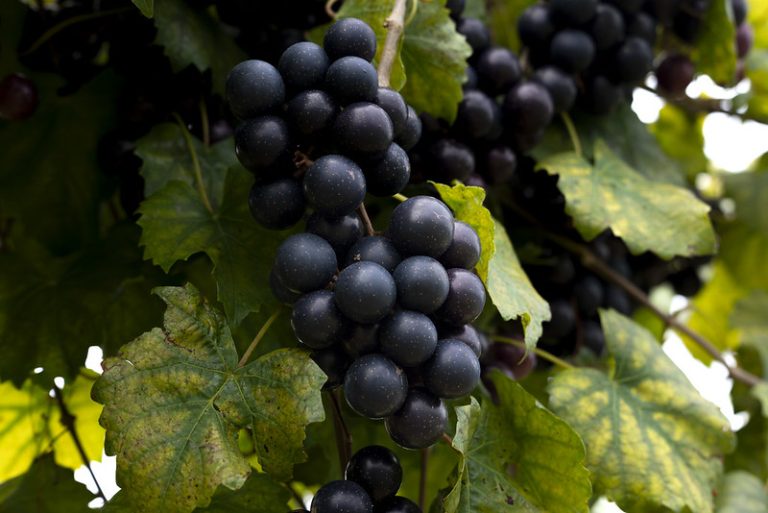
Two new varieties of muscadine not only promise a longer growing season but also recall two Arkansas icons: Altus, the state’s wine capital, and Mighty Fine, a name that describes its flavor and a favorite phrase of retired fruit breeder John Clark.
Altus and Mighty Fine are being released this fall by the Arkansas Agricultural Experiment Station. Margaret Worthington, director of the Fruit Breeding Program for the experiment station, noted that although muscadines are known for being susceptible to damage when exposed to cold temperatures, both new varieties stand out for their ability to withstand colder weather compared to other muscadine varieties.
“I think it’s an opportunity for Arkansas producers to expand what they’re doing with different fruit crops,” said Worthington, who is also an associate professor of horticulture with the experiment station, the research arm of the University of Arkansas System Division of Agriculture, and the Dale Bumpers College of Agricultural, Food and Life Sciences at the University of Arkansas.
“Muscadines are a nice fall crop, which makes them a good option for a berry grower wanting to spread out the labor and harvest throughout a longer season,” she said.
Mighty Fine
The first variety, named Mighty Fine, will be a black, seeded, fresh-market release, meaning it will be sold as a fresh fruit like table grapes. Mighty Fine performed very favorably in consumer trials when compared to the accepted quality standard for muscadines, the Supreme cultivar, Worthington said.
The Mighty Fine muscadine is larger in size, and among 58 field day attendees in 2022 who sampled it, it was ranked as the favorite by 37 percent, coming in ahead of Supreme and two other genotypes researchers were considering releasing.
Worthington also said the new variety is self-pollinating and can produce fruit without needing another pollinizing variety.
Why “Mighty Fine?” Worthington said a grower suggested the name to her at a field day years ago. She said she liked it because it rhymes with muscadine and is a phrase frequently used by Clark, former director of the Arkansas Fruit Breeding Program and Distinguished Professor Emeritus of horticulture, who began the program’s muscadine breeding in 2006.
Altus
The other new release, named Altus, is also black, seeded and cold hardy, but is smaller in size and targeted for wine and juice production.
Altus, in Franklin County, is home to many of the state’s wineries and has hosted wine production since the late 1800s.
Hot- and cold-pressed juices produced from Altus muscadines were compared by 66 consumers to those from the Noble cultivar, the most widely planted black muscadine for wine and juice production, and Altus scored higher with consumers liking it for flavor, sourness and overall impression.
Renee Threlfall, an associate professor of enology and viticulture with the Division of Agriculture and Bumpers College, was a co-inventor of the Altus variety and noted it can bring floral notes to beverages.
Worthington credited Arkansas’ Post Winery in Altus for being involved with the variety trials.
“I always really value when an industry partner is willing to trial new cultivars, so it’s nice to have somebody like Post look at the vines and see things they like in them,” she said.
Worthington noted that many wineries in the southeast U.S. make muscadine wine. In Arkansas, those include Post, Wiederkehr Wine Cellars, Mount Bethel Winery and Rusty Tractor Vineyards.
Muscadine wines are a serious business in Arkansas with a solid following. Muscadine wines earned top scores in the 2022, 2023 and 2024 Arkansas Quality Wine competitions.
Those interested in purchasing these muscadine plants or Arkansas Fruit Breeding Program blackberries, grapes, or peaches and nectarines, can find a list of licensed nurseries online.
“We are all excited about our first two muscadine releases,” said Parker Cole, associate director of technology commercialization for the University of Arkansas System Division of Agriculture. “Mighty Fine and Altus are great varieties and are a testament to the hard work and dedication of our Fruit Breeding Program team to deliver new varieties for producers.”
Looking forward
Worthington noted that the breeding program is also working on seedless varieties, which consumers can look forward to in the years to come.
“I am very hopeful to see the muscadine industry grow in Arkansas,” she said. “I think they’re a really nice, adapted crop here, and I’m surprised I don’t see as many muscadines being grown and eaten here as I did in North Carolina where I’m from.”
For further information about licensing Mighty Fine or Altus, growers can contact the Technology Commercialization Office by phone at 479-575-3953 or email at agritco@uada.edu.
To learn more about the Division of Agriculture research, visit the Arkansas Agricultural Experiment Station website. Follow us on X at @ArkAgResearch, subscribe to the Food, Farms and Forests podcast and sign up for our monthly newsletter, the Arkansas Agricultural Research Report. To learn more about the Division of Agriculture, visit uada.edu. Follow us on X at @AgInArk. To learn about extension programs in Arkansas, contact your local Cooperative Extension Service agent or visit uaex.uada.edu.
About the Division of Agriculture
The University of Arkansas System Division of Agriculture’s mission is to strengthen agriculture, communities, and families by connecting trusted research to the adoption of best practices. Through the Agricultural Experiment Station and the Cooperative Extension Service, the Division of Agriculture conducts research and extension work within the nation’s historic land grant education system.
The Division of Agriculture is one of 20 entities within the University of Arkansas System. It has offices in all 75 counties in Arkansas and faculty on three system campuses.
Pursuant to 7 CFR § 15.3, the University of Arkansas System Division of Agriculture offers all its Extension and Research programs and services (including employment) without regard to race, color, sex, national origin, religion, age, disability, marital or veteran status, genetic information, sexual preference, pregnancy or any other legally protected status, and is an equal opportunity institution.
Waldron Mayor Endorses Montgomery for District 52 State Representative

Brent Montgomery, a Republican candidate for Arkansas House District 52, has received the official endorsement of Waldron Mayor David Millard. The announcement came Thursday, July 17, marking a significant boost in Montgomery’s campaign as he seeks to represent Scott, Yell, and parts of Sebastian Counties in the state legislature.
Montgomery, who announced his candidacy in May, recently hosted a well-attended campaign kickoff event at Chamberlyne Country Club in Danville, where local leaders including Kelly Boyd, State Representative Mary Bentley, and Mayor Millard spoke in support of his campaign.
In his formal endorsement, Mayor Millard highlighted Montgomery’s work ethic, strong moral compass, and deep local roots.
“As humble as he is, Brent is very self-motivated to get things done,” Millard said. “Scott County will continue to have a voice in the Capitol with Brent. He has roots here, he’s grounded in Christian faith, and he truly has the ability and drive to serve.”
Millard, who is Montgomery’s uncle, also spoke to the family’s long-standing legacy in Scott County. Montgomery’s grandfather, the late Rev. Millard, was the longtime pastor of Harvey Assembly of God. “Public service runs in the family,” he added.
Montgomery, a successful business owner, said he felt called to public service and has taken steps to ensure his company will continue to operate smoothly in his absence. “When I felt led to run, I made changes within my business to free myself up to fully serve this district,” he said.
With the retirement of long-serving Representative Marcus Richmond, Montgomery acknowledged the responsibility of stepping into that role.
“I know I have big shoes to fill,” he said. “When I knock on doors, I want to take the time to send them a handwritten letter and make notes of their concerns. That kind of listening is important to me.”
Montgomery emphasized his commitment to accessibility, saying he plans to mirror Richmond’s responsiveness to constituents.
“Just as people recognized that Marcus returned calls and answered emails, I intend to do the same,” he said. “I want to represent the people of this entire district — that’s my plan.”
The campaign has already gained traction in all corners of District 52, with many noting Montgomery’s deep connections to the area and reputation for integrity. “He’ll serve all the people — not just Scott County,” said Mayor Millard. “But his heart is here, and that matters.”
Montgomery says he will continue meeting voters across the district in the months ahead, focusing on faith, family values, economic growth, and responsive leadership.
“This campaign isn’t about politics,” he said. “It’s about people. I want to hear from them and serve them with humility, honesty, and hard work.”
T-Mobile Announces the Return of Friday Night 5G Lights: Turning High School Football into a Nationwide Celebration of Hometown Pride

Last season, nearly 1,750 high schools from all 50 states – including the Greenwood Bulldogs — brought unmatched energy and creativity, rallying their communities and the nation, ultimately crowning Inola High School from Inola, Oklahoma the grand prize winner.
This year’s competition promises to be even bigger, with more winners, more prizes and more chances for small towns to shine on a national stage. 450 schools will win $5,000 through weekly $5K Fridays giveaways, 25 finalists will each score $25,000 for their football programs and more.
The grand prize winner will receive a $1 million football field upgrade, a renovated weight room from Gronk Fitness, a consultation with stadium experience experts, an all-expense-paid trip to the SEC Championship Game for select school officials and students and a tailgate party revealing the finalized upgrades in 2026.
More than 2,500 high schools across the country have pre-registered, and 36 high schools already signed up across Arkansas, including Greenwood again.
During last year’s contest, Greenwood High School Bulldog’s football team was awarded $25,000 for field improvements and moved to the second round.
Here’s How to Get in the Game:
- Eligible to high schools in towns under 150,000 residents
- Deadline to Apply: September 12
- Entry Website: www.FridayNight5GLights.com
- Entries should include a short story on why the school deserves a game-changing field transformation.
- Finalist selection will be based on creativity, need, and community spirit.
- Public voting opens Sept. 25 – Oct. 24, with bonus votes earned via weekly “Social Plays.”
- The grand prize winner will be announced on Oct. 30.
To learn more about today’s announcement, visit the newsroom.
Back to school: What happens after school is important too

By Mary Hightower
U of Arkansas System Division of Agriculture
What happens after school is as important as what happens during class time.
Routines are important to keep busy families stay organized, fed and rested while still getting essential activities done, said Brittney Schrick, extension family life specialist for the Division of Agriculture.
It’s important for parents or guardians to set clear expectations and allow time for everyone to get into a daily routine. It is a good idea to begin the back-to-school routines before school begins, Schrick said, adding that “a few days is usually sufficient, but some children may need longer adjustment time.”
Once the dismissal bell rings, “make sure your child knows the after-school plan and be sure to communicate that with their teachers and all other necessary people,” she said. “Most schools have strict policies about pick-up/end-of-day procedures.
“If your child typically walks home, but they are picked up when it is raining, the school needs to know,” Schrick said. “If you normally pick your child up, but grandma is doing the pickup on Fridays, the school and your child need to know that as well.”
Routine is also important once the sun goes down.
“Going back to school also means going back to bed at a set time every night,” Schrick said. “Establishing a routine is essential to ensuring a good night’s sleep for your child.
“The same process of getting ready for bed each night will help prepare the child’s body and mind for rest,” she said. “A child’s bedtime routine should be consistent, relaxing and free from distractions.”
Schrick also has a publication for parents to gauge their child’s readiness to be home alone. Home Alone Handbook: Is Your Child Ready? MP571.
Schrick has other suggestions, including information about screentime at her Family Life Fridays blog.
To learn about extension programs in Arkansas, contact your local Cooperative Extension Service agent or visit www.uaex.uada.edu. Follow us on X and Instagram at @AR_Extension. To learn more about Division of Agriculture research, visit the Arkansas Agricultural Experiment Station website: https://aaes.uada.edu/. Follow on X at @ArkAgResearch. To learn more about the Division of Agriculture, visit https://uada.edu/. Follow us on X at @AgInArk.
Back to school: Keeping lunches out of the danger zone

By Mary Hightower
U of Arkansas System Division of Agriculture
Once a school lunch leaves your home kitchen, will it still be safe when lunchtime rolls around?
That’s the question Torrie Smith, Carroll County extension agent in family and consumer sciences, wanted to answer.
So, she did a little experimenting.
“I have young children that will soon go off to school and will want to take a packed lunch. I know one of the top priorities for moms is packing a nutritious lunch that your child will actually eat,” she said. “A major concern should be, will your child’s school lunch be food safe by the time they get to lunch?”
At issue is TDZ — the temperature danger zone — the zone between 40 and 140 degrees Fahrenheit where foodborne pathogens multiply most rapidly.
“Depending on what time you or your child packs their lunch and what time it is eaten determines how long it needs to stay out of the temperature danger zone,” Smith said. “The food might need to keep cool, or hot, for anywhere between five to six hours.”
Smith bought a bunch of color-coded, insulated fabric lunchboxes and divvied them into cold and hot lunches and went to work.
For the cold lunches, each box got a turkey and cheese sandwich with mustard, and carrots as a side. Two of the boxes also got a cheese stick. She placed a frozen yogurt tube in one lunch to act as a cold pack to keep the temperatures low.
- Red lunchbox. In the first lunchbox, she used a commercial freezer pack to keep it cold.
- Blue lunchbox. In the second lunchbox, she used the frozen yogurt tube. Smith said the manufacturer advertises that the tube can keep the food cold and can be eaten when defrosted.
- Orange lunchbox. In the last cold lunch, she used a baggie filled with ice. Not everyone has access to a commercial freezer pack, but a family might have ice to make a homemade cold pack.
For the hot lunches, Smith packed a container of noodle soup, whole wheat crackers, carrots and a cheese stick.
“Most young children won’t have access to a microwave to heat up their lunch so it’s up to the lunch packer to heat up the soup, pasta, or other hot item while packing and keep it hot until lunch,” she said.
- Green lunchbox. In the first hot lunchbox, Smith put the soup in a glass bowl with a lid, without any special insulation added.
- Purple lunchbox. In the other hot lunch, Smith used an insulated stainless-steel Thermos-type vacuum bottle to keep the soup hot. “I made sure to get one that wasn’t too heavy that wouldn’t weigh down a small child,” she said.
Watching the clock
Then she waited, with kitchen thermometer in hand.
“I set the lunches aside and planned to check the temperature of the lunches every two hours until I reached six hours when the lunch might be eaten,” Smith said. “I didn’t put the lunches in the refrigerator because not a lot of teachers have a big enough fridge to store every child’s lunch.
“After the first two hours, I used my thermometer to check each sandwich, soup, and cheese stick to test the temperature,” she said.
The results
Smith didn’t have to wait long for the results, and what she found was surprising.
“All of the lunches were in the temperature danger zone at the two-hour mark,” Smith said.
“None of the methods I used to keep the cold lunches cold kept the cold lunches out of the TDZ and the same is true for the hot lunches.
“Bacteria loves to grow in the TDZ and can make your child very sick,” Smith said. “While foods can be at the TDZ for around two hours and still be safe, by lunchtime, the food would have been in the TDZ for over three hours.”
Smith offered these tips for making sure lunches remain safe after the two-hour mark:
- Use two sources of cold. According to the U.S. Department of Agriculture, there is a better chance the lunch is going to stay cold enough to be safe with two cold packs.
- Freeze the drink. Hel keep the lunch cold by freezing a 100 percent fruit juice box or small water to act as another cold source. Not only will it help in keeping the lunch cold it will also ensure their drink to be cool and refreshing by the time lunch comes.
- Pack smart. Put the most perishable items right next to the ice pack. Doing this will make sure the items most likely to grow bacteria — foods with dairy and mayonnaise, for example — in the TDZ are kept the coldest.
- Preheat the thermos. Before putting hot foods in an insulated thermos, preheat it by filling it with boiling water and letting it set for a few minutes. After the thermos is warm, dump the water, immediately add the hot food, and quickly place the lid tightly on the thermos.
- Keep it clean. Do not reuse plastic baggies intended for single-use. The resealable baggies can harbor bacteria that cause sickness. To reduce single-use plastic waste, an option is a bag that is washable can be sanitized. If the lunch is for a small child, discuss with the child what is to keep or throw away.
Find Smith’s original blog post on safe lunches and other helpful advice online at Torrie’s Top Tips. Find safe lunch tips from the U.S. Department of Agriculture.
Product mentions do not imply endorsement by the University of Arkansas System Division of Agriculture.
To learn about extension programs in Arkansas, contact your local Cooperative Extension Service agent or visit www.uaex.uada.edu. Follow us on X and Instagram at @AR_Extension. To learn more about Division of Agriculture research, visit the Arkansas Agricultural Experiment Station website: https://aaes.uada.edu/. Follow on X at @ArkAgResearch. To learn more about the Division of Agriculture, visit https://uada.edu/. Follow us on X at @AgInArk.
Changes to Mansfield Senior Center Hours and Meal Service
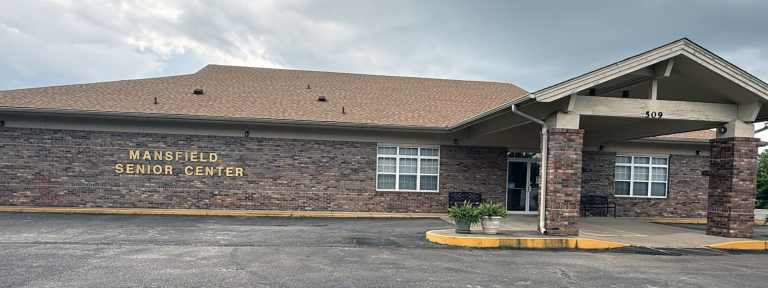
We want to inform you of upcoming changes to the Mansfield Senior Center’s hours of operation and dining room meal schedule. These changes will begin Monday, July 21, 2025.
For Congregants Visiting the Center:
Monday:
- The center will be open for social activities only — enjoy pool, cards, and more.
- No meal will be served in the dining room.
- Tentative hours: 8:00 AM to 12:00 PM (subject to change week-to-week as needed).
Tuesday – Friday:
- The center will operate as usual from 8:00 AM to 2:00 PM.
- Lunch will be served daily at 11:30 AM.
For Home Delivered Meals Participants:
Monday:
- No delivery routes will run on Mondays.
- You will receive a frozen meal on Thursday or Friday of the prior week to cover Monday’s meal.
Tuesday – Friday:
- Delivery routes will run on their regular schedule.
If you have any questions or concerns, please don’t hesitate to reach out to site director, Ashli Black at 479-928-4429.
The Bigger Picture:
Urgent Funding Shortfalls
These adjustments come amid a critical funding shortfall facing all senior centers in the region. Deanna Rice, Executive Director of Region 8 Senior Centers, reports heartbreaking realities—including the first-ever food waitlist for seniors in her 20-year tenure.
“In my 20 years, I have never had to turn someone away because we did not have enough food,” Rice shared.
Cuts include a staggering $34,333 reduction in USDA funding, while staff—already working with limited hours and without benefits—face increasing financial uncertainty. Rising maintenance and fuel costs for programs like Meals on Wheels further compound the crisis.
Legislative support is urgently needed to sustain these programs. Anyone with questions or wishing to help can contact Deanna Rice at 479-648-9970.
Greenwood Senior Center Adjusts Hours Amid Countywide Funding Crisis

Beginning Wednesday, July 16, 2025, the Greenwood Senior Center will implement new operating hours and meal service changes in response to a growing funding crisis affecting senior centers across Sebastian County.
These changes aim to help sustain vital services for congregants and home-delivered meal participants while balancing resource limitations.
Weekly Schedule for On-Site Congregants
Monday–Thursday:
Open: 8:00 a.m. – 2:00 p.m.
Lunch served daily at 11:30 a.m.
Bingo will take place every Thursday at 10:00 a.m.
Friday:
Open for socialization only — activities like pool, cards, and fellowship.
There will be no lunch service.
Tentative hours: 8:00 a.m. – 12:00 p.m., subject to weekly adjustment
Weekly Schedule for Home-Delivered Meals Monday–Thursday:
Normal delivery routes
Friday:
No delivery service
Participants will receive a frozen meal on Thursday to enjoy on Friday
For questions, reach out to Lisa Moore at 479-597-3010.
The Bigger Picture:
Urgent Funding Shortfalls
These adjustments come amid a critical funding shortfall facing all senior centers in the region. Deanna Rice, Executive Director of Region 8 Senior Centers, reports heartbreaking realities—including the first-ever food waitlist for seniors in her 20-year tenure.
“In my 20 years, I have never had to turn someone away because we did not have enough food,” Rice shared.
Cuts include a staggering $34,333 reduction in USDA funding, while staff—already working with limited hours and without benefits—face increasing financial uncertainty. Rising maintenance and fuel costs for programs like Meals on Wheels further compound the crisis.
Legislative support is urgently needed to sustain these programs. Anyone with questions or wishing to help can contact Deanna Rice at 479-648-9970.
Smokin’ summer: Celebrate grilling month with food safety in mind
U of Arkansas System Division of Agriculture
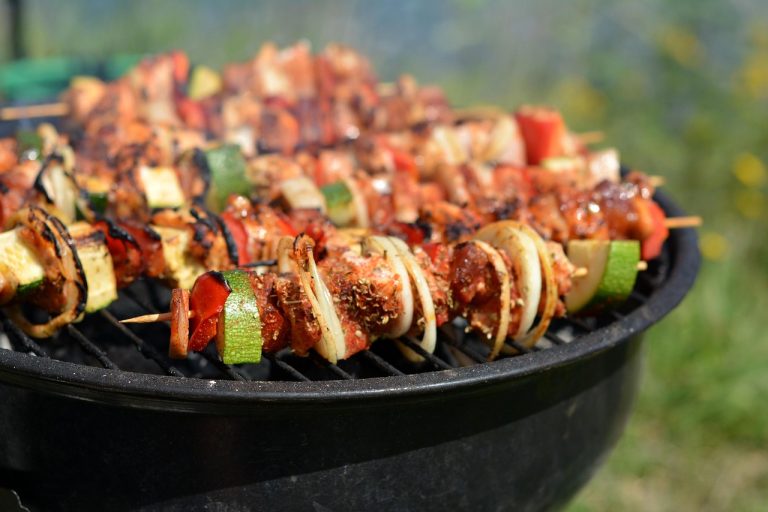
July is National Grilling Month — a perfect time to enjoy the great food and the outdoors and invite friends and family, but not foodborne illness.
Whether you’re grilling at home or transporting food to a cookout, practicing safe food handling is essential from the refrigerator or freezer all the way to the table.
Here are safe grilling tips from the U.S. Food and Drug Administration to help keep your meals both tasty and safe:
- Marinate safely. Always marinate foods in the refrigerator, not on the counter or outdoors. If you plan to use some of the marinade as a sauce, set it aside before adding raw meat, poultry, or seafood. Never reuse marinade that has touched raw food.
- Partial cooking? Be cautious. Partial cooking is only safe if the food goes directly onto a hot grill immediately afterward ideal for times when you’re grilling on your patio.
- Cook to the right temperature. Use a kitchen meat thermometer to ensure that food reaches a safe internal temperature:
- Poultry and ground poultry: 165 degrees Fahrenheit
- Ground meats and hamburgers: 160 degrees Fahrenheit
- Beef, pork, lamb, veal (steaks, chops, roasts): 145 degrees Fahrenheit, with a rest time of at least three minutes.
- Fish: 145 degrees Fahrenheit or until the flesh is opaque and flakes easily with a fork.
- Shrimp, lobster, crab: Cook until flesh is pearly and opaque.
- Keep grilled food hot. Move cooked food to the edge or back of the grill, away from direct heat, to keep it warm without overcooking.
- Clean utensils and surfaces. After food prep, wash all cutting boards, dishes, utensils, and countertops with hot, soapy water to prevent cross-contamination.
- Inspect for bristles. If you use a wire bristle brush to clean the grill, carefully check the grill grates and food to ensure no bristles are left behind.
- Avoid cross-contamination. Wrap raw meat, poultry, and seafood tightly to prevent juices from contaminating other foods, especially ready-to-eat items like fruits and vegetables.
- Stay out of the danger zone. Never leave food sitting in the temperature danger zone — between 40 degrees Fahrenheit and 140 degrees Fahrenheit — for more than two hours, or one hour if the temperature outside is above 90 degrees Fahrenheit. Bacteria multiply quickly in this range, increasing the risk of foodborne illness
Check out these helpful links for more information:
- FDA: Handling Food Safely While Eating Outdoors
- Partnership for Food Safety Education: Food Safety on the Move
To learn about extension programs in Arkansas, contact your local Cooperative Extension Service agent or visit www.uaex.uada.edu. Follow us on X and Instagram at @AR_Extension. To learn more about Division of Agriculture research, visit the Arkansas Agricultural Experiment Station website: https://aaes.uada.edu/. Follow on X at @ArkAgResearch. To learn more about the Division of Agriculture, visit https://uada.edu/. Follow us on X at @AgInArk.