

Arvest Shares Fraud Protection Tips for Summer Travel
With summer travel coming up, Arvest Bank encourages customers to take simple steps to protect their finances and make the most of their vacation.
According to NerdWallet’s 2026 Summer Travel Report, 84% of those surveyed said they plan to use a credit card to pay for vacations this year. With travel volume expected to reach record highs this year, staying alert is key to avoiding financial headaches while away from home.
“Summer travel should be about fun and relaxation, not worrying about card declines or security breaches,” said Lori Winesburg, sales manager of Arvest Bank – Fort Smith/River Valley region. “If you take a little time before your trip to get your accounts ready and learn how to avoid possible risks, you can travel with confidence knowing your finances are safe.”
Winesburg offered these tips for summer vacationers.
Prepare Your Cards and Accounts
Card interruptions often occur due to unexpected out-of-state or international activity. Notify your credit card company or bank if you are traveling abroad, especially if you’re leaving the country. This ensures the bank knows to expect transactions from your destination and is less likely to freeze your card for suspected fraud. If using a credit card while traveling abroad, be sure you’re familiar with any foreign transaction fees you might incur.
Leverage Digital Tools for Security
Your smartphone and other technology can help safeguard your finances when used appropriately.
● Digital wallets. Consider using digital wallets such as Apple Pay or Google Pay, which offer stronger encryption protection than physical cards.
● Tap-to-pay. Use the tap-to-pay feature at gas stations to reduce the risk of card skimming at the pump.
Monitor Accounts
Monitor all your accounts regularly, including those you are not actively using.
● Enable push notifications. Set up real-time alerts for all transactions to catch unauthorized activity the moment it happens.
● Know how to “lock” your card. If a card goes missing, know how to instantly “lock” it to prevent unauthorized use.
● Report fraud immediately. If you experience fraud while on vacation, contact your credit card company or bank as soon as possible to report the fraudulent purchases. You may also want to report any scams or instances of fraud to the Federal Trade Commission (FTC) at reportfraud.ftc.gov.
About Arvest
With more than $27 billion in assets, Arvest is a full-service bank delivering financial solutions to individuals and businesses of all sizes. Since 1961, Arvest has been committed to providing financial solutions that help communities thrive and grow. Today, the bank has more than 200 locations throughout Arkansas, Oklahoma, Kansas and Missouri. Arvest is an Equal Housing Lender and Member FDIC. To learn more, visit arvest.com.

Buddy Poppies Continue Tradition of Honoring America’s Fallen Veterans

Each year, small red flowers known as Buddy Poppies begin appearing across communities nationwide as veterans organizations prepare to honor and support those who have served in the United States Armed Forces.
The Buddy Poppy, recognized as the official memorial flower of the Veterans of Foreign Wars, traces its roots back to World War I and the famous poem “In Flanders Fields,” written by Lieutenant Colonel John McCrae after witnessing poppies growing among soldiers’ graves on the battlefields of Europe.
Since 1922, the VFW has distributed Buddy Poppies as a way to remember fallen service members and raise funds to assist veterans, active-duty military personnel and their families. The flowers are assembled by disabled and needy veterans who are compensated for their work, making the program both symbolic and supportive.
Local VFW posts often distribute Buddy Poppies in the weeks leading up to Memorial Day, with volunteers stationed outside businesses, community events and public gatherings. Donations collected through the program help fund veteran assistance programs, scholarships, youth activities, patriotic education efforts and emergency support for veterans facing hardship.
For many veterans, the Buddy Poppy serves as more than just a flower — it is a reminder of sacrifice, service and the enduring cost of freedom.
“Every poppy represents a life sacrificed for our freedoms,” veterans organizations often emphasize during annual campaigns. “Wearing one shows remembrance and support for those who served.”
The red poppy has become one of the most recognizable symbols of military remembrance across the United States and several allied nations. While often associated with Memorial Day observances, Buddy Poppies are distributed year-round by VFW posts as part of ongoing veteran outreach and education efforts.
Residents are encouraged to support local veterans organizations during Buddy Poppy drives and take time to remember those who made the ultimate sacrifice in service to their country.
“Just Roll with It” Serving up Recipes and Humor

By Sheri Hopkins, Lifestyle Contributor
Hello everyone! I love this weather, I walk outside on my way to work and it’s such a cool crisp morning. Next Friday I am going back to Nashville to my great niece Sophie’s high school graduation. Ya’ll know everytime we go on a road trip I take a notepad so I can write down all the crazy stuff that happens to us on our trips. I was talking to a lady the other day and she has more stuff happen to her than happens to my nephew. I can’t wait for Monday’s so she can come in and tell me what all happened to her. A squirrel in the house, an alarm going off that she didn’t know she had, her cat throwing up everywhere, the gas company shutting her gas off by mistake, it’s always something going on.
I seen her the other day and she said I had a sweater on with this dress but I took it off because I looked just like Ruth Buzzi, I cracked up. I hadn’t thought about Ruth Buzzi in years. If you young folks don’t know who she is Google her, makes me want to buy a hairnet and wear it sideways. She was on Laugh In, Sesame Street, The Carol Burnett Show, Saved By The Bell, Love Boat and Chips. I’m sure there is more but she was hilarious. If you can find reruns of The Carol Burnett Show you young folks really need to watch it, that show could make Eeyore laugh out loud. Harvey Corman and Tim Conway would try to make each other laugh when they were doing their skits. Do any of ya’ll remember Cheers, Seinfeld, Murphy Brown, Golden Girls and I loved Punky Brewster.
They sure don’t make shows like them anymore. If someone followed my big crazy family around, we could have a sitcom. The new Braums in Greenwood has opened, I have been there once. Ya’ll know my nephew, the one that went to Braums in Ft Smith and his debit card was declined because he had went out of state and forgot to give his bank a travel notice, so they blocked his card. I reminded him that if he goes to the new Braums to make sure his card is working so the girl behind the counter won’t yell for everyone to hear “Sir you don’t have any money!!” as loud as she could for the whole store to hear. I haven’t heard if he has been or not.
Ya’ll have a great week and hug your loved ones and tell them how much you love them.
BANANA PUDDING COOKIES
2 1/4 cups all-purpose flour
1 teaspoon baking soda
1 1/2 sticks butter, softened
3/4 cup light brown sugar
1/4 cup granulated sugar
13.4 oz. box of instant banana pudding (dry)
2 large eggs
1 teaspoon vanilla
1 1/4 cup white chocolate chips
Preheat event to 350 degrees. I suggest you line your cookie sheets with parchment paper to keep them from sticking. Whisk together the flour and baking soda. In a separate bowl, cream the butter and sugars until light and fluffy. Beat in the pudding mix, followed by the eggs and vanilla. Add the dry ingredients, stirring until a dough forms. Fold in the white chocolate chips. Form the dough balls about 1″ and place on a cookie sheet and bake for 8-9 minutes until set. Let cool and enjoy. Do not overbake the cookies.
Extension financial expert shares tips to navigate high gas prices

By Rebekah Hall University of Arkansas Division of Agriculture
Arkansas drivers are paying higher gas costs at the pump, and a financial expert with the Cooperative Extension Service says some households may need to adjust their spending habits to accommodate increasing gas prices. According to AAA, the average price of regular unleaded gas in Arkansas was $4.076 per gallon as of May 15. That’s up 44% from a year ago when gas prices averaged $2.818 a gallon.
“Reducing other expenses can allow more income to be used to cover the cost of gas,” said Laura Hendrix, extension associate professor of personal finance and consumer economics for the University of Arkansas Division of Agriculture. “Sometimes it is necessary to adjust a spending plan to allow for uncontrollable changes in expenses. When gas prices return to normal, you can resume your regular spending habits.”
In the meantime, Hendrix shares these tips to help make ends meet:
· Watch your speed. According to the U.S. Environmental Protection Agency, driving 55 mph instead of 65 mph improves gas mileage by 15 percent.
· Avoid aggressive driving. “Eliminating ‘jackrabbit’ starts and stops can help improve gas mileage by 5 percent,” Hendrix said.
· Use cruise control when appropriate. Steady driving uses less fuel.
· Use air conditioning less. “It can help to use air conditioning as little as possible,” Hendrix said. “However, on warm days, running the AC may be more cost-effective than driving with the windows down, which can cause drag and reduce aerodynamics.” The U.S. Department of Energy recommends rolling the windows down at lower speeds and using the AC at highway speeds.
· Remove excess weight. An extra 100 pounds in the trunk can reduce fuel economy by up to 2 percent, according to the Department of Energy. “Excess weight in the luggage
rack on top of the car also creates wind resistance, causing additional reductions in fuel efficiency,” Hendrix said.
Drive smart According to AAA, Arkansas currently ranks among the nation’s 10 least expensive gasoline markets. For many Arkansans, however, higher prices at the pump are causing strains on the wallet, Hendrix added.
Hendrix said it’s important to shop around for the best gas prices near you. Compare gas stations, and remember to check the octane level, which measures fuel stability, if necessary.
“Refer to the owner’s manual for the recommended octane level of gasoline for your car,” Hendrix said. “Don’t buy a more expensive octane level if your car doesn’t need it.”
By planning trips ahead of time, you can also reduce miles by combining errands so that you make stops along a planned route, Hendrix said. To spend less time driving in general, make plans to carpool, walk when possible or ride a bike. Check the availability of public transportation in your area or work remotely from home, if possible.
Be efficient when choosing a vehicle. “If you own more than one vehicle, drive the one that gets the best gas mileage,” Hendrix said. “If you are looking to purchase a new vehicle, consider energy-efficient options such as electric or hybrid.” Visit the extension Personal Finance page to learn more about building financial security, money management and more.
To learn about extension programs in Arkansas, contact your local Cooperative Extension Service agent or visit uaex.uada.edu. Follow us on Facebook and Instagram. To learn more about the Division of Agriculture, visit uada.edu. To learn more about ag and food research in Arkansas, visit the Arkansas Agricultural Experiment Station at aaes.uada.edu.
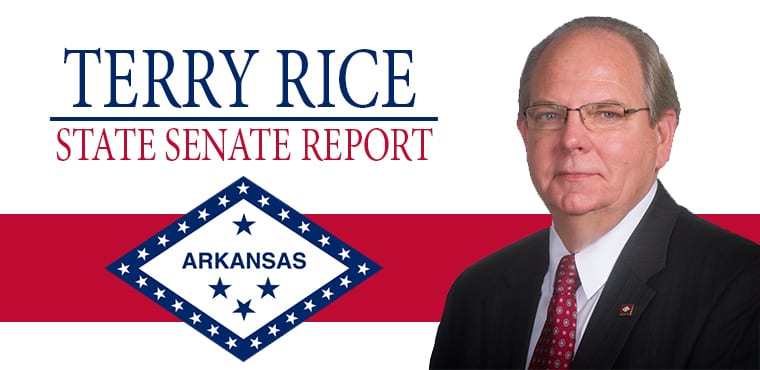
State Capitol Week in Review from Senator Terry Rice
Recently, the state Senate and House Committees on Public Health, Welfare, and Labor met jointly to review major developments affecting rural health care in Arkansas. The Senate committee is chaired by Senator Missy Irvin, with Senator Dave Wallace serving as Vice Chair.
Committee members heard an overview of the Rural Health Transformation Program from the Arkansas Department of Finance and Administration.
On July 4, 2025, President Donald Trump signed H.R. 1 into law, making significant changes to federal spending and tax policy. Some of these changes affect funding for Medicare, Medicaid, and other health coverage programs. Rural health systems, which rely heavily on public insurance programs, will feel these impacts more than urban areas. To help address this, Congress created the Rural Health Transformation Program. It provides $50 billion over five years for states to help soften the impact of federal funding reductions on rural communities.
The new law shifts more responsibility for supporting health care from the federal government to states and local communities. Because of this, it is important for rural leaders to understand their communities’ health needs and work together across regions to make the best use of available resources.
Arkansas will be especially affected by these changes. Nearly 45 percent of Arkansans live in rural areas, where residents often have less access to care, more challenging health outcomes, and more fragile healthcare systems. Half of the state’s rural hospitals are considered at risk of closure, which is the highest rate in the country. This makes it critical to use Arkansas’s Rural Health Transformation funds to strengthen the long-term stability of rural healthcare providers. The program offers a chance to improve rural healthcare infrastructure, expand collaboration, and reduce the gap in access and quality between rural and urban areas.
The state’s Rural Health Plan sets a vision for redesigning rural health care around prevention, connectivity, and sustainability, rather than only keeping facilities open. The plan links healthcare improvements to broader goals such as healthier children, stronger families, a more stable workforce, and stronger local economies. Potential applicants are encouraged to view the program as a multi-year effort to transform operations, not as a one-time grant opportunity.
Funding may be used for projects such as workforce recruitment and training, leadership development, expanding services, redesigning care models, telehealth and health IT upgrades, care coordination, and planning for long-term sustainability.
Funds may not be used to pay off debt, cover operating losses, perform routine maintenance, replace capital equipment, replace existing funding sources, or make one-time purchases that cannot be sustained.
The Rural Health Transformation Program will distribute $50 billion to participating states from 2026 through 2030, with $10 billion available each year. In December 2025, the Centers for Medicare and Medicaid Services announced the first round of awards, including $208,779,396 for Arkansas. Additional awards will be announced in later rounds.
On May 4, Governor Sarah Huckabee Sanders announced the initial funding application process is underway. You can get details at www.ArkansasRHTP.com.