93.8 F
Fort Smith
Saturday, July 11, 2026
Home Blog Page 208

Timepiece: Arkansas Food Riots

By Dr. Curtis Varnell

The date was January 3, 1931 and times were hard across the South.  Months after the stock market collapsed, drought hit the mid-west.  Dust clouds blew the plowed soil into the air creating billows of dark grit in the sky.  Thousands of people packed up and moved from the parched lands of Oklahoma, Kansas, Arkansas, and Texas.  Those remaining faced hard times as the crops that they relied on for food and income produced such meager fare that there was nothing to eat and no money to buy more.

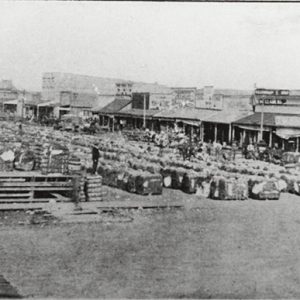
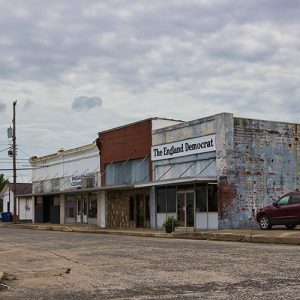
England, Arkansas, a small town located just east of the state capitol in Lonoke County, was destitute.  The cotton crop they depended on had failed, the bank they borrowed money from had collapsed, and the aid they were receiving from the Red Cross was cut-off due to not having the correct paperwork.  

H.C. Coney, a local farmer, described the situation.  “We all gotpretty low on food out there, and some was a starving.  A woman came over to me crying.  Her kids had not eat in two-dayand wanted to know what we were going to do.”  Coney said he got in his truck, picked up neighbors, and began the short trip into town.  More men joined as they approached town, some with weapons.  Most of the men were known as hard-working farmers, blue-collar men who were desperate to feed their families.  The local Red Cross, said to already be feeding over 100,000 starving Arkansan’s had no food to give and lacked the needed paperwork for the men to apply for help from the food bank in St. Louis.

The New York Times reported that 500 or more men, half of whom were armed, stormed the business section of town and demanded food or threatened to take it by force.  Having little choice, local merchants opened the doors to their business and handed out what supplies they had, hoping that the Red Cross or the federal government would repay them for their loss.  The food and supplies were enough to last only a few days but the actions of the disgruntled farmers had far-reaching implications.  Alarmed as well as embarrassed by the national press which characterized the Hoover administration as being “fat cats” enjoying the good life while the population starved, began to look at options to help.  Joe T. Robinson, Arkansas Senator, agreed to supply loans to assist the poor.

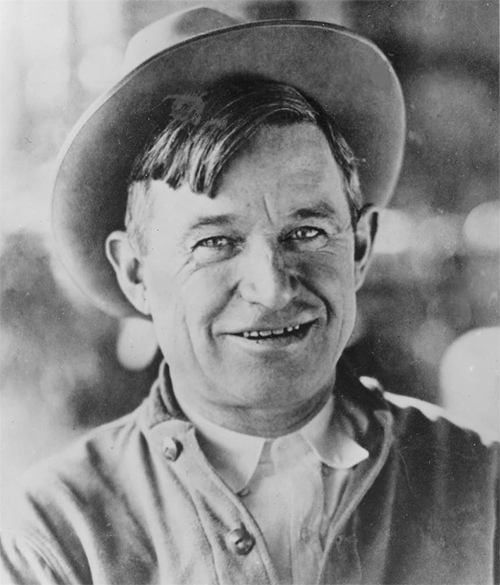
Hearing of the plight, Will Rogers wrote, “It took a little band of 500 simple country people … to demand food for their wives and children to hit the heart of the American people more than all of your Senatorial pleas and government investigations.”  He traveled to Washington to ask Hoover for direct aid to the region.  Turned down, he travelled to England, Pine Bluff, and the region and see the conditions for himself.  He organized a relief program on his own, went on a 19 stop tour, and gave the proceeds to assist farmers.  His national radio pleas raised over $3 million dollars for the poor.  

Rogers, raised poor in a small central Oklahoma town, understood the plight of the poverty stricken and, with his home-spun humor and national popularity, used his celebrity as a platform to attack the wealthy.  “It wasn’t the working class that brought this condition on. It was the big boys themselves who thought that this financial drunk we are going through was going to last forever.  They over-merged and over-Capitalized, and over-everything else.  That’s the fix we are in now.”

The actions of a few hundred hungry farmers is said to be the impetus for the election of FDR and the beginning of the New Deal.  When asked what Arkansas owed for his part in assisting their plight, Rogers replied in his old shucks manner, “Arkansas gave me much more than I gave them when I got Betty.”    Rogers was married to Betty Blake of Rogers, Arkansas in 1908.  The fall after the riot, Arkansas had a bumper crop.  Seeing the plight of the coal miners in central Oklahoma, farmers in the England area, sent 13 truckloads of food to the struggling miners.  Rogers wrote, “Now, that’s remembering, ain’t it?”

Tennis has four named as Players to Watch

University of Arkansas – Fort Smith men’s and women’s tennis placed four on the Lone Star Conference Tennis Preseason Players to Watch List, announced Tuesday by the league office.

Anis Ramchane and Killian Darneaux were the representatives for the men’s program while Petra Csizmadia and Camila Romero were selected for the women.

Ramchane and Darneaux teamed at No. 1 doubles for a Lions squad that won its first Lone Star Conference Tournament match last season. The duo posted a 10-7 overall mark, including 5-3 in conference play.

In singles, Ramchane went 7-11 at No. 1 singles last season and had a pair of regionally ranked wins. Darneaux went 5-13 at No. 4 and picked up a win in the LSC Quarterfinals against Lubbock Christian.

Csizmadia posted a 5-13 mark at No. 2 singles for the Lions last season and is expected to move up to the top flight this year. In doubles, she paired with Isabella Serrano at No. 2 a year ago.

Romero returns to the lineup after missing the 2022-23 season due to injury. In her first two seasons, Romero recorded an 11-18 record at Nos. 5 and 6 singles. She went 7-7 at No. 3 doubles in 2021-22.

Women’s tennis begins the season February 9 at Henderson State while the men start their season Feb. 13 at the University of the Ozarks.

Conference teams face each of their LSC opponents in a single round-robin schedule format starting in mid-March and continuing through the month of April. The men’s and women’s team with the best winning percentage over the conference matches is the LSC champion.

The 2024 LSC Men’s and Women’s Tennis Tournaments will be played concurrently April 25-26-27 at the Arlington (Texas) Tennis Center. Winners of the two tournaments earn the LSC automatic berth to the NCAA Division II Tennis Championships. Regional play in the national tournaments May 10-11 for the women and May 13-14 for the men. National finals are scheduled May 20-25 in Altamonte Springs, Fla., as part of the spring NCAA Division II Championship Festival.

UAFS places 73 on LSC Fall Commissioner’s Honor Roll

The Lone Star Conference announced its Commissioner’s Honor Roll for the fall 2023 semester, with University of Arkansas – Fort Smith having 73 student-athletes honored.

The Commissioner’s Honor Roll is announced at the conclusion of the fall and spring semesters with student-athletes qualifying based on grade point average for the specified semester. To be eligible for the recognition, student-athletes must have a minimum 3.30 grade-point average for the semester and be on the sport roster. Participants on all 19 LSC championship sports, three non-conference sports, and athletic training student staff were included among the fall 2023 honorees.

UAFS had 22 4.0s last fall, as well.

For the full list of UAFS honorees, click here.

Lawsuit Filed Against DHS’ Division of Youth Services and Contract Provider

0

A lawsuit was filed in Saline County, AR on Tuesday, January 23, against the Department of Human Services, Division of Youth Services and contract provider, Rite of Passage.

In the complaint filed in civil court, a minor, “John Doe,” alleges sexual abuse by an ROP employee at the Arkansas Juvenile Assessment and Treatment facility in Alexander, AR. Furthermore, that DHS, juvenile services division, is negligent and liable for the actions of that employee.

Read the full compliant –HERE

Rite of Passage also operates the juvenile treatment center in Mansfield, under contract with DHS, DYS. However, the attorney in this case, Joshua D. Gillispie, verified that the allegations in this case occurred at the Alexander, AR facility.

The office of DYS Director Michael Crump stated that they cannot comment on pending litigation, but “takes seriously the health and well-being of the youth in our custody.”

Lions tie three-point record in wire-to-wire win over Cameron

FORT SMITH, Ark. – University of Arkansas – Fort Smith Women’s Basketball tied the program record for made threes in a game as the Lions defeated Cameron, 79-74, Saturday at Gayle Kaundart Arena at the Stubblefield Center.

The Lions connected on 15-of-28 attempts from distance for a 53.6 percent clip. Guards Baylee Fincher and Riley Hayes each drained five triples while guard Morgan Browning was 4-for-4 from beyond the arc.

After combining for 70 points in Thursday’s win, the aforementioned trio combined for 49 against Cameron. Fincher led the way with 20 points, with 15 coming in the second half. Hayes had 15 points, all from the three-point line, and Browning added 14.

Forward Kayla Brundidge was one rebound shy of a double-double, tallying 12 points, nine boards and three assists.

UAFS never trailed in the game, with Brundidge scoring the first four points of the contest. Cameron quickly tied it up, but a three by Browning gave the Lions a lead they wouldn’t relinquish. UAFS led for a total of 38:42.

The Lions led by as many as 10 late in the first quarter and again early in the second before the Aggies cut the lead down to four at the break.

UAFS started the second half on an 8-0 run, and later had an 11-3 run that pushed the lead to 55-37. The lead grew to as many as 19 in the fourth before the Aggies made a final push.

The Lions led 65-49 with 8:12 left as the Aggies slowly chipped away at the deficit, getting within 78-74 with five seconds left before guard Zyniah Thomas iced the game with a free throw.

Thomas added five points and dished out a team-high five assists.

The 53.6 percent from beyond the arc and 51.8 percent from the floor were both season-highs for the Lions. UAFS had a season-low 13 turnovers and had a 20-11 edge in points off turnovers.

UAFS remains at home next week to face the top two teams in the Lone Star Conference, starting with UT Tyler on Thursday at 5:30 p.m.

Campbell, Frederick tally season-highs against Cameron

FORT SMITH, Ark. – Guard Kobe Campbell tied his career-high with 19 points as University of Arkansas – Fort Smith Men’s Basketball fell to visiting Cameron Saturday, 86-68, at Gayle Kaundart Arena at the Stubblefield Center.

Campbell finished 8-for-12 from the floor while also pulling down a team-high seven rebounds. Guard Tyler Frederick scored a season-high as well, tallying 15 points on 5-of-8 shooting and 3-for-3 from beyond the arc.

Cameron scored the first six points of the game, but the Lions roared right back with six straight points of their own. UAFS then took a 13-10 lead following a layup by Campbell.

The Aggies later regained the lead, then used a 16-7 run to end the half to lead 43-27 at halftime.

Cameron extended the lead to 58-37, but the Lions continued to fight, using a 13-2 run over four minutes to cut the lead to 10. But the Aggies responded with a 12-3 run to put the game out of reach with just over five minutes to go.

Guard Payton Brown added 16 points off the bench, while forward Furaha Cadeaux de Dieu recorded seven points and six rebounds.

Both teams shot 46 percent from the floor.

After committing just six turnovers Thursday, the Lions committed 20 turnovers against the Aggies, leading to a 23-13 edge in points off turnovers for Cameron.

UAFS will look to bounce back Thursday at 7:30 p.m.against UT Tyler at the Stubblefield Center.

Arrest Reports 1/21

Arresting agency – Hackett Police Department:
Kenneth Wayne Basinger of Hackett was booked into the Sebastian County Detention Center on January 25 at 2:32 p.m. and remains at the SCADC without bond. Basinger was charged with fugitive from justice – out of state.

Arresting agency – Sebastian County Sheriff’s Office:
Jim Samuel Bias of Lavaca was booked into the Sebastian County Detention Center on January 26 at 11:12 a.m. and remains at the SCADC. Bias was charged with drug court sanctions.

Kevin Daniel Christian of Charleston was booked into the Sebastian County Detention Center on January 26 at 3:10 p.m. and remains at the SCADC with bond. Christian was charged with Failure to Appear – Class B Misdemeanor, and Petition to Revoke – Felony.

Joshua Kane Deases of Hartford was booked into the Sebastian County Detention Center on January 25 at 9:49 a.m. and released on cash bond January 25 at 2:08 p.m. Deases was charged with Contempt of Court–(child support), FTAS, FTRespond Subpoena, FTComply WCO.

Jason Lee Hicks of Huntington was booked into the Sebastian County Detention Center on January 24 at 4:33 p.m. and released on legally sufficient bond January 27 at 1:24 p.m. Hicks was charged with Possession Drug Paraphernalia – Felony, and Possession of Controlled Substance – Schedule I/II Felony <2g.

Tiffany Lacinda Hill of Charleston was booked into the Sebastian County Detention Center on January 26 at 3:24 p.m. and released on cash bond January 27 at 8:01 a.m. Hill was charged with Overdraft/Violation Of The Arkansas Hot Check Law Misdemeanor.

Tyler James Jachera of Huntington was booked into the Sebastian County Detention Center on January 26 at 3:54 a.m. and remains at the SCADC with bond. Jachera was charged with Possession of Drug Paraphernalia C Felony, and Petition to Revoke – Felony.

Soni Rae Jackson of Hackett was booked into the Sebastian County Detention Center on January 27 at 4 a.m. and released on legally sufficient bond January 27 at 1:14 p.m. Jackson was charged with Driving While Intoxicated 1st Offense.

Jo Beth Kossman of Huntington was booked into the Sebastian County Detention Center on January 26 at 4:39 a.m. and remains at the SCADC with cash bond. Kossman was charged with Failure to Appear – Class B Misdemeanor.

Derrick J Lawson of Booneville was booked into the Sebastian County Detention Center on January 23 at 10:31 a.m. and remains at the SCADC without bond. Lawson was charged with two counts of Failure to Appear – Class C Felony, Return To Testify, and Assist Outside Agency-Felony.

Spirit Rose McMurray of Waldron was booked into the Sebastian County Detention Center on January 24 at 9:17 p.m. and remains at the SCADC with cash bond. McMurray was charged with Failure to Appear – Class C Felony.

Billy Spann of Charleston was booked into the Sebastian County Detention Center on January 24 at 9:50 p.m. and released on legally sufficient bond January 24 at 11:54 p.m. Spann was charged with Assault On Family Or Household Member-3rd Degree.

Arresting agency – Fort Smith Police Department:
Jimmy Jay Bridges Junior of Greenwood was booked into the Sebastian County Detention Center on January 26 at 5:22 p.m. and released on legally sufficient bond January 26 at 8:11 p.m. Bridges was charged with contempt – willful disobedience (failure to pay fine)

Dakota H Sims of Waldron was booked into the Sebastian County Detention Center on January 27 at 3:57 a.m. and released on legally sufficient bond January 27 at 8:41 a.m. Sims was charged with Careless Driving – Failure to Maintain Control, Refusal To Submit To a Chemical Test-adult, and Driving While Intoxicated 1st Offense.

Arresting agency – Greenwood Police Department:
Duane C Carter of Van Buren was booked into the Sebastian County Detention Center on January 24 at 3:36 p.m. and released on legally sufficient bond January 24 at 10:37 p.m. Carter was charged with Driving when vehicle License or Registration Suspended or Revoked and Driving While Intoxicated 2nd offense.

Andrea Soledad Quinones of Prairie Grove was booked into the Sebastian County Detention Center on January 22 at 12:42 a.m. and remains at the SCADC with legally sufficient bond. Quinones was charged with Improper Lane Change/Usage/Left of Center Driving While License Cancelled/Suspended/Revoked, and Possession Drug Paraphernalia – Felony.

Arresting agency – Barling Police Department:
Amanda Faye Griffin of Lavaca was booked into the Sebastian County Detention Center on January 23 at 10:31 p.m. and released on legally sufficient bond January 24 at 2:28 a.m. Griffin was charged with Driving While Intoxicated 1st Offense.

Arresting agency – Logan County Sheriff’s Office:
Nathan Ross, 32 of Paris, was booked into the Logan County Detention Center on January 22 at 3:01 p.m. Ross was charged with possession of methamphetamine or cocaine with the purpose to deliver, simultaneous possession of drugs and firearms, proximity to certain facilities enhancement, controlled substances – offenses relating to records, maintain premises, etc. possession of a schedule VI-controlled substance with the purpose to deliver, three counts of endangering the welfare of a minor in the second degree, and three counts of possession of drug paraphernalia.

Nicholas Spicer, 42 of Lavaca, was booked into the Logan County Detention Center on January 22 at 9:35 p.m. Spicer was charged with probation violation.

Christopher Rongey, 50 of Booneville, was booked into the Logan County Detention Center on January 23 at 4:17 p.m. Rongey was charged with failure to appear.

Adam Swafford, 50 of Booneville, was booked into the Logan County Detention Center on January 25 at 12:38 a.m. Swafford was charged with non-support greater than $25,000.

Frank Case, 39 of Ozark, was booked into the Logan County Detention Center on January 25 at 5:13 p.m. Case was charged with driving while intoxicated – DWI 4th, failure to appear – felony, and violation of probation/suspended imposition of sentence.

Dalton Martin, 30 of Magazine, was booked into the Logan County Detention Center on January 25 at 8:22 p.m. Martin was charged with possession of schedule I or II controlled substance with purpose to deliver, and possession of drug paraphernalia.

Bobby White, 45 of Booneville, was booked into the Logan County Detention Center on January 25 at 9:13 p.m. White was charged with sentenced to days in jail.

Hailen Midwell, 38 of Delaware, was booked into the Logan County Detention Center on January 26 at 12:28 a.m. Midwell was charged with failure to appear.

Cameron Claybaugh, 38 of Van Buren, was booked into the Logan County Detention Center on January 26 at 11:59 a.m. Claybaugh was charged with hold for U.S. Marshal.

Andrew Brewer, 33 of Subiaco, was booked into the Logan County Detention Center on January 26 at 4:25 p.m. Brewer was charged with failure to pay.

Shady Downs, 22 of Booneville, was booked into the Logan County Detention Center on January 26 at 4:42 p.m. Downs was charged with hold for drug court.

Oliver Frith, 33, was booked into the Logan County Detention Center on January 26 at 10:29 p.m. Frith was charged with failure to pay.

Tyler Kintsel, 23 of Magazine, was booked into the Logan County Detention Center on January 27 at 1:17 a.m. Kintsel was charged with contempt of court for failure to pay fines FTP.

Blaine Duvall, 26 of Paris, was booked into the Logan County Detention Center on January 27 at 4:22 p.m. Duvall was charged with three counts of failure to appear – felony, and two counts of bond revocation.

Arresting agency – Franklin County Sheriff’s Office:
Akiles R Pena, 31 of Ozark, was booked into the Franklin County Detention Center on January 27 at 1:11 a.m. Pena was charged with driving while intoxicated – DWI 1st.

Jimmy D Barnett, 81 of Altus, was booked into the Franklin County Detention Center on January 26 at 11:16 p.m. Barnett was charged with driving while intoxicated – DWI 1st, and driving left of center.

Amos Breedlove, 43, was booked into the Franklin County Detention Center on January 26 at 8:51 a.m. Breedlove was charged with homicide – attempted murder 1st, reckless driving, fleeing by vehicle, speeding, resisting arrest, burglary – residential, theft of vehicle valued at $25,000 or more, theft of property/motor vehicle theft, assault 3rd degree/creates apprehension of imminent injury, criminal mischief – 1st degree/property of another value $1,000 or more, and disorderly conduct.

Joshua Oliver Snook, 38 of Ozark, was booked into the Franklin County Detention Center on January 24 at 5:28 p.m. Snook was charged with failure to register vehicle more than 60 days, driving while intoxicated – DWI 1st, and sentenced to days.

Rhonda A Byers, 50 of Ozark, was booked into the Franklin County Detention Center on January 24 at 10:11 a.m. Byers was charged with two counts of sentenced to days.

Marty Lee Keck, 65 of Altus, was booked into the Franklin County Detention Center on January 23 at 8:14 a.m. Keck was charged with sentenced to days.

Howie D Durning, 57 of Ozark, was booked into the Franklin County Detention Center on January 21 at 9:02 p.m. Durning was charged with driving while license suspended, open container containing alcohol in moto vehicle, and sentenced to days.

Jake Shaffer, 32 of Ozark, was booked into the Franklin County Detention Center on January 21 at 2:36 p.m. Shaffer was charged with public intoxication, fleeing on foot, refusal to submit to arrest, assault on family or household member – 3rd degree/apprehension of imminent danger, Endangering the welfare of minor – 3rd degree, recklessly risks physical/mental harm, and violation of no contact orders.

**The charges against those arrested are allegations and the cases are still pending in the courts.**


Homemade Kids Chest Rub

My kids just recovered from the flu, and by just recovered I mean it’s been a few days, but I have no idea how many. All the days sort of blur together and I don’t know what day of the week it is anymore. That makes it interesting when it comes to singing days of the week because we homeschool and try to pinpoint what day it is. 

I do know it’s January still. January is a whole year in itself, and the rest of the year flies by. January takes up 216 out of the 366 days of the year. 

That was a whole monologue. I don’t usually do that much, but you get the idea. Lot of sickness, January bad too many days. It’s probably your life too, and if not, count your blessings.

Rabbit trail.

Okay, now I’ll find my point again. Nothing was helping the kids’ coughs, except Vicks which we only had a tiny bit of. Then I remembered a family friend made us some homemade Vicks when my oldest was a baby, so I went on a hunt for a recipe.

If you have essential oils you should be set to fix this up! (EO stands for Essential Oil)

Ingredients 

-1/8 cup coconut oil

-4 drops tea tree EO

-2 drops thyme EO

-2 drops lavender EO

-2 drops Frankincense EO

-2 drops lemon EO

Directions

Melt coconut oil in a small pan (I melted mine right in my jar by setting the jar with the coconut oil in the boiling water)

Heat until just melted, remove from stove.

Allow to cool for 5 minutes, you want it to be liquid but less hot to preserve the oils potency.

Add essential oils and stir well.

Store in a cool place for up to a year.

To use rub on chest, back, or feet to aid in cough and congestion relief.

Magazine Schools Participating in Operation Paperback Program to Support Military Members

By Jonathan W. Gipson
Magazine Schools Media Relations

MAGAZINE – Magazine Schools proudly supports its military families, and as the first Purple Star Designated School in Logan County, it has committed to serving its students and families connected to our nation’s armed forces.

Magazine Schools recently announced its participation in the Operation Paperback program. Operation Paperback is a national, non-profit organization, whose volunteers collect gently-used books and send them to American troops overseas, as well as veterans and military families here at home. Since 1999, it has shipped over 2.9 million books to countries all over the world.

Operation Paperback provides books to wounded warrior programs and veterans hospitals located within the United States, as well as USO centers at US Airport transit points. 

In addition, past projects include providing books from military Professional Reading Lists to support servicemember professional development goals, supporting chaplains as they counsel troops, both before redeployment and after reunification, with a variety of specifically requested titles, supplying books for the annual book giveaway at NSA Souda Bay in Crete, Greece for service members and their families and supplying children’s books to deployed soldiers who read to their children via webcam or on DVDs.

“As part of this project, we will be able to send books directly to our American troops deployed overseas and to veterans and VA hospitals within the United States,” Magazine Schools District Administrator for Federal Programs and Curriculum and Military Family Liaison Karen Gipson said.

The most popular genres requested are bestsellers, action and spy novels, murder mysteries, fantasy and science fiction. There are also many requests for business and investing books, classics, history (especially military history) and current event-oriented non-fiction.

If you are interested in joining Magazine Schools in this project by donating new or gently used books, please drop off your donation at the Magazine Schools Administration Building located at 485 East Priddy Street in Magazine or if you would like to arrange pick up, please contact Gipson at karen.gipson@magazinek12.com or 1-866-900-2001.

Congress mulls bills meant to help ranchers defend calves from vultures

By Mary Hightower
U of Arkansas System Division of Agriculture

Congress is mulling a pair of bills aimed at helping livestock producers protect their calves, kids and lambs from predatory vultures.

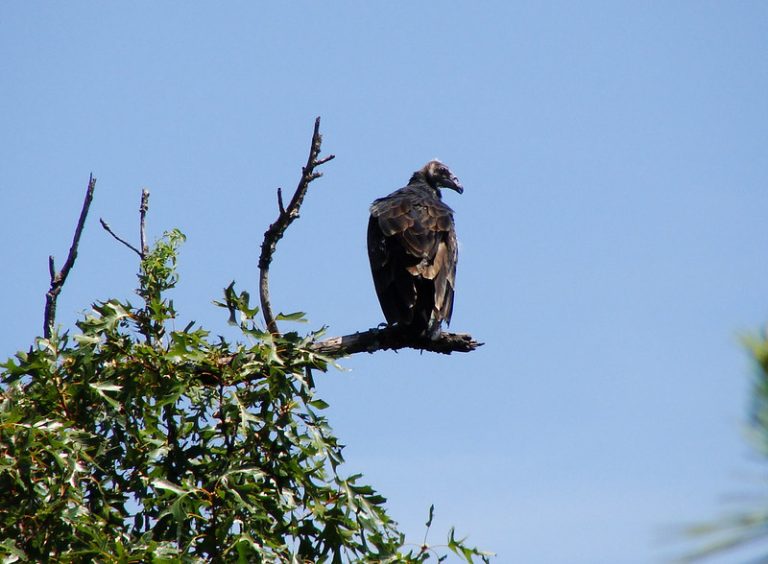
The bills, one in the U.S. House and the other in the Senate, target Coragyps atratus, the black vulture, a bird protected under the Migratory Bird Treaty Act of 1918. The law enacts treaties between the United States and Canada, in 1916; Mexico in 1936, Japan in 1972, and Russia in 1976. The law prohibits the “take” — killing, capturing, selling, trading, and transport — of protected migratory bird species without prior authorization by the Department of Interior U.S. Fish and Wildlife Service.

Black vultures are the subject of two bills filed in Congress.

Vultures are known to be carrion-eaters, cleaning up roadkill or other carcasses. However, black vultures also hunt. Among its targets are newborn cattle, goats and sheep.

The species is found in North and South America and is listed by the International Union for Conservation of Nature as a species of “least concern.” While estimates suggest that black vultures are responsible for the loss of thousands of calves every year, as a protected species, the bird may not be killed without a permit.

Because of the complexities of the treaties, obtaining a permit is not a simple process and permits are limited. Arkansas producers, permits are available through an agreement with the Arkansas Farm Bureau. What once required a minimum of two or three weeks has been reduced to a couple of days.

The aim of the bills, HR1437 and S3358, both named the Black Vulture Relief Act of 2023, is to allow livestock producers to “take” black vultures without a permit so long as the take is necessary to protect livestock, said Brigit Rollins, staff attorney for the National Agricultural Law Center.

In November, Sen. Markwayne Mullin of Oklahoma introduced the Black Vulture Relief Act which would allow livestock producers to take black vultures without a permit so long as the take is necessary to protect livestock. A similar bill was introduced in the House last March by Rep. John Rose of Tennessee.

“It’s an issue that’s been gaining prominence over the last few years, so the fact that a bill has been introduced in Congress specifically addressing it speaks to how quickly this issue has risen in importance,” Rollins said.  

Cattle losses

Dana Martin Stewart of Martin Cattle Company in Judsonia has lost calves to vultures through the years. 

“It is extremely frustrating to see our calves hunted by vultures and to have very little recourse,” she said. “We spend a lot of extra time during calving season checking pastures, making sure they are up and able to nurse before the vultures get to them first.

“Losing a calf because of vultures is not only an economic loss, but also a loss of genetics that have been years in the making,” Stewart said.

In the fall of 2023, representatives from the National Cattlemen’s Beef Association and the United States Cattlemen’s Association testified to Congress about the costs of vulture predation.

“They were reporting that the number of producers affected by black vultures could range anywhere from 15 percent per state to as high as 33 percent of producers in heavily impacted areas such as Florida,” said Maggie Justice, extension beef production specialist for the University of Arkansas System Division of Agriculture.

The U.S. Department of Agriculture’s Wildlife Services reported “that black vulture attacks on cattle increased by almost 25 percent between 2020 to 2022, based on the cases in which they were called to assist,” Justice said.

“Oftentimes the vultures are going after calves as they are being born and the loss of a newborn calf can cost a producer on average, $2,000 or higher,” Justice said. “And that number only increases if the dam is harmed at this time as well.”

Quantifying attacks is difficult. Cows often calve out of sight of humans and humans often don’t catch the birds in the act of killing livestock.

“Some livestock producers might assume the loss was to a coyote. Other times it could be a stillborn calf,” said Becky McPeake, extension wildlife specialist for the University of Arkansas System Division of Agriculture. “By the time the producer arrives, they might see the vultures cleaning up the carcass, not knowing whether the birds caused the death or not.”

Vulture behavior

There are two vulture species in Arkansas. Turkey vultures are characterized by their red heads, and black vultures, with black heads. Both are year-round residents.

“Turkey vultures typically are solitary and seek carcasses by smell and sight. As a single bird, they are not known to take live animals and are relatively unaggressive,” McPeake said. “Black vultures are aggressive, as they work in groups and attack vulnerable animals. Black vultures are also known to follow a turkey vulture and rob them of their carcass.”

McPeake said that “some attribute climate change to their spread from their southern range into the U.S. As they have spread northward, more producers have been impacted.”

USDA, in its publication “Vultures,” also suggests that a ban on the pesticide DDT in 1972 may have also helped vulture populations.

“Also, vultures have benefited from fragmentation of the landscape by humans, which creates mosaics of forested and open areas for roosting, nesting and foraging,” the USDA publication states. “Vultures have clearly adapted and thrived in the presence of human activity.”  

Helping ranchers

Justice said if a producer does not have a permit, there are some ways to help protect their herd:

  • Making sure that cattle calve in areas near human activity. “This will not only help in case of emergencies during calving but can also help to keep an eye out for vultures taking an interest in your group.”
  • Scare off black vultures with loud noises so they won’t return to your pasture.
  • Find and change whatever is attracting the vultures to a pasture before they become established.
  • Consider adding guard animals to the herd such as guardian dogs or donkeys.

“The biggest piece of advice would be that as soon as you see a black vulture near your property reach out to your Wildlife Service and your county extension agent for assistance looking into the correct depredation permits, as well as reimbursement for animal losses through the Livestock Indemnity Program,” Justice said.

The Cooperative Extension Service has additional information on black vultures.

To learn about extension programs in Arkansas, contact your local Cooperative Extension Service agent or visit www.uaex.uada.edu. Follow us on X and Instagram at @AR_Extension. To learn more about Division of Agriculture research, visit the Arkansas Agricultural Experiment Station website: https://aaes.uada.edu. Follow on X at @ArkAgResearch. To learn more about the Division of Agriculture, visit https://uada.edu/. Follow us on X at @AgInArk.

About the Division of Agriculture

The University of Arkansas System Division of Agriculture’s mission is to strengthen agriculture, communities, and families by connecting trusted research to the adoption of best practices. Through the Agricultural Experiment Station and the Cooperative Extension Service, the Division of Agriculture conducts research and extension work within the nation’s historic land grant education system.

The Division of Agriculture is one of 20 entities within the University of Arkansas System. It has offices in all 75 counties in Arkansas and faculty on five system campuses.

The University of Arkansas System Division of Agriculture offers all its Extension and Research programs and services without regard to race, color, sex, gender identity, sexual orientation, national origin, religion, age, disability, marital or veteran status, genetic information, or any other legally protected status, and is an Affirmative Action/Equal Opportunity Employer.