

76.2 F
Fort Smith
Wednesday, June 24, 2026
Home Blog Page 322

Division of Arkansas Heritage awards Small Museum Grants

(LITTLE ROCK) – The Arkansas Department of Parks, Heritage and Tourism today announced $21,930 in grants for nine historic properties and museums across the state. Funded by the 1/8th-cent conservation tax, the awards help small history museums, historical societies, historic houses and sites, and military museums promote education, awareness and enjoyment of Arkansas history. 

The Small Museum Grants Program aims to increase the ability of community-based small museums and organizations to research, preserve, present and conserve Arkansas history. 

Award recipients are:

• City of Fairfield Bay, for museum operating expenses, $2,500

• Clinton House Museum, CHM Operating Grant, $2,500

• Fort Smith Heritage Foundation, for lawn and grounds maintenance, $2,500

• Greene County Historical and Genealogical Society, for publishing materials, microfilm and air purifier, $2,500

• Helena Museum of Phillips County, to cover utilities, $2,500

• Howard County Historical Society, for operating expenses and utilities, $2,500

• Logan County Museum Association, for county museum collection management project, $2,500

• Old Independence Regional Museum, for museum utilities and scanner, $2,500

• Pope County Historical Foundation, clothing and hat preservation project, $1,930

Eligible organizations must have an annual operating budget of $250,000 or less; must have a staff of at least one person, either paid or volunteer; and must be open to the public at least 90 days per year. Eligible activities include buildings and grounds maintenance, operating costs, equipment purchases up to $1,000, accessioning of artifact collections, educational programming, research, exhibits, and web site design and maintenance. The maximum grant award is $2,500. 

To learn more about the application process, visit https://www.arkansasheritage.com/available-grants/division-of-arkansas-heritage-grants/small-museum-grants-program . The deadline for the next cycle of grant applications is April 20, 2023. Awards are granted twice per year. 

For more information about the Small Museum Grants Program, please contact Debra Fithen, grants manager for Arkansas Heritage, at 501-324-9150 or debra.fithen@arkansas.gov .​

Arkansas Heritage

Arkansas Heritage was created in 1975 and is a division of the Arkansas Department of Parks, Heritage and Tourism. There are eight agencies with unique heritage focuses under the umbrella of this division: Arkansas Arts Council, Arkansas Historic Preservation Program, the Delta Cultural Center in Helena, the Old State House Museum, the Arkansas Natural Heritage Commission, the Mosaic Templars Cultural Center, the Historic Arkansas Museum and the Arkansas State Archives. 

Arkansas Department of Parks, Heritage and Tourism

The Arkansas Department of Parks, Heritage and Tourism protects and promotes our state’s natural, cultural and historic assets, contributing to a thriving economy and high quality of life. It is made up of three divisions: Arkansas State Parks, Arkansas Heritage and Arkansas Tourism. Mike Mills serves as the cabinet secretary for the department.


Allison Extends Volleyball Career at Henderson State

Mansfield Senior, Natalie Allison signs her letter of intent to continue her volleyball career to the collegiate level at Henderson State University in Arkadelphia.

Allison, a standout high school athlete, assisted the Mansfield Lady Tigers with a three-peat of State Volleyball Championships in 2020, 2021, and 2022, a Softball State Runner-Up in 2021, as well as Conference and District Regional Champs in Softball and Basketball, and 2022 District Golf Champs.

Accompanying her team accomplishments, Allison’s presence on the court, and field has garnered personal accolades which include All Conference, All District, All State Volleyball, 2021-2022 Volleyball Player of the Year, 2021 State MVP, All Star West, 2021-2022 All Tournament Team, and 2021 & 2022 Captain.

Taking her leadership qualities, and outgoing personality into college, Allison plans to focus her academic career in Health and Physical Education.

“First, I would like to thank God for this opportunity. I would like to thank all of my teammates and coaches for giving me the chance to play with them and helping me succeed. I also want to thank my parents for the countless hours on the road for camps and tournaments and their continued support. I wouldn’t be where I am without the people around me who have always supported me through all of the highs and lows of my volleyball career. It’s been an honor to be a Tiger. Go Reddies!!”Natalie Allison

Natalie-Allison-Mansfield-Volleyball-Henderson State-University
Mansfield Senior, Natalie Allison

The Most Common Animals Used in Farming Today

Unfortunately, many US farms have seen declines in the populations of certain types of livestock. Bouts of bird flu have exacerbated the issue, leading to fewer chickens and eggs, which drives up costs for consumers. Everything from beef cattle to pork has seen its relative value increase as demand continues to outpace supply.

If you want to protect yourself against potential shortages or make some extra money, you should consider raising some of the most common animals used in farming today.

Chickens

Chickens are one of the most popular animal choices for farmers because they’re easy to start with and provide quick returns on your investment. Chicken meat and eggs are highly nutritious and offer high yields for relatively low costs.

You’ll need a good shelter for your chickens if you decide to go this route. A sturdy chicken coop will protect your chickens from predators, the elements, and even thieves. This coop also gives chickens a comfortable place to lay their eggs without stress. Consider implementing a few routine chicken coop maintenance tips to improve your setup.

Pigs

Pigs are another commonly farmed animal that farmers can raise for multiple sources of income. They have the highest potential for meat production, and you can sell their waste for fertilizer. Pork is considered a lean meat and contains a high amount of protein.

When raising pigs, it’s crucial to remember that they carry diseases that can be dangerous to humans and other animal populations. Limiting their interactions with other livestock and scheduling regular vaccinations is a must for your community’s health and safety.

Cows

Cows are everywhere across the United States, and farmers use them to produce quite a few animal products. They produce dairy products such as milk, cheese, and butter. They’re also commonly used for meat, with their hides processed into leather for manufactured goods.

Your cattle have essential needs that you need to account for, such as food, water, and shelter. They need a pasture to roam free in and quality food for their health. Cows may require milking and assistance with birthing, and farmers will need to manage the genetic makeup of their herds with care.

Improve Your Farming With the Right Animals

There’s a wide variety of livestock to choose from if you’re starting or expanding your farm. Knowing a few best practices when caring for the most common animals used in farming today will allow you to make the most of available resources.

There’s no telling what the future has in store, but with a few basic farming practices, you’ll have all the foodstuffs you need for selling or personal consumption.

Timepiece: Plant Invasion

As the ice and snow began to disappear, green stalks began to poke sharp points through the soil, soon to be followed by the beautiful yellow daffodil blooms that signal spring.  The flower appears in the most unlikely places, its blossoms found everywhere across the state.  Wondering in the depths of the National Forest, one can discover patches decorating the ground, usually accompanied by trees that have blossomed into cluster of sweet smelling blossoms.  Searching the area, one usually locates the tumbled-down fences, old foundation stones, and sometimes, old cans and bottles left from old homesteads, long ago deserted and forgotten.  As plentiful as the daffodil and even the flowering trees appear to be, they are all the product of settlers who brought a piece of their homeland along with them.  The daffodil, often called the Easter flower in Arkansas, originated in Spain.  Early Roman apothecaries thought the stalk and bulbs had medicinal value so they carried cured specimen along with them as the Roman legions conquered the known world.  Planting them at various sites, the hardy flower soon became favorites in gardens throughout Europe and were eventually brought to America.  They are celebrated yearly with daffodil festivals in Camden and at old Fort Washington.

Twenty-three percent of all the plants found in Arkansas are non-native, transported in from virtually every country in the world.  Even in the midst of dense forest land, three per-cent of the plants you see were not here when the first pioneers arrived.

None of the common fruit trees existed in America but arrived on our shores in much the same way as the daffodil.  All of us remember the stories of Johnny Appleseed and how he propagated the growth of America’s favorite fruit.  Not all plants brought to America are as enjoyable.  Kudzu, brought to the U.S. from Japan over a hundred years ago, has become a nuisance and covers thousands of acres of land in Arkansas.  Many homes now grow the Bradford pear.  The tree grows fast and has beautiful blossoms in the spring but, it grows so fast that its limbs and branches break off in high winds and ice storms.  Our street and road crews probably hate the thought of them after our recent winter weather. 

Mimosas dot our yard at home and have been around all my life but were brought here from Japan and Iran in 1745 to be planted as yard ornamentation.  They produce so many seed and grow so well in a variety of climates, we find them everywhere. 

Nothing is more Arkansas than the flowering honeysuckle.  We used to pull the center out of the flower and extract the juice in the center of the flower while enjoying its sweet, sticky smell.  Its flowers and vines are found growing up trees, over fences, and climbing the sides of abandoned buildings all over the state.  Again, non-native, brought in here from Japan over a century ago.

Around most old home sites you find privet.  People use to plant the bush to block off their yards. Left untended, the stuff propagates rapidly into tangled scraggly bushes that take over the land.  I have discovered they are virtually impossible to get rid of and, every time I try, I have to attend church to get forgiveness for the unkind thoughts going through my head.

Many of the plants and animals in America arrived here as a part of the collective history and memories of our homeland.  Some were brought accidently or as a part of a scientific endeavor that has gone awry. For whatever reason, as we drive through our neighborhoods or wander the paths of our forests, they are a part of life today.

Associations Burn Through Burden of Habitat Management

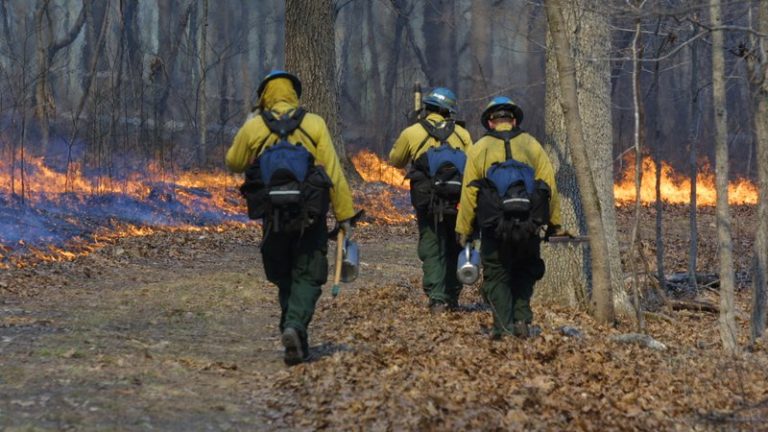
Last year, the Arkansas Game and Fish Commission helped improve habitat on 57,221 acres through the use of prescribed fire with only 81 available days when conditions were right to burn. Thanks to new prescribed burn associations forming throughout The Natural State, the AGFC is putting the tools in place to eclipse that amazing tally.

But wildlife populations don’t just exist on managed public land.

According to AGFC Director Austin Booth the habitat quality on private land has even more impact on wildlife populations on a landscape level in Arkansas.

“Only about 10 percent of Arkansas is public land,” Booth said. “If we created picture-perfect habitat on all of that as an agency, we’re still missing 90 percent of the state. That is why we have doubled down on private land habitat with the establishment of a Private Land Habitat Division to focus on this need.”

Old Wisdom, New Lesson
Ted Zawislak, North Arkansas Private Lands Supervisor for the AGFC, says prescribed burn associations are one of many new tools the agency is using to empower landowners who want to improve wildlife habitat on their land. Each group is established through a regional private land biologist and is structured with a president, vice president, secretary, treasurer and board members. Once established, the PBA receives fire training and can apply for a burn trailer and equipment provided in partnership by the AGFC, Quail Forever, Arkansas Forestry Division of the Arkansas Department of Agriculture and United States Fish and Wildlife Service.

On the surface, prescribed burn associations seem like a new take on the wisdom of community-based work seen in Amish barn-raisings. The adage “Many hands make light work,” comes up a bit short of the benefits you find in PBAs.

“PBAs don’t just share the workload labor-wise,” Zawislak said. “They share knowledge, experience and even tools in addition to muscle power. Everyone in the PBA sees the benefits of prescribed burns in a less intimidating, more effective effort.”

Catching Fire
Prescribed burn associations have proven successful in many states surrounding Arkansas. According to John Weir, research associate at Oklahoma State University’s Department of Natural Resource Ecology and Management, there are roughly 113 PBAs spread across 19 states conducting prescribed burns on private and public land. Those numbers grow each year.

According to Zawislak, AGFC biologists contacted Weir to get info on expanding these programs to Arkansas. Oklahoma’s associations have been at work for nearly a decade. From 2015 to 2020, they performed 591 operations and improved 133,587 acres of wildlife habitat with prescribed burns.

“We didn’t want to reinvent the wheel,” Zawislak said. “Oklahoma has a healthy PBA network with several groups participating in their state. Weir’s advice shortened the learning curve for us tremendously, as did the input from many of our established partners here in Arkansas.”

Laurie Gaines, current president of the Central Arkansas PBA, the first one established in Arkansas, has gone from intimidation to implementation of fire in less than a year thanks to the knowledge and help of the group. She credits Maia Larson, previous president of the PBA, with getting things off the ground and running.

“I’ve gone from, ‘Oh my gosh, can I burn this ditch full of leaves without panicking?’ to being able to create fire lanes and coordinate a team of volunteers to make larger prescribed burns happen.”

Sparked Interest
Gaines initially learned about prescribed fire through a chance meeting with Morgan Meador, a Farm Bill biologist with Quail Forever.

“Once I learned how fire has been used for centuries to manage habitat, and I realized it was something I wanted to do with my land,” Gaines said. “I took the ‘Learn To Burn’ classes offered through AGFC and Quail Forever, which were fantastic. But the association is how you’re able to get the manpower, tools and equipment to be successful with prescribed burns.”

Gaines says the central Arkansas PBA is still relatively small, but the motivations to join are extremely diverse. Some landowners are wanting to use fire to clear out vines, shrubs and tangles trying to take over some wooded areas, others are looking to increase the amount of turkey and quail habitat on their property.

“We just conducted a burn in December to clear off an area where a member is trying to reestablish wildflowers,” Gaines said. “Me, I’m just looking to improve my 40 acres for wildlife and make it where it’s easier to walk and ride an ATV to enjoy the property more. But to do that, I know I need more than just myself, you need a network of friends, and so do they.”

Managing Lanes
Gaines says her PBA is always looking for new members, but there’s still a lot of need for more PBAs throughout the state.

“You don’t want to get too large, logistics-wise,” Gaines said. “If members are more than a county or two away from each other, they may not be able to participate in burns. You also need to be within driving distance to pick up the trailers AGFC, Quail Forever and the Fish and Wildlife Service loan out once you’ve met their training criteria.”

Zawislak hopes the program’s momentum has begun to pick up steam. In 2021, only two groups existed, but they burned 148 acres on private land. In 2022, the program expanded to four groups and managed burns on 435 acres. Now Zawislak says seven PBAs have taken root, including groups in south Arkansas and the Arkansas River Valley.

“Taking away confusion and intimidation of using fire as a tool is key,” Zawislak said. “Someday you hope you can leave and they will stand on their own. I have personally burned with these groups and have seen firsthand how people who were once scared of using fire have become so proficient that I would trust them to burn my own property.” 

Learn more about joining a PBA or forming a new group at www.agfc.com/habitat. People in central Arkansas can also contact Gaines at centralarkansaspba@gmail.com.

105 Teams Set for AGFC’s Archery in the Schools State Championship

Thousands of young archers throughout The Natural State took their places at the firing line last weekend to compete in the Arkansas Game and Fish Commission’s Archery in the Schools regional qualifying tournaments. At the close of competition, 105 teams were chosen to compete in this year’s state championship event, which will be held at Bank OZK Arena in Hot Springs, March 3-4.

Curtis Gray, AGFC Archery in the Schools Coordinator, said teams competed in one of three divisions to qualify for the state championship.

“We have students in elementary schools, middle schools and high schools who compete, so we separate the archers into classes based on age,” Gray said. “But it’s amazing to see some of the younger shooters compete on the same level as many of our high school teams. A lot of it comes down to the amount of practice and instruction the team experiences.”

Twelve in-person regional shoots were held throughout the state Feb. 11 for teams who wished to compete in a traditional manner. Teams also had the ability to compete virtually through a standardized scoring system and tournament framework the week before, as long as their scores were turned in by Feb. 10 and could be verified.

“We used a virtual design with good success when COVID-19 prevented many schools from attending in-person events,” Gray said. “While we’d ideally like to see all schools come back and compete in regional events in person, we understand that some still more comfortable in a virtual format for now and we want to give all our kids the opportunity to compete.”

The top two teams in each region for each division earned births into the state championship, as did the remaining top 12-scoring teams in each division, regardless of location.

“The format helps even the playing field for teams who are in really strong divisions that may have just had a bad shoot,” Gray said. “Some third and fourth-place finishers in a few regions could compete alongside first-place finishers in other regions, so we make sure they get a chance to qualify based on their talent as well.”

Gray says 3,358 students competed either in person or virtually during this year’s regional tournaments, which is nearly identical to last year’s participation totals.

“We’ve built back some momentum in the program, thanks to some dedicated teachers and educators,” Gray said. “The competition level is high and there’s still some good excitement surrounding the program.”

The Arkansas National Archery in the Schools Program – part of the National Archery in the Schools Program – teaches archery skills as well as an outdoor hobby that young people may enjoy for the rest of their lives. It has also proven to be a great way to sharpen skills, build self-esteem and create a stronger atmosphere for success in the classroom, according to Gray.

ANASP is funded through several sources, including Act 799 of the 2003 Arkansas General Assembly, which sends fine money collected from violators of AGFC regulations to all 75 counties. The money is earmarked for conservation education in schools.

Complete results of the 2023 Arkansas Archery in the Schools Regional Qualifiers are available at https://nasptournaments.org/.

Visit www.agfc.com/ais for more information on Archery in the Schools and to learn how to join the program.

Elementary qualifiers

Charleston Elementary

Old High Middle School

Magnet Cove

Glen Rose

Washington Middle School

Taylor Elementary

St. Johns Lutheran School

Valley Springs

Alpena

Eagle Mountain Magnet

Southside Elementary

Green County Tech Elementary

Cave City School District

Pottsville Elementary

Waldron Elementary

South Side School

West Side Elementary

Salem Elementary — Bryant

Collegeville Elementary

Crystal Hill Elementary

Homeschoolers On Target

South Pike County School

Acorn Elementary

Bergman Elementary

Hill Farm Elementary

Marshall School

Hurricane Creek Elementary

Omaha

Columbia Christian School

Perryville Elementary

Springhill Elementary

Jasper School District

Linda Childers Knapp Elementary

Robert L. Davis Elementary

Valley View Elementary

Middle School Qualifiers

Charleston Middle School

Lincoln Jr. High School

Magnet Cove Middle School

Glen Rose Middle School

Barton Archery Team

Taylor Middle School

Star City Middle School

Stuttgart Junior High School

Alpena Middle School

Valley Springs Middle School

Cedar Ridge School

Southside Middle School

Greene County Tech Middle School

Valley View Junior High School

Pottsville Junior High School

Waldron Middle School

South Side School

West Side Middle School

Bethel Middle School

Bryant Middle School

Des Arc Elementary

Cabot Junior High North

South Pike County School

Acorn Middle School

Omaha High School

Bergman School

Jasper School District

Cave City School District

Washington Middle School

DQ Cubs

Hamburg Middle School

Marshall School

Perryville Middle School

Arkansas Arts Academy

Ozark Junior High

Cabot Junior High South

High School Qualifiers

Charleston High School

Bentonville High School

Glen Rose High School

Taylor High School

Star City School District

Stuttgart High School

Alpena High School

Bergman School

Cedar Ridge School

Southside High School

Greene County Tech High School

Cave City School District

Waldron High School

Pottsville High School

Vilonia High School

Pangburn High School

Bryant High School

Spa City Archery

Cabot High School

Sylvan Hills High School

South Pike County School

De Queen High School

Valley Springs High School

Omaha High School

Ozark High School

Valley View Senior High

Brookland High School

Cossatot River High School

Marshall School

Hillcrest High School

Parkview High School

Acorn High School

Jasper School District

Clarksville High School

Lavaca Curves Shots Past Lady Rebels In District Tournament Win

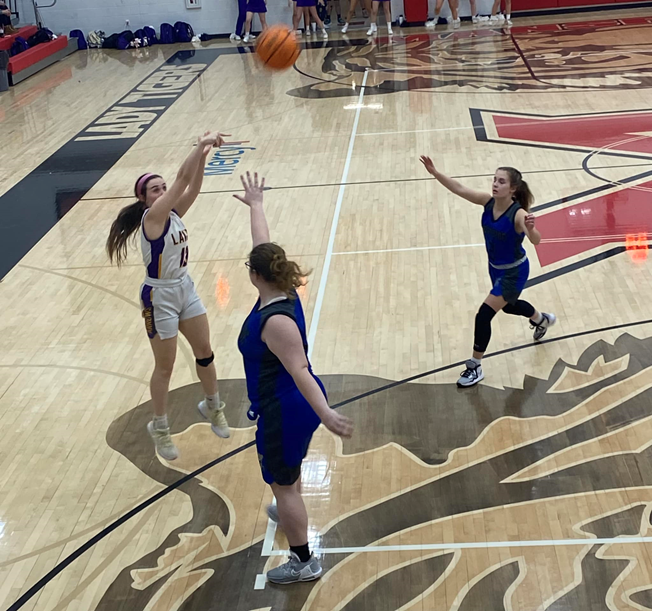
Sometimes you get a game that just sticks in your head after you watch it as one of the great ones. It’s one of those games where the effort, the determination, the downright grit of the athletes and coaches from both teams seem to make the scoreboard seem irrelevant at times. If you were in attendance at the Mansfield High School gymnasium on Tuesday, February 14th and saw the Lavaca Lady Golden Arrows take on the JC Westside Lady Rebels in Round2 of the 2A-4 District Tournament then you know that one of those “sometimes games” was that game.

The game started off with some nice passing by Lavaca, but the Lady Golden Arrows couldn’t capitalize on their opening possession with points. Instead, it was the Lady Rebels who scored first with a long range three-point shot. A Lavaca foul then allowed JC Westside to sink a free throw to take an early 4-0 lead. An offensive rebound and put back by the Lady Rebels added to their lead and forced Lavaca to take a time out with 4:32 left in the quarter. Lavaca’s passing game finally opened up to what they wanted as the Lady Golden Arrows connected with a hook shot to break JC Westside’s momentum. Just as soon as Lavaca stopped JC Westside’s momentum, they picked up their own as the Lady Golden Arrows tied the game up at 6-6 off of free throws and a layup. The teams then took turns putting up points in the paint until the opening quarter ended with a narrow 11-10 JC Westside lead.

Lavaca came out smoking hot to start the second quarter as the Lady Golden Arrows went on a 12-3 run on JC Westside. The game was turning into a one-way golden street for Lavaca’s offense leaving JC Westside’s defense looking a little bit gassed. The Lady Rebels finally started putting it back together with two minutes left in the quarter by hanging nine straight points on Lavaca to close the score to a 23-21 Lady Golden Arrow lead. Both teams then proceeded to take turns with fouls and turnovers which slowed the games pace down. Lavaca would hit a free throw with 0:04 seconds left in the half and prepared to head into the half with 0:02 on the clock. That’s when the Lady Rebels fired off a half court cannon ball that smoked through the net at the buzzer to tie the game 24-24.

With a new half and a tied score, both teams got a fresh start. But who who’d take advantage of it? Lavaca would take advantage first with a pair of free throws to break the tie and take the lead 26-24. Lavaca knew two points wouldn’t suffice though so the Lady Golden Arrows added a board bucket and drew a plus one on a foul to gain a five-point lead. Lavaca was getting hot, but fouls kept the Lady Rebels on ice forcing JC Westside to call a time out at the 3:50 mark of the third quarter. JC Westside broke free of their frosty situation with a three-point shot, but that was after an 11-0 run by the Lady Golden Arrows. Lavaca continued their dominance all the way down to a 38-27 score at the end of the third quarter.

Trying to make up for a rough third quarter, JC Westside scored first off of a free throw to open the final quarter of play. The Lady Rebels then closed the game down to a six-point lead with back-to-back board buckets in the paint. The cannon balls and arrows were beginning to fly again as both teams pulled out all the stops to earn a prized spot in Round3 of the tournament. Lavaca pulled out the lead back out to twelve points before the Lady Rebels broke the streak with a free throw. JC Westside then sank two threes to bring the scoreboard back down within nine points, but Lavaca wasn’t deterred as they continued to light up the scoreboard enroute to a 53-44 final score and the victory.

The Lady Golden Arrows used their tenacity in the face of adversity to punch their ticket to Round3 of the 2A-4 District Tournament. Lavaca will have just a single day to rest up after their hard-fought win as they will play again on Thursday, February 16th at 7:00pm at the Mansfield High School gymnasium. Thier opponent will be the number two seeded Mansfield Lady Tigers. The winner of that game will head directly to the 2A-4 District Championship game while the loser will have to settle for playing in the third-place game at 4:00pm. 

JC Westside Beats Western Yell In “Wild West” District Showdown

The Western Yell County Wolverines pulled off quite the upset on Monday, February 13th by slaying the Mountainburg Dragons. If the Wolverines hope was to roll through the 2A-4 District Tournament as a Cinderella Story, then they were well on their way. Standing in the way of that feel good story though was a JC Westside Rebels team that was made up of giants. Could the Wolverines take down both dragons and giants in just two days? Not if the Rebels had anything to say about it.

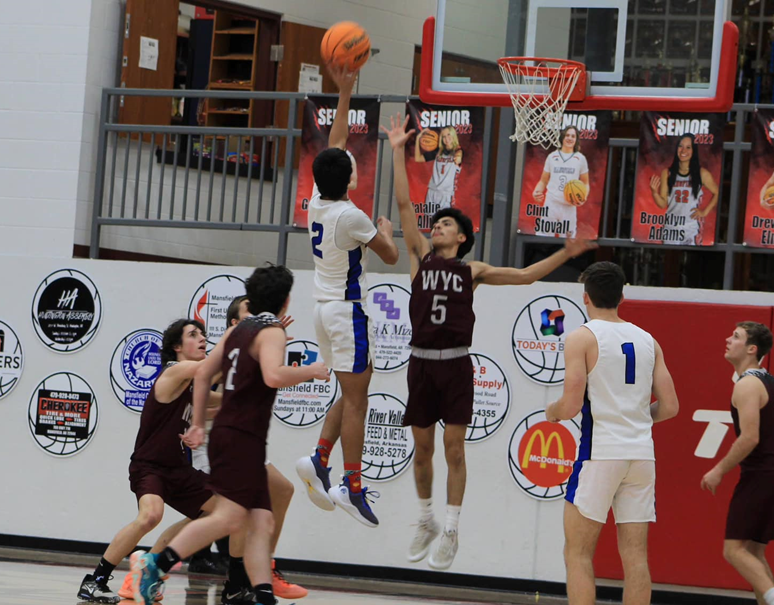
Both Western Yell and JC Westside went straight to the boards with powerful board buckets to start the game. The Wolverines then swapped their rough and gruff power game and caught JC Westside off guard for a pair of three-point sniper shots to gain a fast 8-2 lead over the Rebels. The fast paced high and flying match up was already shaping up to be exactly what everyone expected as both teams showed off their talents. The Rebels were able to go on a 6-0 run with offensive rebounds and put backs to tie the game up 10-10. Western Yell broke the tie though and kept the nets hot with another three-point shot to close the first quarter ahead of JC Westside 13-10.

JC Westside scored on two rebound put backs to start the second quarter to come within one point of the Wolverines, but Western Yell shook it off an went back ahead with a drive straight to the basket. The Rebels bounced right back again and tied the game up at 16-16 by putting in the work in the paint. The power game of the bigger Rebels was starting to payoff for the Rebels, so they stuck with it and it paid off with JC Westside taking their first lead of the night with an 18-16 score. Western Yell kept their long-range shooting going, but their success rate was low allowing JC Westside to pile up points and build momentum. The momentum started to flow through the Rebels defense too allowing JC Westside tack on back break away layups off of Wolverine turnovers. JC Westside was clearly in the driver’s seat when the buzzer sounded as the Rebels went into the half up 28-19 over Western Yell. 

The second half picked up where the first half left off. Western Yell uncharacteristically could not seem to hit the mark on their shots. The Rebels on the other hand sank a three-pointer and followed it up with a put back to score the first points of the third quarter. JC Westside placed a lease in the paint as the Rebels made the Wolverines pay for any inside attempts to score on one end and dominated the boards on the other to extend their lead to 38-23. The lead only got bigger for the Rebels as Western Yell still couldn’t seem to buy a point while JC Westside just couldn’t miss. The Wolverines broke through the Rebels 20-point lead towards the end of the final quarter, but it was JC Westside who scored their way to a 45-29 lead at the third quarter buzzer. The fourth quarter was a complete rewind of third quarter film as JC Westside used their size advantage to score another 17 points on the Wolverines enroute to a 62-44 over Western Yell.

The JC Westside Rebels earned their automatic spot in the 2A Regional Tournament with the win and will now face the Mansfield Tigers. The two teams split W’s in the regular season with the Rebels winning the latest contest.  It will definably be a must-see game as JC Westside takes on Mansfield on Thursday, February 16th at 8:30pm with a shot at the 2A-4 District Championship game on the line.

Wildcats Turn The Page On Magazine In Round2 District Victory

The Magazine Rattlers versus the Hector Wildcats. Both schools’ athletic programs have decades of history playing against each other in every sport. Neither the Rattlers nor Wildcats are ever guaranteed a win when they face off and boy howdy do they put on a show. So, it’s easy to believe that a Hector versus Magazine basketball game in Round2 of the 2A-4 District Tournament would be a doozy. With a shot at the District Title and an automatic bid to the 2A regional Tournament on the line, no one had to think it would be a great game, they already knew it.  

Hector showed their claws right from the tip off with an on target three-pointer then forced Magazine to call a very early time out with a powerful defensive push. Magazine rolled in a layup to answer, but the Wildcats drilled in another three for good measure. That trend was pretty much set in stone in the first quarter as Hector would sink a three-point shot for each Magazine board bucket giving the Wildcats a 14-7 lead with 2:24 left in the first quarter. Neither Magazine nor Hector seemed to want to deviate from their game plan, but it was Hector who executed their plan better as the first quarter ended with the Wildcats up 16-9 over the Rattlers.

As the second quarter began, Magazine began to see success in their “keep it simple” game plan as the Rattlers closed Hectors lead to 18-17 with short shots and board buckets. The Rattlers patience finally paid off as they tied the game at 18-18 on a free throw with 3:35 left in the quarter. Hector would quickly regain the lead off of a free throw and a put back to set up a 21-18 lead. Magazine again came close to getting the lead off of a layup but couldn’t pull past Hectors vicious defense in the paint. The Wildcats held up well against every strike Magazine took at getting points as the teams went into halftime with Hector narrowly leading Magazine 22-20.

The third quarter was what defensive fans dream as both teams played lights out across from the ball. Turnovers, rebounds, and blocked shots ruled the game as Magazine held Hector to just seven points and Hector kept Magazine to only six points in the quarter. The team’s defensive showcase ended the third quarter with only a combined 15 points between the two and a 29-26 Hector lead. With defense being the name of the game up to that point, it would now come down to whose offense could get their gears going in the fourth and final quarter. 

Hector was first to put up points with a pair of free throws as Magazine began to get sloppy with fouls. Both teams were able to get an opening to sink a three-point shot each after that to set the score at 33-29 in the Wildcats favor with 5:03 left in the game. Magazine laid in a chip shot, but Hector mirrored that with a powerful layup of their own. The Wildcats then went wild with three-pointers to build on their lead. Magazine on the other hand would not lay down without striking out with a couple of threes of their own to bring the game to a 41-38 lead with 1:20 left in the final quarter. Although it was one heck of a game by both teams, it was Hector who pulled away with a 47-40 victory over Magazine to advance to Round3 of the 2A-4 District Tournament.

The hard-fought victory gives Hector not only the bump up to Round3 of the 2A-4 District Tournament, but also puts them automatically in the 2A Regional Tournament. The Wildcats main focus though will be earning a shot at the 2A-4 District Championship. To obtain that goal, they will have to go through the number one seeded Lavaca Golden Arrows. The game between Hector and Lavaca will be held on Thursday, February 16th at 5:30pm at the Mansfield High School gymnasium and is sure to be a barn burner. 

Gonzalez Pleads Guilty to One Count of Third-Degree Battery

The State of Arkansas has resolved the criminal case against former Waldron Police Officer, Omar Gonzalez.

See original story

In a statement by the Special Prosecuting Attorney 15th Judicial District, Emily White, the plea was an agreement with the defendant and on the advice of his attorney, John Collins.

The Defendant entered into a negotiated plea of Guilty to one (1) count of Battery in the third degree, in violation of Ark. Code Ann. §5-13-203, a Class A Misdemeanor, for his continuing course of conduct toward Robert Deer on February 16, 2022, in Scott County. At the time of the criminal offense, the defendant was employed as a City of Waldron Police Officer and was at all times working within the lawful scope and authority of his position as a law enforcement officer in Scott County. The Defendant was sentenced to pay a fine of $1,000.00 and standard court costs of $250.00 with the Scott County Circuit Court.

“I would specifically like to thank the Arkansas State Police, Troop G, for their diligent efforts in this criminal investigation and successful prosecution,” stated White.

The charges of an accomplice in this case against current Scott County Sheriff Randy Shores are still open and pending with the courts.