77.2 F
Fort Smith
Saturday, July 11, 2026
Home Blog Page 505

Obituary – Robert Barger (1960-2021)

Robert G. Barger 61 of Greenwood passed away Friday, July 30, 2021 in a local hospital. He worked at Whirlpool Manufacturer in Fort Smith. He was preceded in death by his mother Janet (Basham) Parker; maternal grandparents Tom and Virginia Basham; his father Durrell Barger; paternal grandparents Bev and Sadie Barger.

A family-held memorial service will be at 5:00 P.M. Friday, August 6, 2021, at Pleasant Hill Freewill Baptist Church in Hackett on Hwy 10. The family will visit with relatives and friends one hour prior to the service. Cremation arrangements are under the direction of Ocker Funeral Home Van Buren.

He is survived by his loving wife of seventeen years Peggy (Kincy) Barger of the home; children by marriage Amanda Terry and husband Tim, Natalie Valencia all of Greenwood, Travis Rowe and wife Michele of Van Buren; grandchildren Jestin and wife Evy Morse, Tessa Shea, Zen and Jo Lea Valencia, Mason Hayes, Harley and Josh Terry, Gracie and Madie Rowe; his brother Dewayne Barger; and sister Beverly Barger both of Vian, Oklahoma; nieces Darrica Reeves and Brooke Connelly; nephews Jonathan and Brett Barger; lifelong friends Danny Baty and Debbie Barger; and his four-legged companion “Scooter”.

A special thanks to Elite Home Health & Mercy Hospice.
Online tributes: www.ockerfuneralhome.com
To plant trees in memory, please visit our Sympathy Store.

Paris Football “Moms 101” Is a Big Hit in Its First Year

New Paris head football coach Jeff Weaver has wasted no time in bringing the entire Paris community into the school’s football program. In just a few months, Coach Weaver has involved elementary and middle school players, mothers, and this weekend, the senior high players’ dads who are participating in a retreat with the coaches. But of all of these great programs that Coach Weaver has brought to Paris, perhaps the most popular was the “Moms 101” event that was held last week at Eagles Stadium.

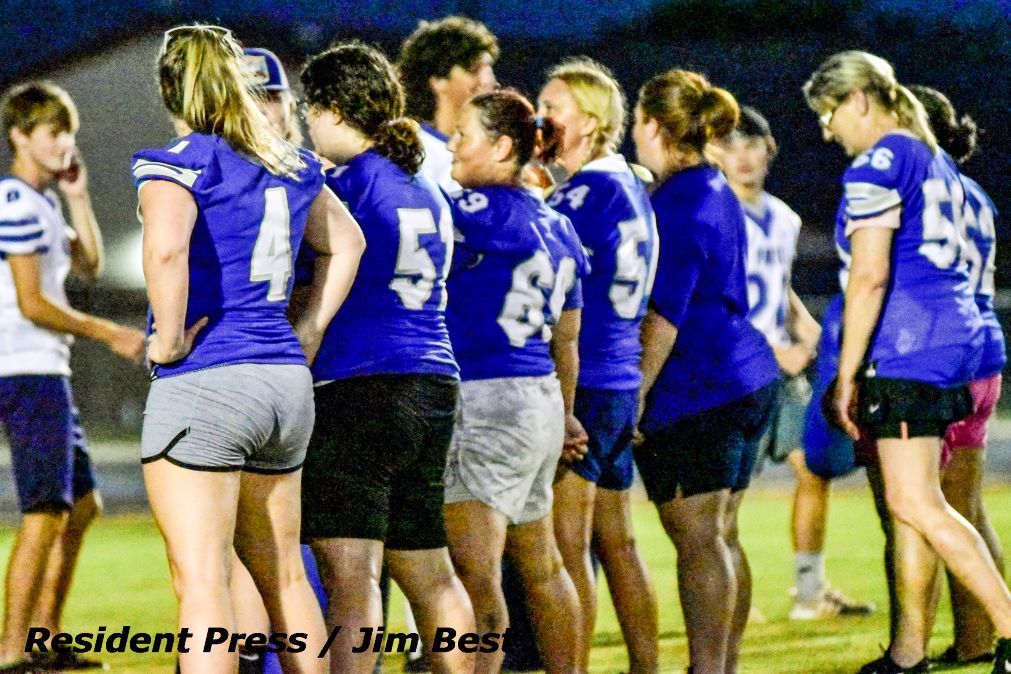
Paris moms played their sons’ positions during “Moms 101” (Resident Press Photo)

Many of the senior high players’ mothers participated in this first annual event. The moms spent approximately one hour in the locker room with the coaches as they gave the mothers a brief “chalk talk” on the format of the event, their positions, and the procedures for practice and running plays. Then it was time to take the field, and the moms did not disappoint!

Playing their sons’ positions, Coach Weaver and the football staff, with the assistance of the players, conducted a one hour “practice”on the field. The moms participated in warm-up drills, individual and position groups, and concluded with team offensive plays. Smiles were plentiful on everyone’s faces as the moms, players, and coaches seemed to have a great time. It was truly a very special event, and was well-received by everyone in attendance.

Resident Press Photo

In many cases, the moms showcased the talent that they have passed along to their sons who play football for the Eagles. But most importantly, everyone had a great time, and when the event was over, Coach Weaver called everyone together and had the players sit with their mothers. He then gave a message to the players with their moms sitting beside them. He spoke of how special their mothers are, and how “no one loves you like your mother does.” He challenged the players to honor their mothers with their conduct, both on and off the field, and to grow up honoring their parents by becoming a good man, husband, and father. It was a great message to the players, and it was very touching for the mothers. Coach Weaver has very strong support going into his first season, and it is apparent to everyone in the community that he truly cares for not only his players, but their families and everyone connected with the Paris football program.

Resident Press Photo

So, now it is time to turn the focus toward the high school football season that will open in a little less than one month. The Eagles open the 2021 football season on the road at Lavaca on August 27. Resident Press will bring you updates leading up to the season and the Eagles opener. Stay with Resident Press for the best in Paris Eagles coverage!

August Time to Prep Fields for Stockpiled Forage

By Ryan McGeeney
U of A System Division of Agriculture

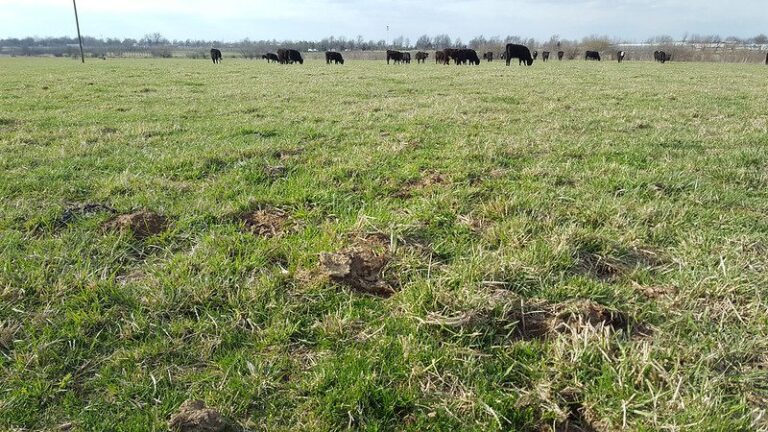
Stockpiling bermudagrass or fescue for fall and winter grazing is one of the most reliable forage practices available for extending the grazing season. Farm demonstrations have consistently shown positive savings when comparing cost and yield of stockpiled forage versus harvesting and feeding hay.

But, as with many things, timing is everything.

John Jennings, professor and extension forage specialist for the University of Arkansas System Division of Agriculture, said many ranchers and pasture managers have arrived at the notion that early August is just too hot to apply nitrogen fertilizer.

“They have been told for years that most of the nitrogen from urea fertilizer will be lost due to volatilization when applied during hot weather,” Jennings said. “I have heard co-op managers tell this to customers, and other forage specialists have stated the same thing.

“But, based on actual research, that is simply not true,” he said.

Urea is a viable source of nitrogen fertilizer if ammonium nitrate is not available. Arkansas research trials on bermudagrass have shown yield differences between those nitrogen sources ranged from zero to 15 percent, with a majority of the studies showing less than a 10 percent difference, Jennings said.

“So, if urea is the primary nitrogen source carried by local dealers, use it,” he said. He said that if a grower is concerned about a 10 percent yield difference, he or she should simply add 5 to 6 pounds per acre more nitrogen to cover it.

“Timing is very important to produce a good fall bermudagrass stockpile,” Jennings said.

Arkansas research on stockpiling bermudagrass has shown that at research plots at Batesville and Fayetteville, delaying nitrogen application from Aug. 1 to Sept. 1 reduced forage dry matter yield as much as 60-80 percent.

“In south Arkansas, that date could be moved from Aug. 1 to Aug. 15,” Jennings said. “Each day closer to September reduces warm-season grass yield potential and viability of making fertilizer applications economical.”

The timing for fertilizing stockpiled fescue is the last week of August to the first week of September.

“Our research showed that early September is the optimum time to apply nitrogen fertilizer,” Jennings said. “Waiting until early to mid-October produced no more dry matter yield than the unfertilized control.

“If producers need fall forage, fertilizing for stockpiled forage is a good option, but timing is important,” he said.

Other options for fall forage include planting pearl millet or browntop millet the last of August. Browntop millet has a very fast growth cycle and can provide grazing in 30 days. Planting oats or brassicas in early September also works well for grazing in November and December. Ryegrass is a poor fall forage producer but can be mixed with winter or summer annual forages to produce grazing later in spring.

To learn more about extension programs in Arkansas, contact your local Cooperative Extension Service agent or visit uaex.uada.edu. Follow us on Twitter at @AR_Extension. Follow us on Twitter and Instagram at @AR_Extension. To learn more about Division of Agriculture research, visit the Arkansas Agricultural Experiment Station website: https://aaes.uark.edu. Follow on Twitter at @ArkAgResearch. To learn more about the Division of Agriculture, visit https://uada.edu/. Follow us on Twitter at @AgInArk.

About the Division of Agriculture

The University of Arkansas System Division of Agriculture’s mission is to strengthen agriculture, communities, and families by connecting trusted research to the adoption of best practices. Through the Agricultural Experiment Station and the Cooperative Extension Service, the Division of Agriculture conducts research and extension work within the nation’s historic land grant education system. 

The Division of Agriculture is one of 20 entities within the University of Arkansas System. It has offices in all 75 counties in Arkansas and faculty on five system campuses.  

The University of Arkansas System Division of Agriculture offers all its Extension and Research programs to all eligible persons without regard to race, color, sex, gender identity, sexual orientation, national origin, religion, age, disability, marital or veteran status, genetic information, or any other legally protected status, and is an Affirmative Action/Equal Opportunity Employer.


Obituary – Alonzo Saenz, Jr. (1940-2021)

Alonzo Saenz, Jr., 81, of Waldron, Arkansas passed away on July 28, 2021, in Fort Smith. He was born July 5, 1940, in Parlier, California to the late Alonzo Sr., and Conception (Nunez) Saenz.

Alonzo was a veteran who served in the United States Navy for almost 4 years. Alonzo was always a busy man, he worked in his garden and enjoyed working his land on his tractor. He also enjoyed going big game hunting with his son Eric.

Alonzo is survived by his wife of 34 years, Sandra Saenz of the home, three sons; Bryan Saenz of Modesto, CA, Eric Saenz and wife Margaret, Raul Saenz and wife Tina of Waldron, AR, one step-daughter Julie Hesterlee of Ava, MO, three grandchildren, 4 great-grandchildren and by one brother David Saenz of San Francisco, CA.

He is preceded in death by his parents, one brother Raul Saenz and one sister Dede Saenz.

Visitation will be held from 3:00 p.m. to 6:00 p.m. Sunday, August 1, 2021, at Martin Funeral Home Chapel.

Graveside service will be held at 1:00 p.m. August 2, 2021, at Fort Smith National Cemetery with Rev. Greg Shively officiating under the direction of Martin Funeral Home in Waldron, Arkansas.

Online condolences may be sent at http://www.martinfuneralhomes.com

Waldron School District to Purchase Supplies from Scott County Hardware

The Waldron School Board met in special session on Monday, July 19 at 5:15 p.m. ​The meeting was held in the Central Office Building. Board members present were Tammye Sherrill, Clay Woodall, Angela Hunsucker, Konnor McKay and Mac Davis. Others present were Superintendent Daniel Fielding.

​President Tammye Sherrill called the meeting to order at 5:20 p.m.

​A motion was made by Hunsucker and seconded by Woodall to approve the purchase order to J & J Flooring.  Motion carried 5-0. 

​A motion was made by Woodall and seconded by Davis to approve the purchase order to Paul Reed for flooring installation.  Motion carried 5-0. 

​A motion was made by Woodall and seconded by Davis to approve the purchase order to Scott County Hardware for school supplies.  Motion carried 5-0. 

​A motion was made by Woodall and seconded by Hunsucker to adjourn.  Motion carried 5-0.

​Meeting adjourned at 5:25 p.m.

Mansfield Police Department Responds to Bomb Threat

On Thursday evening, July 29, the Mansfield Police Department responded to a residence on Huntington Avenue after a homeowner located what he believed to be a bomb.

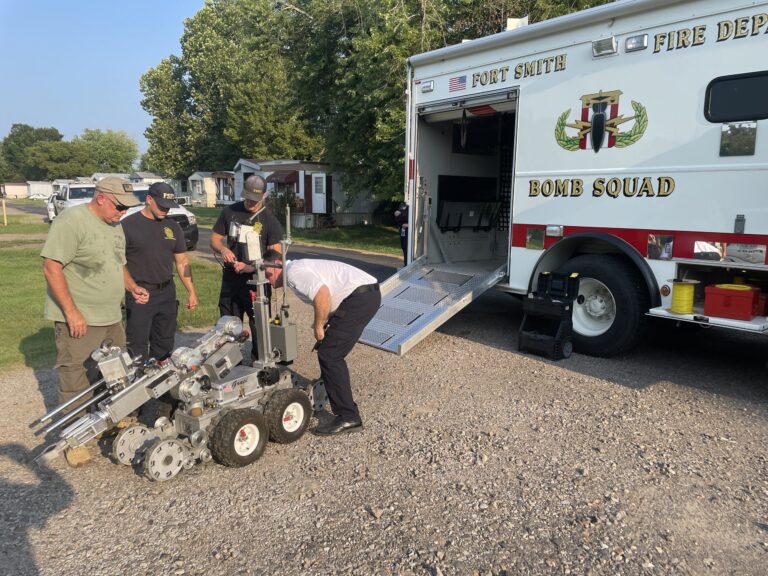
The Mansfield Police Department contacted the Department of Alcohol Tobacco and Firearms, and the Fort Smith Fire Department Bomb Squad unit was dispatched to the scene.

Mansfield Police Chief Wayne Robb stated that there were two devices, both constructed from PVC pipe. One was filled with black powder. Robb noted that the second device most likely also contained black powder, but it’s contents dissipated upon detonation. According to Chief Robb, both devices were rigged with fuses.

”It was determined by ATF that it was a homemade firework device,” stated Chief Robb. “We have coordinated with the Arkansas State Police to further investigate the evidence…There is no threat to the public’s safety.”

The Scott County Sheriff’s Office assisted with the call.

AG Alert: Immediately Delete Vulgar Text Messages

Scammers have resorted to new lows in an age-old scheme to steal consumers’ personal information. Attorney General Leslie Rutledge is once again warning Arkansans of phishing schemes where scam artists will send a link through text or email hoping the cell phone users will allow access to information on the phone. The updated scam adds additional shock value because scammers have added vulgar and sexual messages in anticipation that users will click that link. This scam is an attempt to surprise users while gaining access to personal information stored on their device.

“Scam artists are disgusting and have reinvented an old scam in a vulgar way to steal from Arkansans,” said Attorney General Rutledge. “If you receive a fake text message that you did not sign up for, do not click on anything in the message and delete the message immediately.”

Attorney General Rutledge recommends the following tips if you receive this group text scam:

  • Do NOT answer or engage with the text message. These scams are attempting to get a response from group members to steal personal information off the phone.
  • Block the calling or texting number on your phone and delete the texts.
    • If the calling number is the spoofed contact of someone you know unblock the number after a few hours or days; otherwise, the person with that number will not be able to reach you.
  • Cell phone users may have an option to filter and block messages from their phones directly. Users can filter and block messages on an iPhone and block a phone number on an Android phone.
  • iPhone and Android users also have the ability to report spam and junk messages that are sent to their phones. iPhone users can find additional information here while Android users can find information here.
  • Any cell phone user can also report text messages by copying the message and forwarding it to 7726 (SPAM) and reporting the message to the Federal Trade Commission at ReportFraud.ftc.gov.

For more information and tips on how to avoid a scam, call the Arkansas Attorney General’s Office at (800) 482-8982 or visit ArkansasAG.gov.

Arkansas Hunting Guidebook Available Online

By Randy Zellers Assistant Chief of Communications

LITTLE ROCK — The printed version of the 2021-22 Arkansas Hunting Guidebook is being produced and should be distributed in August throughout the state, but hunters can get familiar with this year’s season dates and regulations with a digital version, now available at www.agfc.com for download.

One thing most hunters familiar with the guidebook may notice is the notoriously short “New This Year” section that graces Page 4. This section usually has a dozen or so changes hunters should note with references to where they can be found later in the book. Thanks to a new two-year regulations cycle, only one note is mentioned in this section of the book, and it is not a regulation so much as a reference for hunters to know about an ongoing research project in the north portion of the state.

A project tracking mortality rates in white-tailed deer within Arkansas’s chronic wasting disease zone involves tagging and radio-collaring deer and following them throughout their lives to determine the impact the disease is having on the population. The easily visible collars and tags may cause hunters to question if the deer is legal to harvest.

Cory Gray, chief of the AGFC’s Research Division, says collared and tagged deer are legal to take, but asks any hunter who shoots these deer to report the harvest to ensure accurate data collection on this important project.

The only other changes that may impact hunters are simple adjustments of season dates to accommodate the change in calendar days from one year to the next.

Statewide 2021 Deer Season Opening Days:

Archery — Sept. 25
Muzzleloader — Oct. 16
Modern Gun — Nov. 13
Special Youth Modern Gun Hunts — Nov. 6-7 and Jan. 1-2
Private Land Antlerless-only Modern Gun Hunt — Dec. 29-31

Visit www.agfc.com/guidebooks for downloadable versions of all AGFC hunting and fishing regulations guidebooks.

Celebrating Farmers Market Week!

By Ryan McGeeney
U of A System Division of Agriculture 

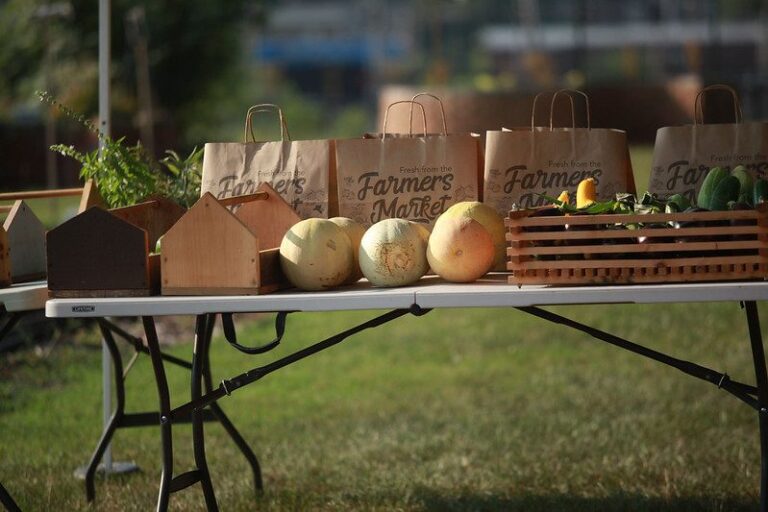
Farmers markets, long thought of as a niche affectation of suburban parking lots or roadside stands, truly came into their own over the past year. As many food retailers struggled to deal with supply chain bottlenecks and indoor capacity restrictions during the COVID-19 pandemic, the typically outdoor farmers markets thrived as sources of fresh and local produce and other products. 

On Thursday morning, Arkansas Secretary of Agriculture Wes Ward visited the campus garden at the University of Arkansas at Little Rock campus to deliver a proclamation from Governor Asa Hutchinson, declaring Aug. 1-7 Arkansas Farmers Market Week. The week coincides with National Farmers Market Week. 

A 2020 survey, conducted by universities across the United States, found that farmers markets enjoyed a 3 percent increase in first-time consumers — equating to about 36 million households. 

Ron Rainey, extension economist for the University of Arkansas System Division of Agriculture, said farmers markets will likely represent an increasing share of the sources from which most consumers get their food. 

“As the survey reveals, farmers markets continue to serve a dedicated and growing segment of consumers,” Rainey said. 

Rainey has also been instrumental in promoting Arkansas MarketMaker, a free online marketing portal promoting farmers markets and other food producers with searchable maps of local food providers. To use or join the program, visit https://ar.foodmarketmaker.com/.  

According to the governor’s proclamation, there are more than 112 known farmers markets in Arkansas, with more than 80 percent of the state’s 75 counties featuring at least one farmers market. 

“Access to healthy foods is a priority of the Healthy Active Arkansas Initiative to reduce obesity rates in the State of Arkansas, and through efforts of initiatives like these, the number of Arkansas Farmers Markets has nearly doubled in the last decade,” the proclamation reads in part. 

Jeremy Adams, executive director of the Arkansas Farmers Market Association, accepted the proclamation from Secretary Ward at Thursday morning’s event, and spoke briefly. 

“This has been a challenging season for Arkansas farmers markets, due to cooler and wet weather conditions, but farmers markets are in full swing,” Adams said. “Arkansas farmers markets have seen high traffic counts again this year, post-COVID, and it appears more people than ever are interested in local food.”   

Adams said many markets have seen an increase in the number of vendors selling products and produce under the “Arkansas Grown” and “Arkansas Made” moniker, an Arkansas Department of Agriculture program that promotes locally grown produce and locally made products. 

To learn more about farmers markets in Arkansas, visit https://www.uaex.uada.edu/farm-ranch/economics-marketing/experience-arkansas-agriculture/.  

To learn about extension programs in Arkansas, contact your local Cooperative Extension Service agent or visit www.uaex.uada.edu. Follow us on Twitter and Instagram at @AR_Extension. To learn more about Division of Agriculture research, visit the Arkansas Agricultural Experiment Station website: https://aaes.uark.edu. Follow on Twitter at @ArkAgResearch. To learn more about the Division of Agriculture, visit https://uada.edu/. Follow us on Twitter at @AgInArk. 

About the Division of Agriculture 

The University of Arkansas System Division of Agriculture’s mission is to strengthen agriculture, communities, and families by connecting trusted research to the adoption of best practices. Through the Agricultural Experiment Station and the Cooperative Extension Service, the Division of Agriculture conducts research and extension work within the nation’s historic land grant education system.  

The Division of Agriculture is one of 20 entities within the University of Arkansas System. It has offices in all 75 counties in Arkansas and faculty on five system campuses.   

The University of Arkansas System Division of Agriculture offers all its Extension and Research programs to all eligible persons without regard to race, color, sex, gender identity, sexual orientation, national origin, religion, age, disability, marital or veteran status, genetic information, or any other legally protected status, and is an Affirmative Action/Equal Opportunity Employer. 

Timepiece: Blackberry Summer

By Dr. Curtis Varnell

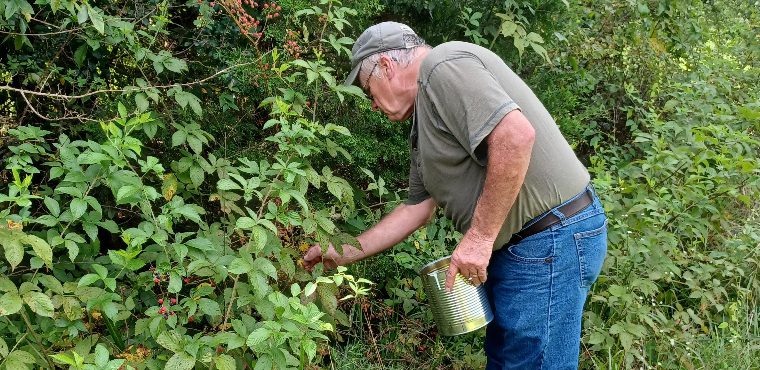
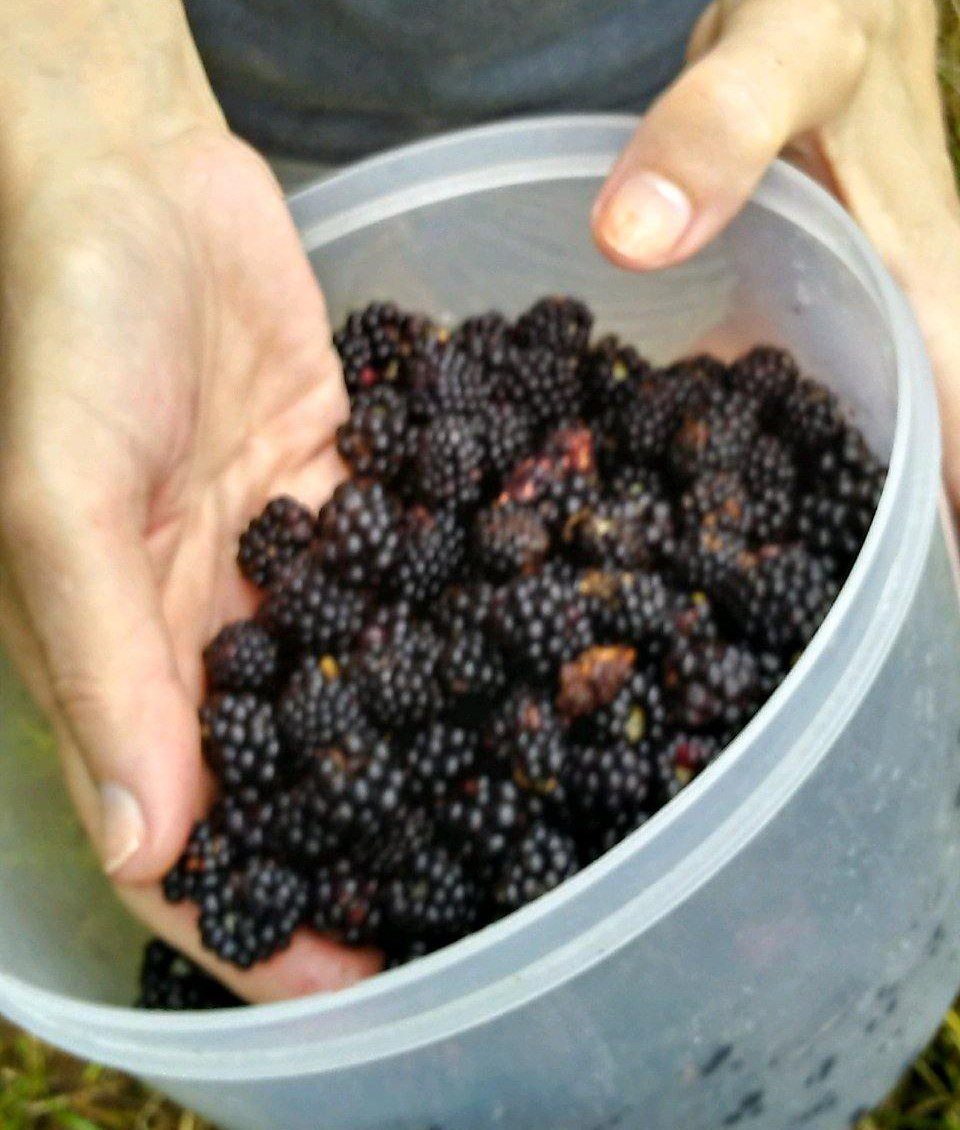
Blackberries are one of the gifts of God.  They grow wild and free in most open pastures in the South and they get ripe just about this time of year.  Even though abundant, they come with some strings attached.  They grow best in June and July, the hottest of hot months in Arkansas, and are attached to some awful thorn-bearing bushes.  To make matters worse, every stinging, biting, and itching insect known to man hang out in the best berry locations. 

My grandmother Nettie loved blackberries and knew the best ways to harvest and the best ways to avoid the attendant problems above.  She also knew the best secret places, those areas where the vines grew thick and were covered with the largest plump berries.  On the days we picked, she would get us up at daybreak while it was a relatively cool 80 degrees or so and head to the pasture.  Our heads were covered by big straw hats and our arms and legs were completely covered by clothing.  Both protected us from the direct rays of the sun and some of the smaller thorns but done little to alleviate the heat of mid-morning July days.   Before the days of DEET, DDT, and Napalm- things that appear to have some chance of killing off the little boogers- my grandmother used home remedies to repel the myriad insects that enjoyed feasting on us.  We spread grease or turpentine around our ankles, around our wrists, and any exposed areas. Kerosene, one of my grandmother’s cure-all remedies, also could be used in place of the above and also prevented any inclination to smoke while harvesting the berries. 

My uncle William was harvesting blackberries on Sand Ridge near Prairie View.  They were more than head high and full of berries that he was picking as fast as his hands could move when he heard a noise on the opposite side of the bushes he was emptying.  Pulling aside the bushes, he came face to face with a black bear that was enjoying the fruit on the backside of the patch.  Both let out a squeal, dropped the berries in hand, and skedaddled in opposite directions. We kept that bear in mind from that point forward but the real danger was Dave Rhineheart’s big bull that shared the pasture where we picked.

Fully armored in our clothing and protected by grandma’s elixirs, we took our gallon armor lard buckets and headed off to work.  If we were lucky and worked all morning, we could pick a gallon bucket by noon.  That bucket of berries would be turned into a dollar cash from one of the local housewives who converted it into a delicious cobbler by evening.  My cousin and I would stop by the local store and get a sixteen-ounce pop cola and a three-dip ice cream for a quarter on the way home. 

Once home, we would heat water over a wood stove, deposit it in a big iron washtub, and then take turns taking a bath.  Lye soap and a little bit of bleach deposited into the tub would hopefully dispose of any of the insects making it past our initial defense.  By the time we were through, the water was deep blue from the residual soap, kerosene, grease, dirt, and sweat.

Blackberry picking taught me many valuable lessons about life.  There is a reward and a sense of pride and accomplishment when you get through doing a job, the harder you work, the more reward you got, and last and most important, chiggers are hard to kill.