
74.6 F
Fort Smith
Monday, July 13, 2026
Home Blog Page 506

Celebrating Farmers Market Week!

By Ryan McGeeney
U of A System Division of Agriculture 

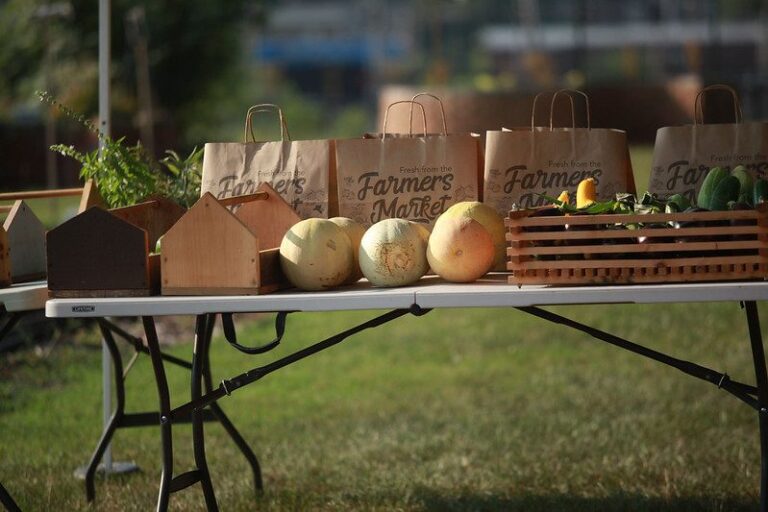
Farmers markets, long thought of as a niche affectation of suburban parking lots or roadside stands, truly came into their own over the past year. As many food retailers struggled to deal with supply chain bottlenecks and indoor capacity restrictions during the COVID-19 pandemic, the typically outdoor farmers markets thrived as sources of fresh and local produce and other products. 

On Thursday morning, Arkansas Secretary of Agriculture Wes Ward visited the campus garden at the University of Arkansas at Little Rock campus to deliver a proclamation from Governor Asa Hutchinson, declaring Aug. 1-7 Arkansas Farmers Market Week. The week coincides with National Farmers Market Week. 

A 2020 survey, conducted by universities across the United States, found that farmers markets enjoyed a 3 percent increase in first-time consumers — equating to about 36 million households. 

Ron Rainey, extension economist for the University of Arkansas System Division of Agriculture, said farmers markets will likely represent an increasing share of the sources from which most consumers get their food. 

“As the survey reveals, farmers markets continue to serve a dedicated and growing segment of consumers,” Rainey said. 

Rainey has also been instrumental in promoting Arkansas MarketMaker, a free online marketing portal promoting farmers markets and other food producers with searchable maps of local food providers. To use or join the program, visit https://ar.foodmarketmaker.com/.  

According to the governor’s proclamation, there are more than 112 known farmers markets in Arkansas, with more than 80 percent of the state’s 75 counties featuring at least one farmers market. 

“Access to healthy foods is a priority of the Healthy Active Arkansas Initiative to reduce obesity rates in the State of Arkansas, and through efforts of initiatives like these, the number of Arkansas Farmers Markets has nearly doubled in the last decade,” the proclamation reads in part. 

Jeremy Adams, executive director of the Arkansas Farmers Market Association, accepted the proclamation from Secretary Ward at Thursday morning’s event, and spoke briefly. 

“This has been a challenging season for Arkansas farmers markets, due to cooler and wet weather conditions, but farmers markets are in full swing,” Adams said. “Arkansas farmers markets have seen high traffic counts again this year, post-COVID, and it appears more people than ever are interested in local food.”   

Adams said many markets have seen an increase in the number of vendors selling products and produce under the “Arkansas Grown” and “Arkansas Made” moniker, an Arkansas Department of Agriculture program that promotes locally grown produce and locally made products. 

To learn more about farmers markets in Arkansas, visit https://www.uaex.uada.edu/farm-ranch/economics-marketing/experience-arkansas-agriculture/.  

To learn about extension programs in Arkansas, contact your local Cooperative Extension Service agent or visit www.uaex.uada.edu. Follow us on Twitter and Instagram at @AR_Extension. To learn more about Division of Agriculture research, visit the Arkansas Agricultural Experiment Station website: https://aaes.uark.edu. Follow on Twitter at @ArkAgResearch. To learn more about the Division of Agriculture, visit https://uada.edu/. Follow us on Twitter at @AgInArk. 

About the Division of Agriculture 

The University of Arkansas System Division of Agriculture’s mission is to strengthen agriculture, communities, and families by connecting trusted research to the adoption of best practices. Through the Agricultural Experiment Station and the Cooperative Extension Service, the Division of Agriculture conducts research and extension work within the nation’s historic land grant education system.  

The Division of Agriculture is one of 20 entities within the University of Arkansas System. It has offices in all 75 counties in Arkansas and faculty on five system campuses.   

The University of Arkansas System Division of Agriculture offers all its Extension and Research programs to all eligible persons without regard to race, color, sex, gender identity, sexual orientation, national origin, religion, age, disability, marital or veteran status, genetic information, or any other legally protected status, and is an Affirmative Action/Equal Opportunity Employer. 

Timepiece: Blackberry Summer

By Dr. Curtis Varnell

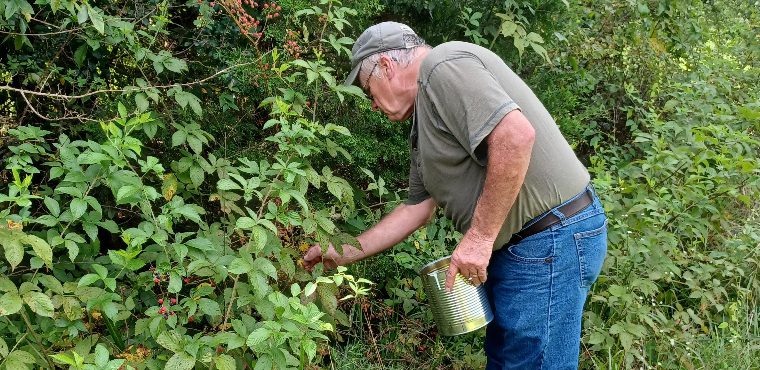
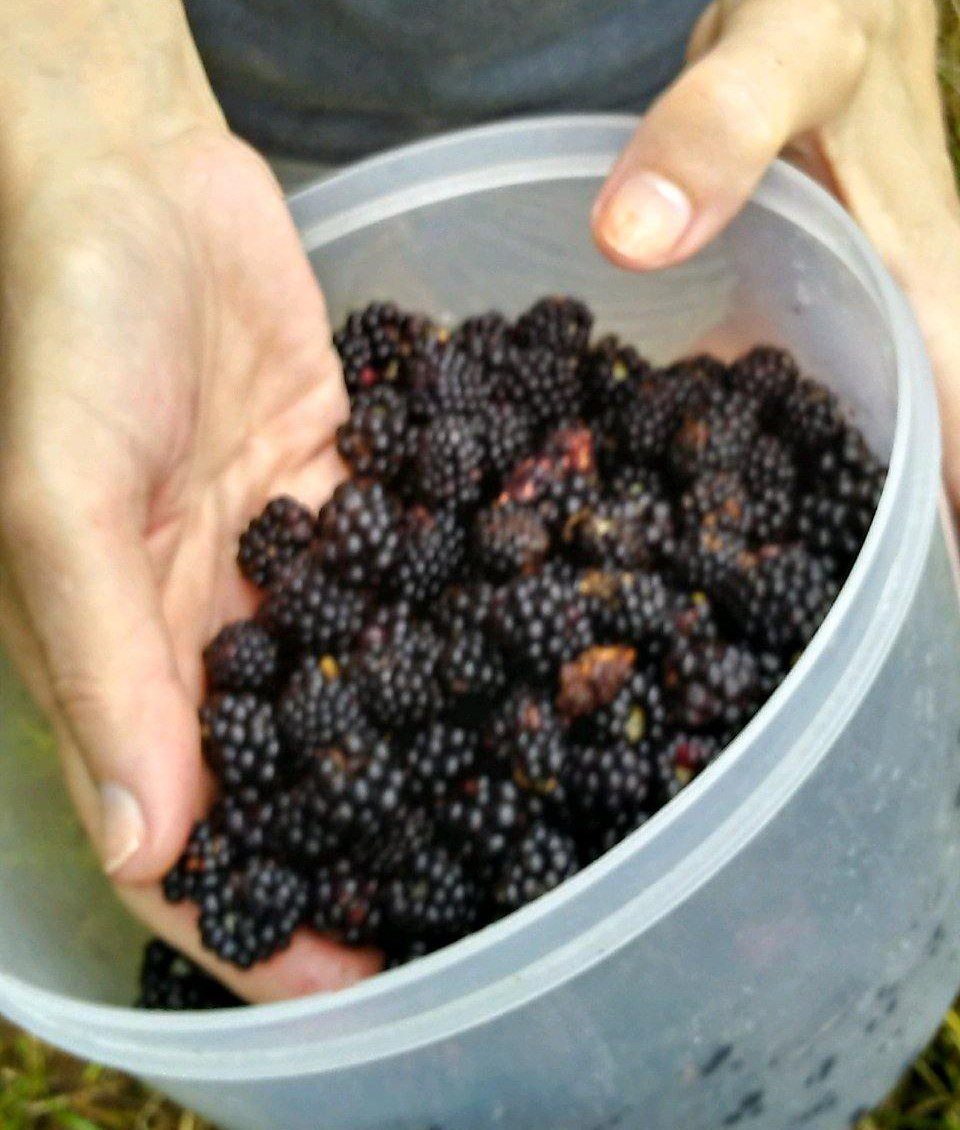
Blackberries are one of the gifts of God.  They grow wild and free in most open pastures in the South and they get ripe just about this time of year.  Even though abundant, they come with some strings attached.  They grow best in June and July, the hottest of hot months in Arkansas, and are attached to some awful thorn-bearing bushes.  To make matters worse, every stinging, biting, and itching insect known to man hang out in the best berry locations. 

My grandmother Nettie loved blackberries and knew the best ways to harvest and the best ways to avoid the attendant problems above.  She also knew the best secret places, those areas where the vines grew thick and were covered with the largest plump berries.  On the days we picked, she would get us up at daybreak while it was a relatively cool 80 degrees or so and head to the pasture.  Our heads were covered by big straw hats and our arms and legs were completely covered by clothing.  Both protected us from the direct rays of the sun and some of the smaller thorns but done little to alleviate the heat of mid-morning July days.   Before the days of DEET, DDT, and Napalm- things that appear to have some chance of killing off the little boogers- my grandmother used home remedies to repel the myriad insects that enjoyed feasting on us.  We spread grease or turpentine around our ankles, around our wrists, and any exposed areas. Kerosene, one of my grandmother’s cure-all remedies, also could be used in place of the above and also prevented any inclination to smoke while harvesting the berries. 

My uncle William was harvesting blackberries on Sand Ridge near Prairie View.  They were more than head high and full of berries that he was picking as fast as his hands could move when he heard a noise on the opposite side of the bushes he was emptying.  Pulling aside the bushes, he came face to face with a black bear that was enjoying the fruit on the backside of the patch.  Both let out a squeal, dropped the berries in hand, and skedaddled in opposite directions. We kept that bear in mind from that point forward but the real danger was Dave Rhineheart’s big bull that shared the pasture where we picked.

Fully armored in our clothing and protected by grandma’s elixirs, we took our gallon armor lard buckets and headed off to work.  If we were lucky and worked all morning, we could pick a gallon bucket by noon.  That bucket of berries would be turned into a dollar cash from one of the local housewives who converted it into a delicious cobbler by evening.  My cousin and I would stop by the local store and get a sixteen-ounce pop cola and a three-dip ice cream for a quarter on the way home. 

Once home, we would heat water over a wood stove, deposit it in a big iron washtub, and then take turns taking a bath.  Lye soap and a little bit of bleach deposited into the tub would hopefully dispose of any of the insects making it past our initial defense.  By the time we were through, the water was deep blue from the residual soap, kerosene, grease, dirt, and sweat.

Blackberry picking taught me many valuable lessons about life.  There is a reward and a sense of pride and accomplishment when you get through doing a job, the harder you work, the more reward you got, and last and most important, chiggers are hard to kill.

Rising Grain Prices Squeeze Catfish Industry

By Mary Hightower
U of A System Division of Agriculture

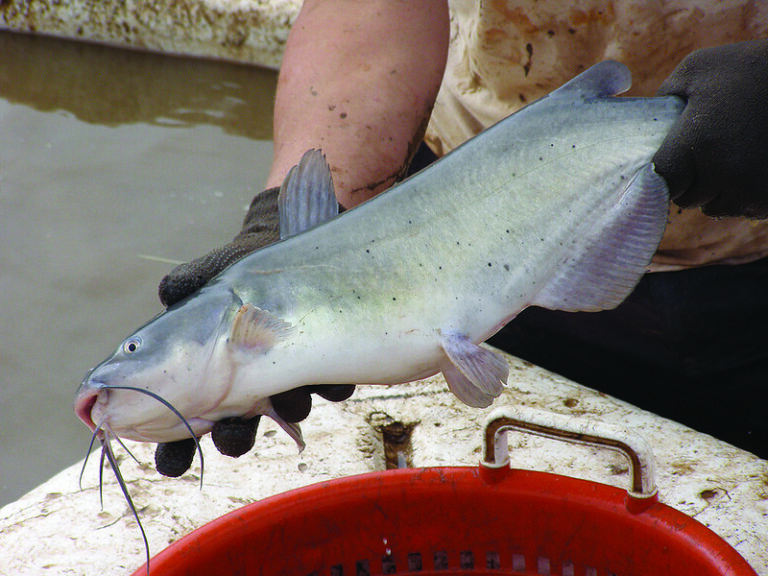
Rising grain prices are draining Arkansas’ catfish industry.

Four states — Mississippi, Alabama, Texas and Arkansas — produce 97 percent of catfish sales in the United States. U.S. catfish sales were $371 million during 2020, down 2 percent from $380 million the previous year. 

Last year, U.S. farm-raised catfish production was 324 million pounds from 59,305 acres of water. Arkansas produced 15.7 million of those pounds from 3,900 acres, valued at $16.6 million.

Arkansas is No. 3 behind Mississippi and Alabama in foodsize inventory as of July 1, according to the National Agricultural Statistics Service, part of the U.S. Department of Agriculture.  “Foodsize” is defined as fish that are 0.75 to heavier than three pounds. The same report showed Arkansas had 9.5 million stocker fish, up 2 percent from a year ago.

Declining pond acreage

In 2002, Arkansas had 37,500 acres of ponds in catfish production.

“By 2021, the industry is one-tenth that size, at just 3,700 acres,” said Scott Stiles, extension economist for the University of Arkansas System Division of Agriculture.

“One reason for the decline can be attributed to a sharp increase in feed prices that ran from 2007 to 2013,” he said. “From 2007 to 2013 the state’s catfish industry lost 22,200 water acres: a decline of 73 percent.”

Stiles said that catfish feed prices are largely driven by grain prices. What the catfish industry refers to as “32 percent feed” typically contains 30 to 44 percent soybean meal and 15 to 20 percent corn.

“Feed costs represent approximately 50 percent of total operating costs for catfish farmers,” he said.

“The U.S. average price for soybean meal rose 160 percent from $189 per ton in 2006 to a peak of $490 per ton in 2013,” Stiles said. “Over the same period, average corn prices in the U.S. moved to record highs, peaking at $6.89 per bushel in 2012.”

And the grain market news was only getting worse for catfish growers.

“For 2021, average soybean meal prices are projected to be the highest since 2013 at $395 per ton,” he said. “When feed costs are at high levels, growers may switch to a 28 percent feed to reduce costs. However, that option is still expensive as growers report paying $482 per ton in the past week for floating feed.”

If there is a bright spot for producers, it’s fish prices.

“Fortunately, catfish prices are slightly better than last year’s average of $1.06 per pound,” Stiles said. “Current farm-level prices are in the range of $1.25 to $1.30 per pound.”

Continued uncertainty

With August being a key yield-determining month for U.S. soybeans, some continued price volatility can be expected.

“Catfish producers are encouraged to keep an eye on the corn and soybean futures markets,” Stiles said. “With U.S. corn and soybean inventories at multi-year lows, there is potential for significant price volatility for the remainder of 2021 and into 2022. Catfish producers might consider booking a portion of their feed needs on pullbacks in grain prices.”

To learn about extension programs in Arkansas, contact your local Cooperative Extension Service agent or visit www.uaex.uada.edu. Follow us on Twitter and Instagram at @AR_Extension. To learn more about Division of Agriculture research, visit the Arkansas Agricultural Experiment Station website: aaes.uada.edu. Follow on Twitter at @ArkAgResearch. To learn more about the Division of Agriculture, visit https://uada.edu/. Follow us on Twitter at @AgInArk.

About the Division of Agriculture

The University of Arkansas System Division of Agriculture’s mission is to strengthen agriculture, communities, and families by connecting trusted research to the adoption of best practices. Through the Agricultural Experiment Station and the Cooperative Extension Service, the Division of Agriculture conducts research and extension work within the nation’s historic land grant education system.

The Division of Agriculture is one of 20 entities within the University of Arkansas System. It has offices in all 75 counties in Arkansas and faculty on five system campuses.

\The University of Arkansas System Division of Agriculture offers all its Extension and Research programs and services without regard to race, color, sex, gender identity, sexual orientation, national origin, religion, age, disability, marital or veteran status, genetic information, or any other legally protected status, and is an Affirmative Action/Equal Opportunity Employer.
The 5 Best Safety Practices for Working on Your Roof

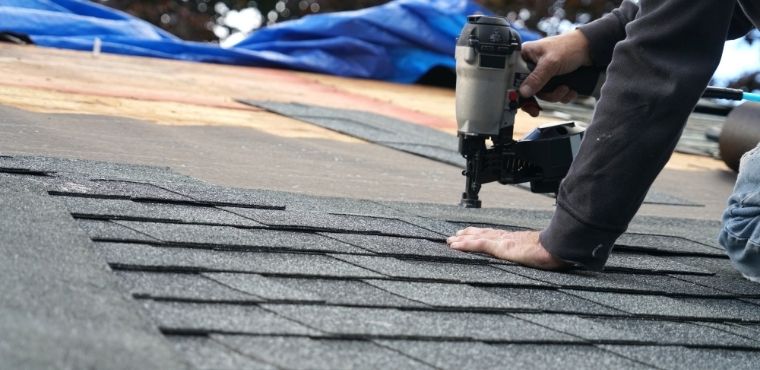
Time brings about so many potential issues for your roof. From heavy storms to harsh sunlight, many factors can cause damage, and it’s up to you as a homeowner to perform repairs. However, working on your home’s roof is incredibly dangerous, and you’ll need to play it safe if you insist on doing things yourself. These are the five best safety practices for working on your roof and how they can help you prevent a catastrophic injury.

Plan Out the Project Ahead of Time

First, make sure you plan out what you want to do on your roof before you actually begin. The more you understand what you need to do, the quicker you can complete each task. This way, you’ll spend less time near these danger zones and make more efficient use of your day. By spending less time above the ground, you also reduce your risks of falling off.

Use a Reliable Ladder

When you start climbing up onto your roof, use a ladder you know you can trust. It will be your sole means of getting up and down when you need to, so you don’t want an old, rusted model that’s falling apart. You should also know how to secure your ladder properly and climb safely. Start by engaging all locks, then place the ladder at a quarter-angle from the wall. Once you’re climbing, maintain at least three points of contact at all times.

Know How To Walk On a Roof

You’ll need to know how to walk on your roof as well. Because of how dangerous falls can be, you’ll want to limit your range of movement as much as possible. Fortunately, there are several things you can do to mitigate your risk, such as working at the right time of day and wearing the proper clothing.

Prepare For the Heat

Another of the best safety practices for working on your roof is to bring things along to help protect you from the heat. Roofing materials can get very warm under direct sunlight since they can either absorb or reflect that energy. This extra heat can quickly dehydrate you and even cause a serious sunburn if you aren’t careful. For this reason, bring along a water bottle and apply sunscreen before you start your work.

Hire a Professional

If you simply don’t want to take the risk, though, remember that you can always call a professional roofing contractor to help. These experts have years of experience working on heavily slanted roofs. They even have all the necessary safety equipment to keep themselves secure, so reaching out to one of these qualified businesses is the safest option of all.

Council Approves Purchase of New Pumper Truck in 5-to-1 Vote

The Greenwood City Council met in special session on Tuesday, July 20 at 6 p.m., Greenwood City Hall. The lone item on the agenda, the authorization for the fire department to purchase a fire apparatus.

All members of the council were present including Daniel McDaniel, Lance Terry, AC Brown, Tim Terry, Ralph Meeker, and Rod Powell. Also present, City Clerk/Treasurer Sharla Derry, Mayor Doug Kinslow, and Fire Chief Stewart Bryan. City Attorney Mike Hamby was not present for the meeting.

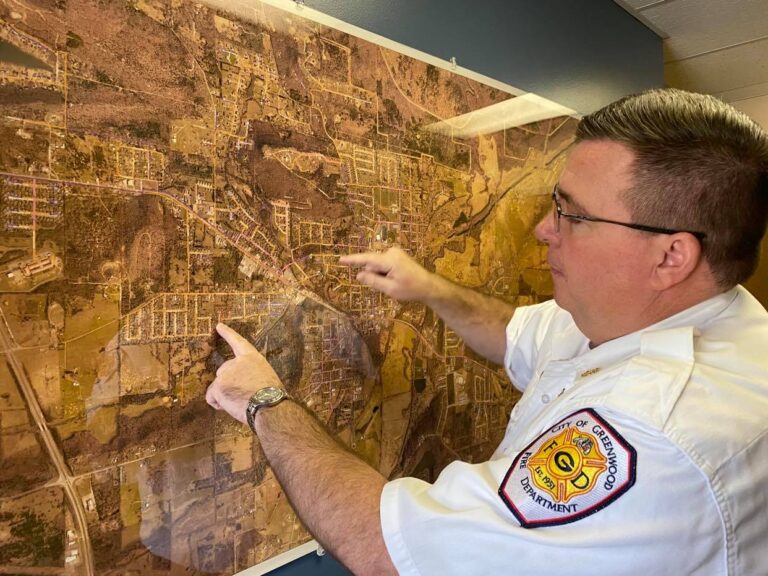
Chief Bryan addressed the members of the council stating that because of COVID, a significant price increase was imminent and that it had been decided by the Apparatus Committee, which is comprised GFD officers, that a model the same as Engine #3 was needed to replace Engine #1 in the existing fleet.

Chief Bryan explained the various details of the apparatus and gave reasons as to why the request was being made. Those reasons included:

  • August 1st price increase of approximately $25,000
  • Current E1 is out of NFPA certification
  • If purchased now, it will pay off before the 1/4 cent sales tax expires
  • Sales taxes are up and it is a good time to make the purchase
  • Equipment will be purchased after the first of the year in next budget cycle

A comprehensive financial analysis was presented by Finance Director Tom Marsh, via telephone. The cost of the Sutphen Pumper is $566,991.45. This purchase will be the third outstanding loan for the department. The fire station property and previous pumper loan will be paid off in August of 2022 and July 23 respectively. The Sutphen Pumper loan at a monthly payment of $10,125.23 would extend to August 2026.

The clerk asked that two items be added to the resolution authorizing the purchase. One, the phrasing that bid requirements do not apply as the Fire Department is a member of the “BuyBoard” and two, a description of what is being purchased. Derry asked that those two items be added to Section 1.

After discussion, a motion was made by Tim Terry and seconded by Lance Terry to approve the purchase authorization resolution with the modifications discussed. The motion passed with a majority vote, 5-to-1, with McDaniel voting against.

A motion was made by Tim Terry and seconded by AC Brown to approve the budget amendment resolution for the apparatus purchase as presented. Again, the motion passed with a majority vote, 5-to-1, with McDaniel voting against.

Three of the council members who voted for the measure are officers on the fire department: AC Brown, Rod Powell, and Lance Terry.

Resident Press reached out to Councilman McDaniel for comment,  he stated “If we need a piece of equipment and we have the money to buy the piece of equipment, I have no problem with that. My problem and my NO vote was because of the process with which this was handled. We are supposed to be a public entity, discuss things out in the open, and budget big-ticket items, none of that happened.  Instead, a special meeting was called with four and a half hours’ notice and I simply don’t think that looks above board, especially when half of the voting council members are also the officers of the department making the special request.” 

“Buying this truck is exactly why the taxpayers voted for the 1/4 cent sales tax,” stated Mayor Doug Kinslow. “The fire department is doing what it needs to do in order to maintain our ISO rating and it is a good insurance savings for folks. The taxpayers were kind enough to make sure we have the funds to maintain the department.”

Tigriphobia, Cynophobia, and Spheksophibia Descend On Mansfield’s Court

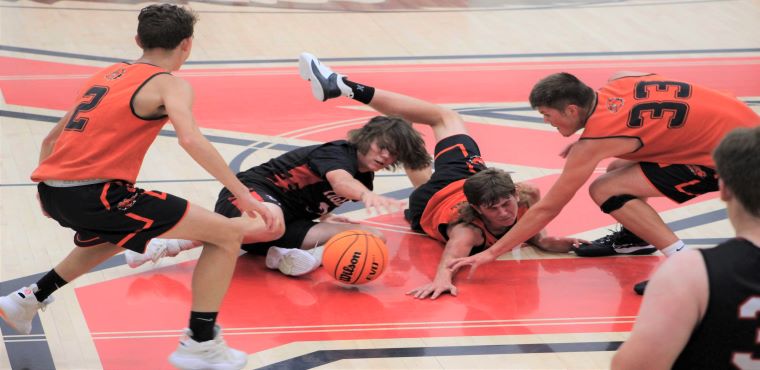
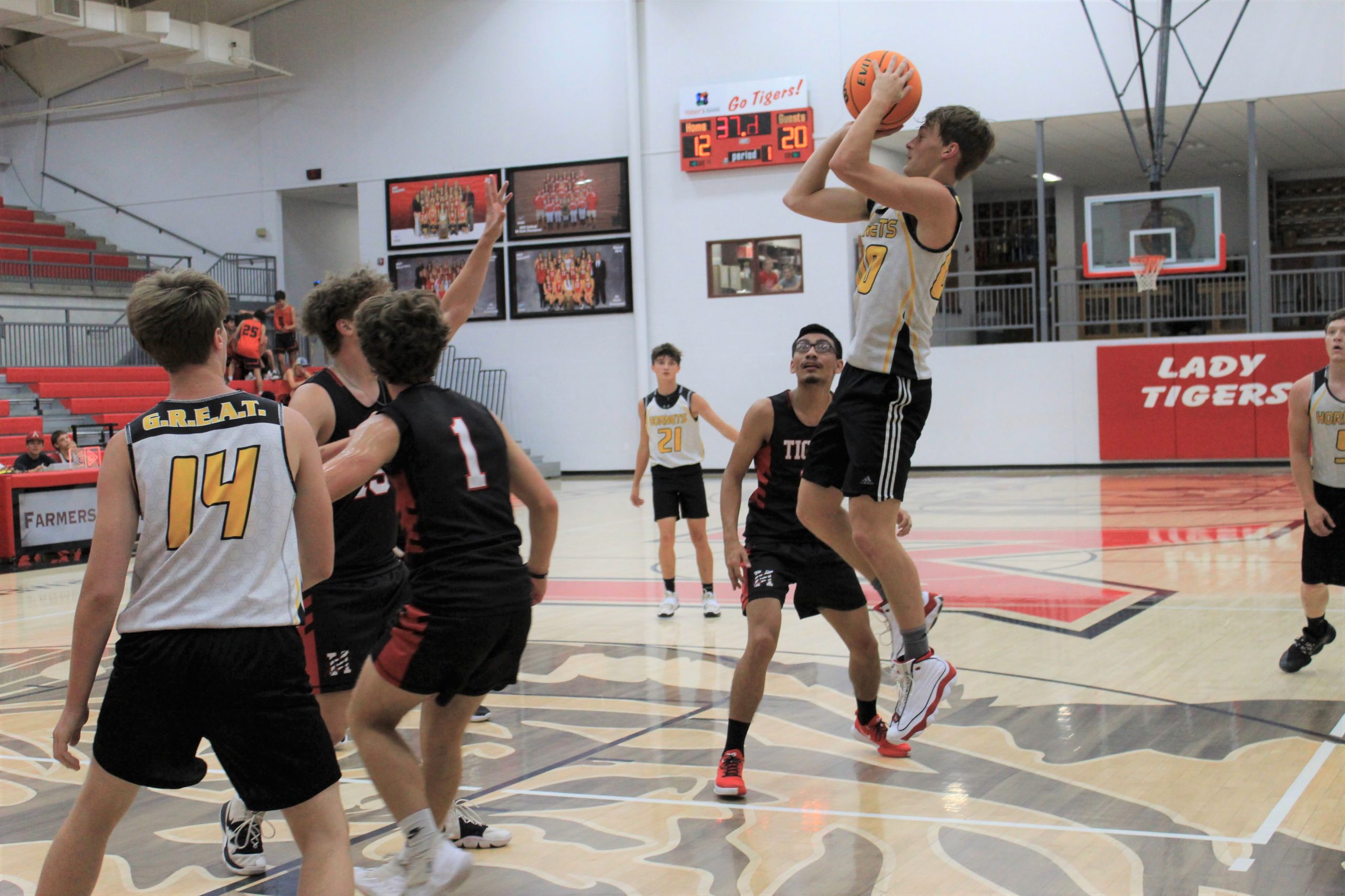
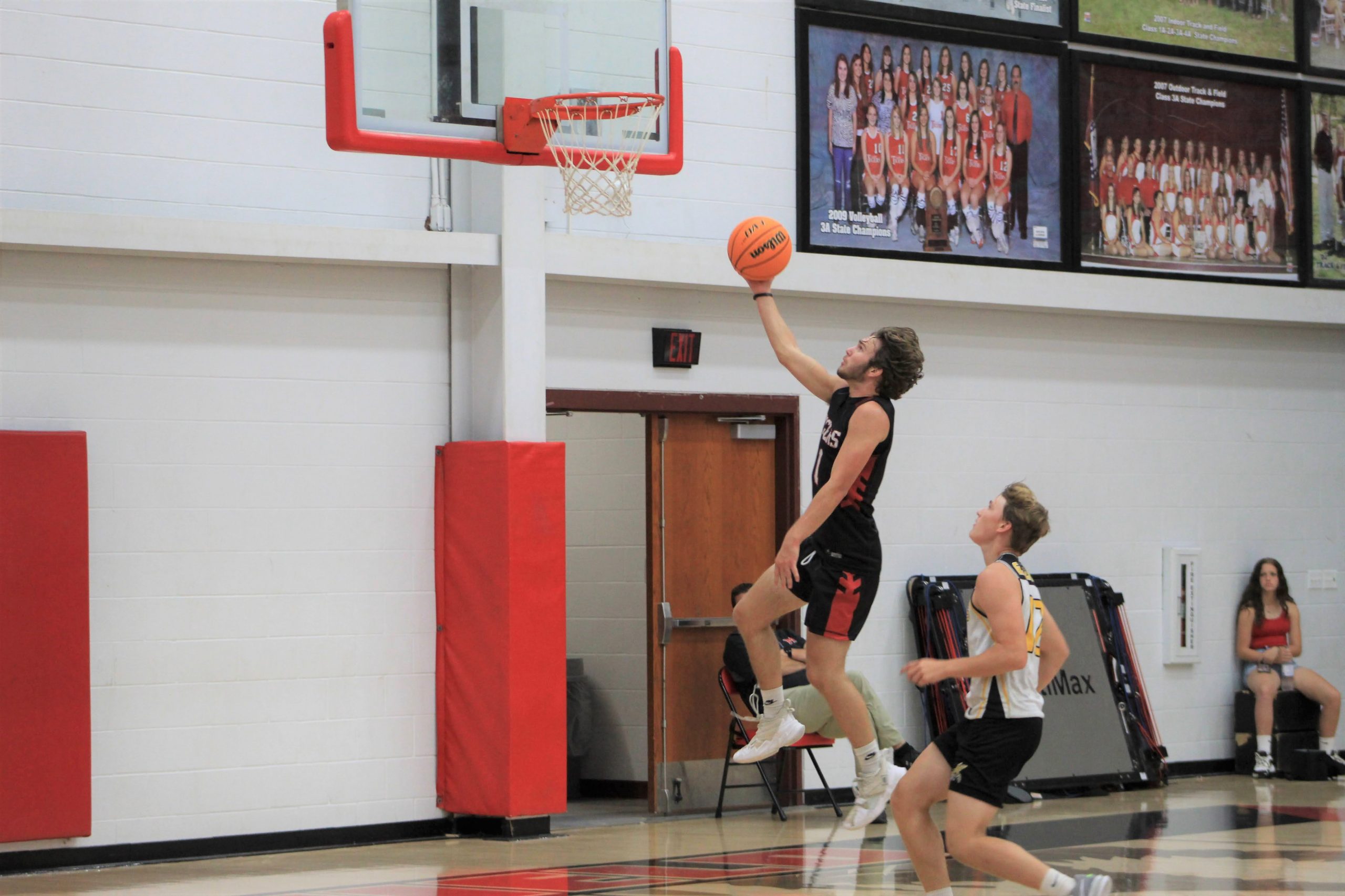
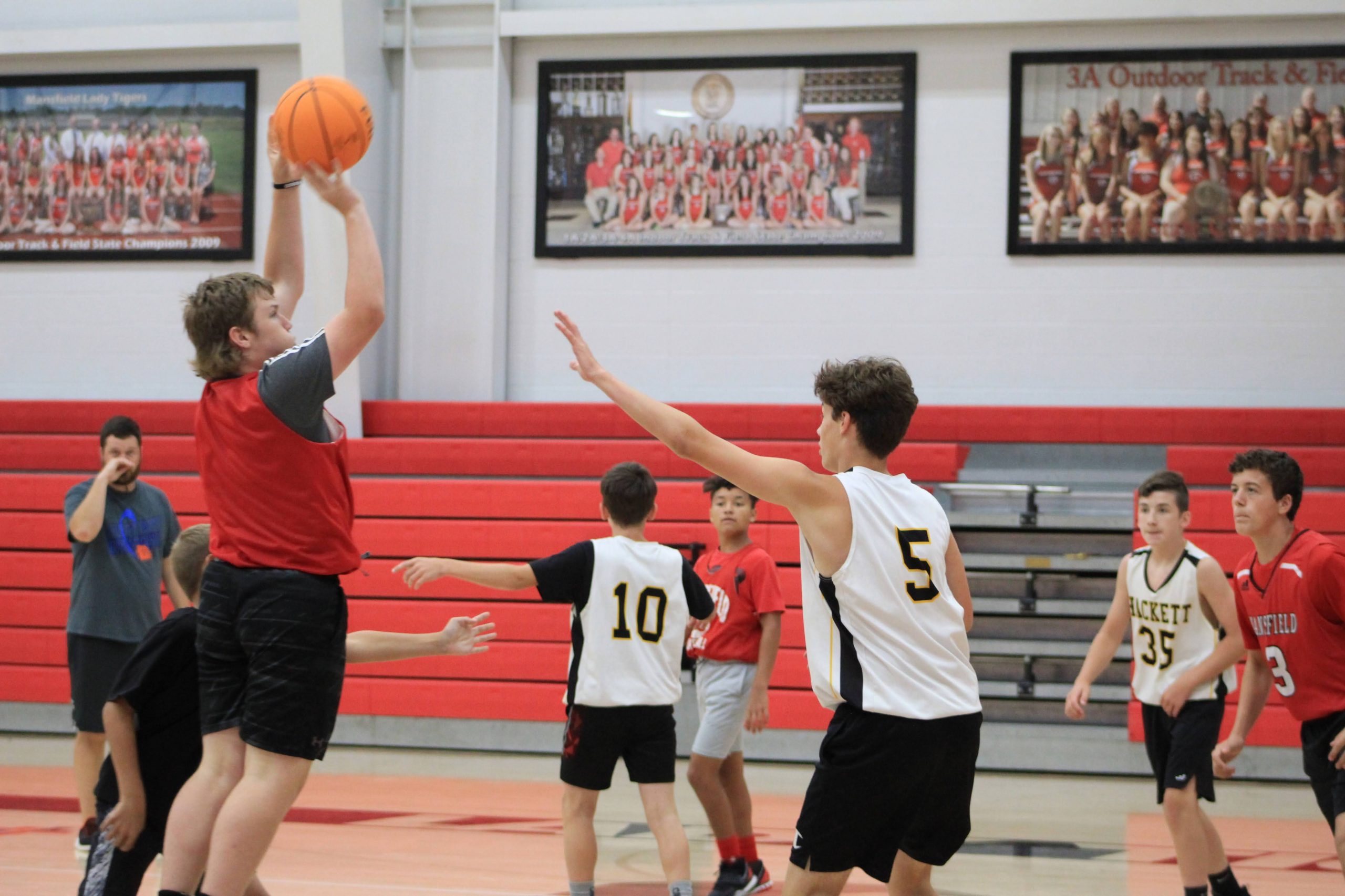
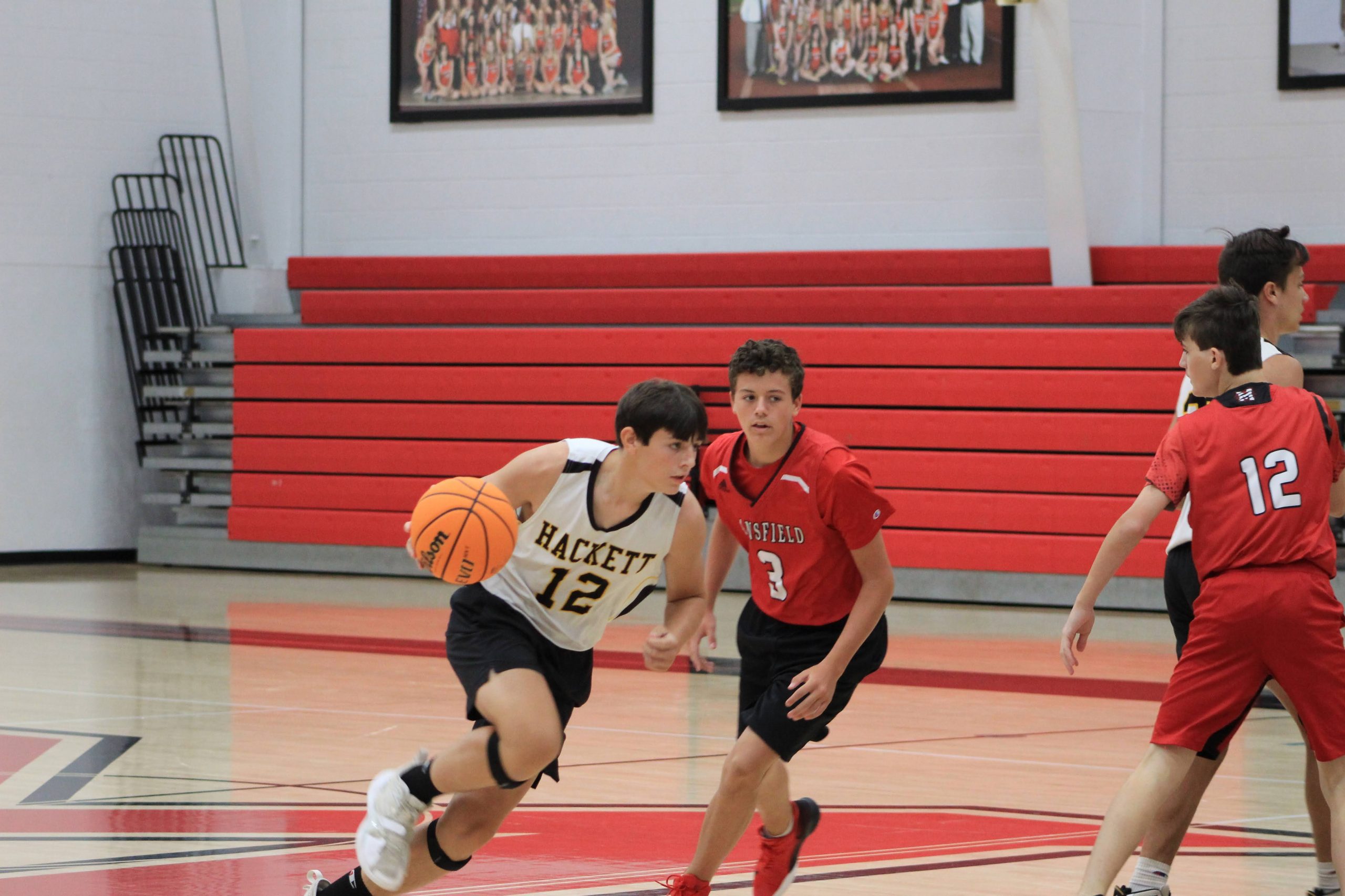
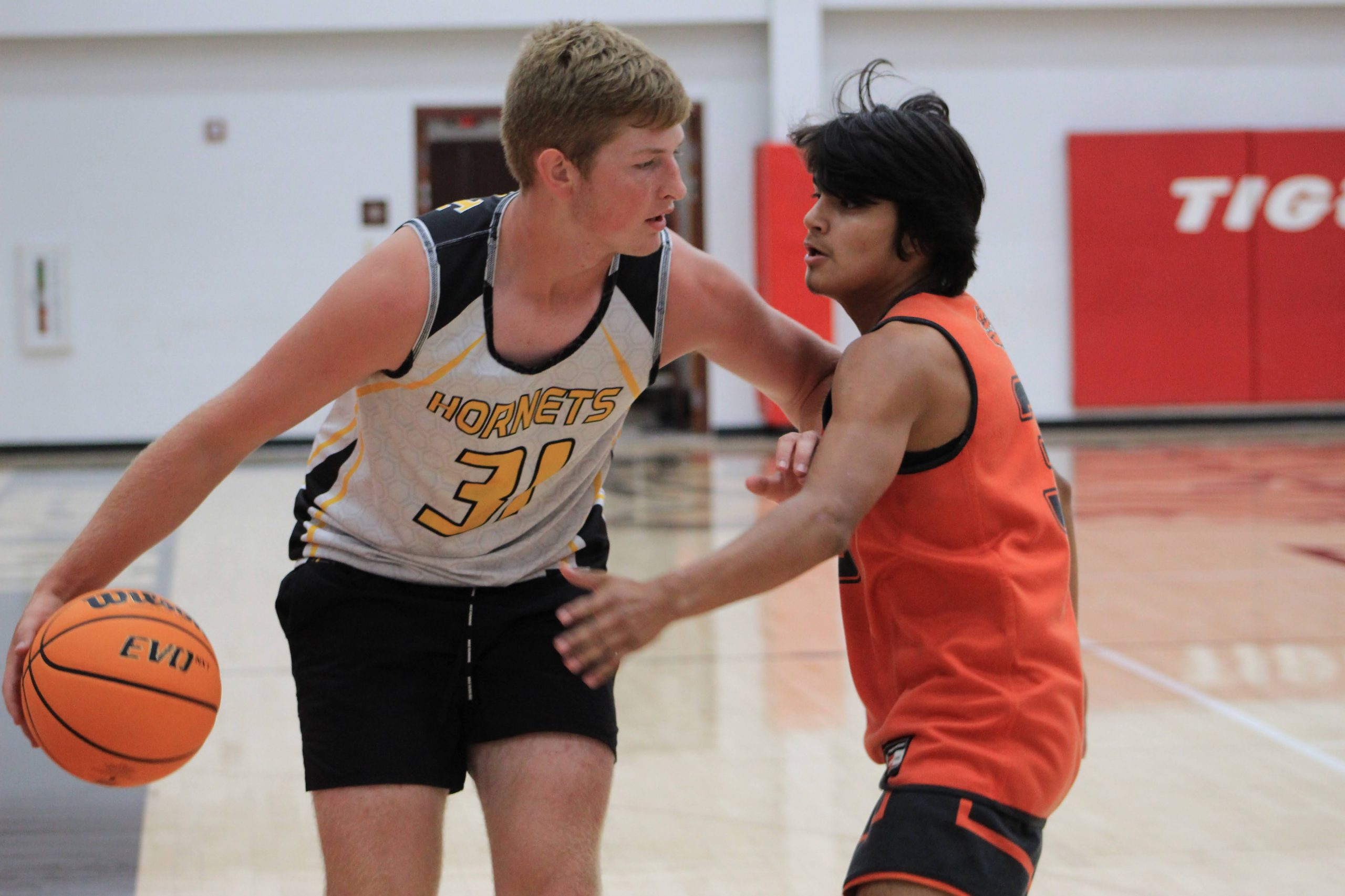
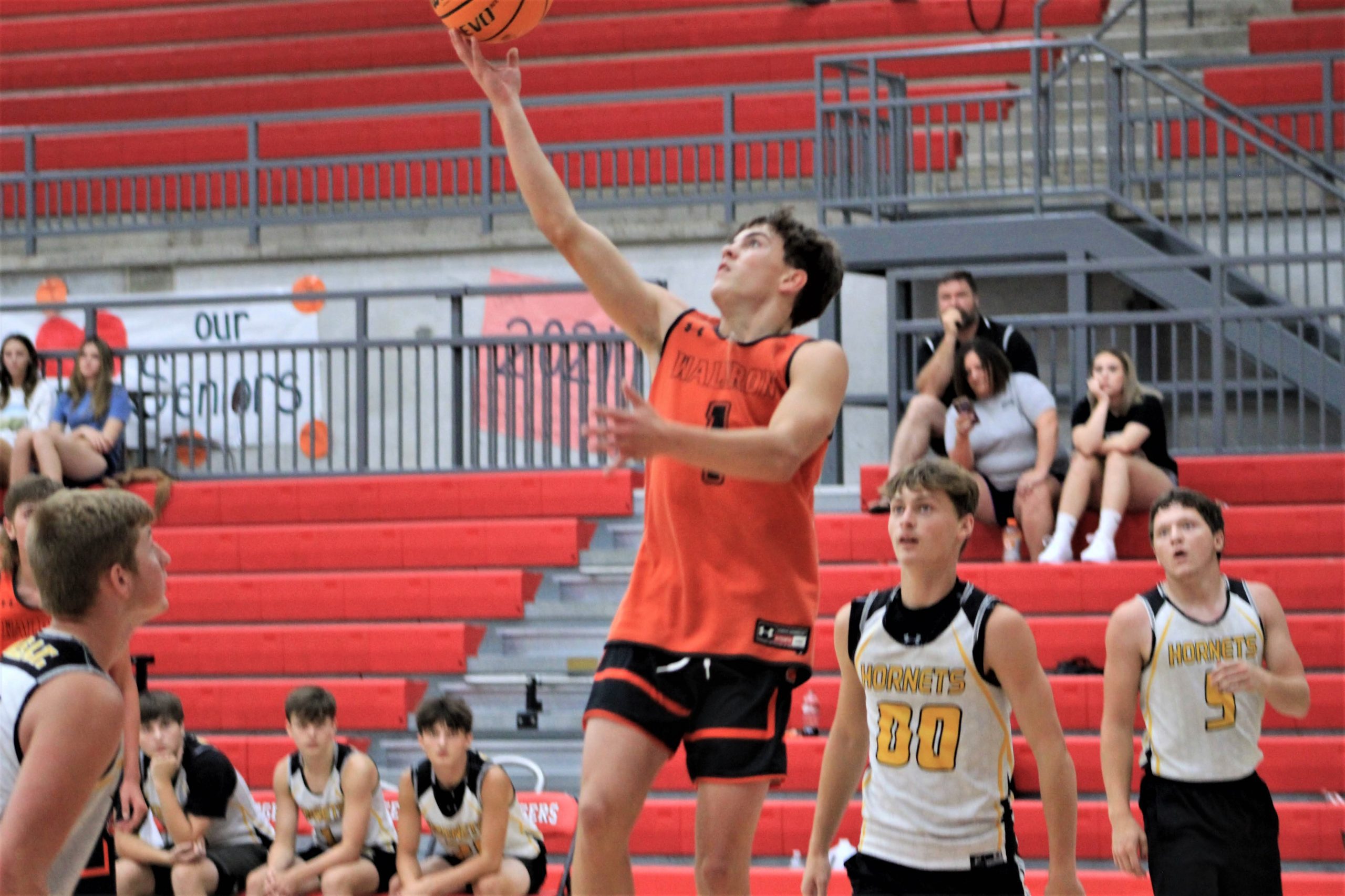
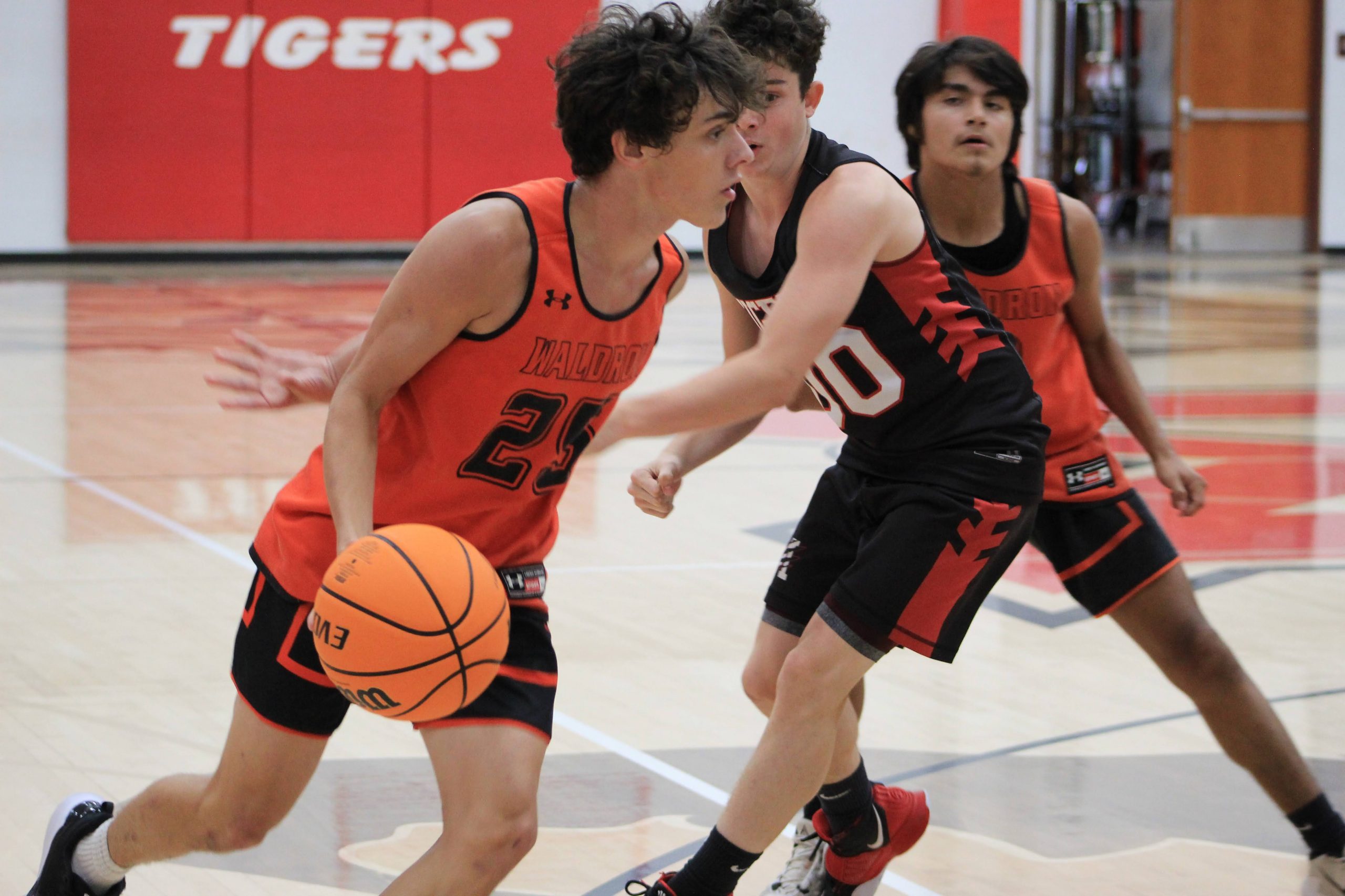
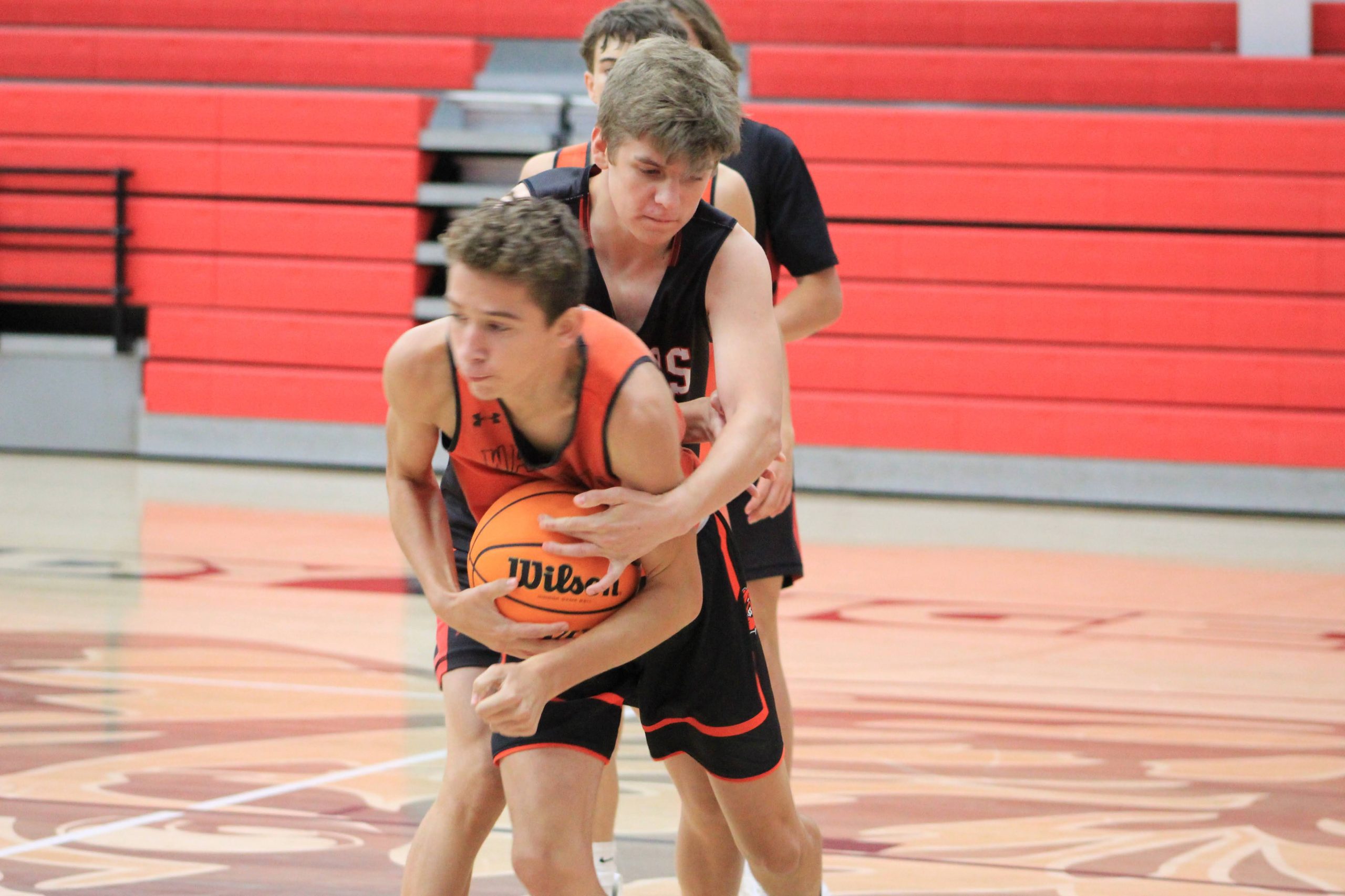
Summer basketball practice came to an end on July 28 for Mansfield, Hackett, and Waldron as the Jr and Sr Tigers, Jr and Sr Hornets, and Sr Bulldogs hit the court for a three town showdown. All in attendance were treated to a front-row seat of what’s to come in the 2021-2022 basketball season. With two of the three towns having a coaches shake-up as the Tigers gained new head coach, Joshua Brown, and the Bulldogs secured new head coach, Josh Atchley. Hackett is still led by Coach Kent Elmore.

The scrimmage kicked off with the Sr High teams of Mansfield and Hackett. Each match-up held two 15 minute quarters. At the end of the first quarter, the Hornets were up 20-12. Hackett was able to keep that lead and ended the match 44-39. The next round hosted the younger counterparts of the Tigers and Hornets Jr High team. This battle was as close as they come as the score read 13-12 Mansfield at halftime and 21-20 Tigers to close the game. Coach Elmore had this to say about his Hornets showing. “We have to get better at playing harder and not getting outworked. We have some talent, but other teams seem to outwork us, especially on the defensive end. That aspect is nothing but a mindset. It was good to close out the summer with two teams who are well-coached. I felt we were able to get better in some aspects and also find out what we needed to work more on.”

The third head-to-head was Waldron and Hackett Sr High. The Bulldogs skyrocketed on the scoreboard and never looked back ending their game with a score of 26-16. “We always play hard but we got to keep getting tougher,” explained Coach Atchley. “Not have tough moments but tough ballplayers. We have had a good summer of work, transitioning to some new things. When ball season gets here we will have to be ready to go. Lots of freedom during the summer for our guys to play and develop but once season gets here, we have to fine-tune what we as individuals can bring to the team. It was a great camp! I appreciate Coach Elmore and Coach Brown for allowing us to compete one last day.”

The conclusion of the scrimmage saw a precursor to the Battle of Scott County as Mansfield and Waldron shut things out. In true fashion, the Tigers and the Bulldogs kept things tight when halftime showed 13-10 Tigers. As the final seconds of the game set in, although the Bulldogs were able to close the gap to a one-point difference, Mansfield landed on top 28-27. Coach Brown ends by saying “I thought the guys on both Jr. and Sr. High competed hard and that’s the main thing I wanted to see today. We have had 5-6 practices with each group so everything has been on the fly since day one trying to get plays in.”

“In Sr High, they had to adjust in the second game because we haven’t worked much zone offense and I thought they did a great job of learning on the job in-game action. Jr. High has a lot of bodies and so it was great to get to see them play! They work really hard and want to do right. I saw a lot of things we can build on with both groups. We have to do a better job of communicating on the defensive end of the floor and our overall defense has to get better. We didn’t communicate as well as I would have liked with either team but we will get there!”

Traveling Warriors Showcase Sebastian County Super Stars

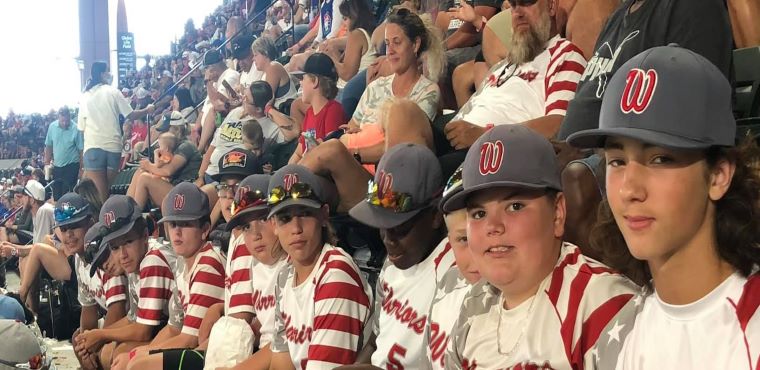
Pictured are the Warriors watching a Texas Rangers game

Travel baseball coach, Kevin Allen, started coaching t-ball for Eastside Baptist Church in 2012. “We played in the Fort Smith Church League full time for five years. In our sixth year, we played both church league and started to travel, but only played a handful of tournaments. In that year we won the 9U All-Star State Tournament in Conway. After that, we were hooked and started traveling full-time the next season with 10U players. So for the last four years, we have traveled full time.”

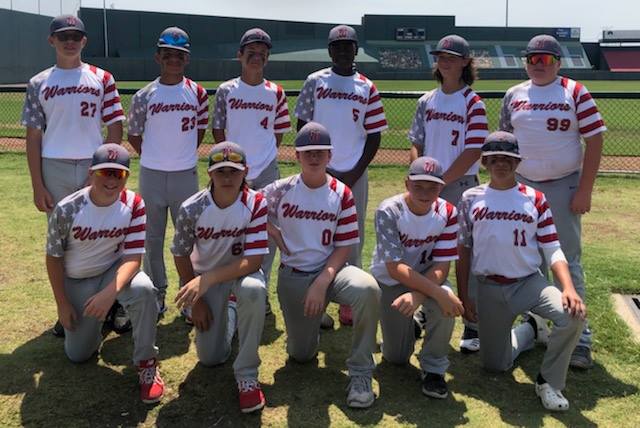
This seasons roster consisted of Cooper Edwards – Mansfield, Steven Thornburg – Hackett, Travir Shelton – Fort Smith, Bradley Chandler – Greenwood, Wesley Raggio – Greenwood, Elijah Rogers – Hackett, Jeremiah Shaw – Greenwood, Logan Thessing – Fort Smith, Walker Allen – Fort Smith, Rhett Moss – Fort Smith, and Wilson Key – Fort Smith. And coaching alongside Allen was Randy Moss, Steven Thessing, Travis Shelton, and Billy Thornburg.

This past season for the USSSA AA Warriors was good but tough as they faced many other talented teams. With a record of 25-21, the Warriors decided that they were going to play in a World Series in Dallas mainly because they had divisions while most other locations didn’t. “We wanted to play within our own classification of AA. But we endured a slight bump in the road where two of our players were unable to attend so we picked up two additional players, Michael Polecat from Muldrow and Maddox McCalip from Fort Smith, to attend the series with us.”

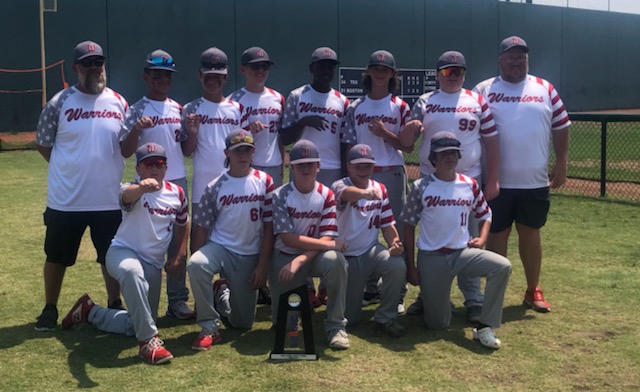
The Third Place AAA World Series Warriors

Now having the play situation under control, the Warriors were ready to go. Or so they thought. At the last minute, they were informed by the state director that the team Polecat and McCalip played on, had been bumped from AA to AAA. That now meant that the team had to move up to a bigger team division as well. But the Warriors lived up to their name and continued to push ahead. “After fundraising and paying for the trip, we couldn’t cancel and it wasn’t fair to tell Michael and Maddox that they couldn’t play. So we bumped up to AAA and went to play!”

“I will have to say though, that my expectations for the entire series were to just survive.” The Warriors suited up for a five-game guarantee tournament with three pool games and a double elimination bracket. The pool games started on a Wednesday with the bracket games that Friday. “Given it was double elimination, teams were losing out and done by Friday. But my first goal was to make it to Saturday. Our boys responded well and against all odds won three straight games on Friday to advance to Saturday in the winners bracket.”

Come Saturday, the Warriors started out down to a team after they scored four runs in the first but battled to win their first game 11-6. The boys suffered a loss in their next game but they still advanced to the semi-final round on Sunday. After swimming in a shark tank of 22 blood-thirsty AAA teams, the underdog AA Warriors combatted through many ups and downs to finish Third Place in the AAA World Series. “We are so proud of the effort that these boys put forth no matter how hard things got!”

Arrest Reports 7/18

Arresting agency – Greenwood Police Department:
Michael Ray Adaway of Greenwood was booked into the Sebastian County Detention Center on July 21 at 1:13 p.m. and released on signature bond July 21 at 8:36 p.m. Adaway was charged with possession of a controlled substance – schedule VI misdemeanor <4oz, and driving while license canceled/suspended/revoked.

Carrie Janine Hokit of Greenwood was booked into the Sebastian County Detention Center on July 22 at 3:13 p.m. and released on signature bond July 22 at 5:41 p.m. Hokit was charged with theft of property <$1k.

Arresting agency – Arkansas Parole:
Denver Alan Davis of Greenwood was booked into the Sebastian County Detention Center on July 19 at 10:15 a.m. and remains on hold for the Arkansas Department of Corrections.

Arresting agency – Sebastian County Sheriff’s Office:
Gary Edward Knotts of Greenwood was booked into the Sebastian County Detention Center on July 21 at 10:15 a.m. and released on signature bond July 27 at 4:10 p.m. Knotts was charged with communicating a false alarm – cause action of emergency personnel – physical injury.

**The charges against those arrested are allegations and the cases are still pending in the courts.**

Arrest Reports 7/18

Arresting agency – Sebastian County Sheriff’s Office:
Benjamin Levi Black of Huntington was booked into the Sebastian County Detention Center on July 28 at 9:25 a.m. and released on legally sufficient bond July 28 at 10:22 a.m. Black was charged with assault in the 1st degree.

Justin Carroll of Waldron was booked into the Sebastian County Detention Center on July 23 at 8:14 a.m. and was released on legally sufficient bond July 23 at 1:32 p.m. Carroll was charged with theft by receiving.

Christian Jeremiah Smith of Hackett was booked into the Sebastian County Detention Center on July 24 at 9 p.m. and released on legally sufficient bond July 24 at 11:42 p.m. Smith was charged with petition to revoke – felony.

Arresting agency – Arkansas Parole:
Eric Kyle Chestine of Huntington was booked into the Sebastian County Detention Center on July 21 at 10:55 a.m. and remains on hold for the Arkansas Department of Corrections.

Arresting agency – Hackett Police Department:
James Taylor Keaton of Hackett was booked into the Sebastian County Detention Center on July 22 at 9:07 p.m. and released on bond July 23 at 2:53 p.m. Keaton was charged with three counts of contempt-willful disobedience (failure to pay fine), and assist outside agency-misd.

**The charges against those arrested are allegations and the cases are still pending in the courts.**

Pittbull Days of Summer

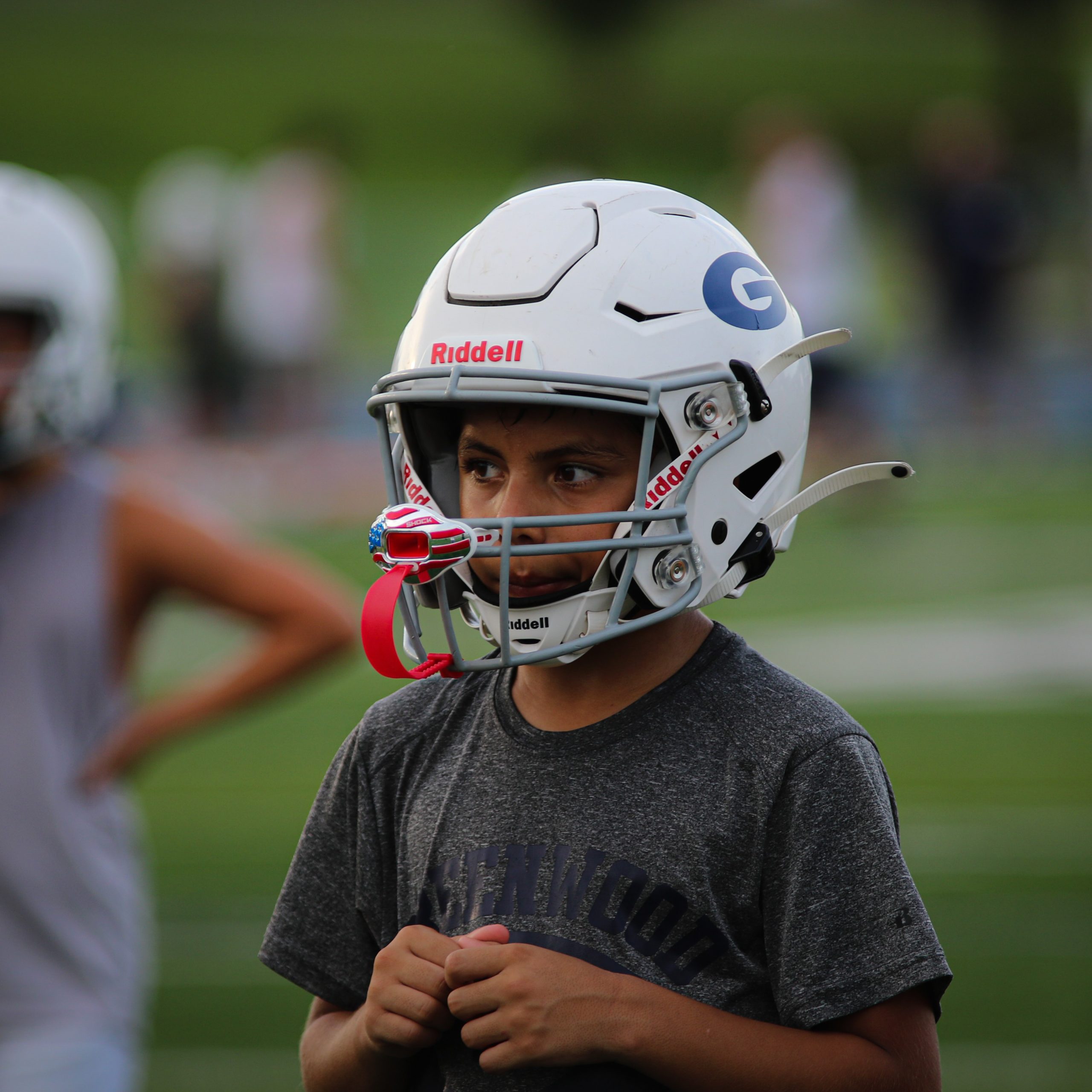
“ONE KNEE TWO EYES!!!!” is exclaimed as the group of upcoming 3rd grade through 6th Grade Pittbulls gather on the “G” at Smith-Robinson Stadium. Although it is not the Coaches saying it, it is the little voices. “AHH! You guys have been to FASDOGS!!!” Greenwood High School Head Coach Chris Young replies to the faces staring back at him.

PAD Camp is a pilgrimage of sorts for the youth in South Sebastian County, with area youth football teams sending players to get a glimpse of what makes Greenwood Football tick. Where else do you get to be taught the foundation of Greenwood Football? This is it. Coupled with the previously mentioned FASDOGS it has become the Pittbull Days of Summer.

Bulldog Head Coach Chris Young
Upcoming 6th graders make their way to another drill

This years camp was a return to normalcy for many, an abbreviated season last year has left several teams hungry for more coming into this season. Later this week we will have a history, current state, and future look at the Pittbulls organization and arguably the toughest league top to bottom in the Bi-State League.

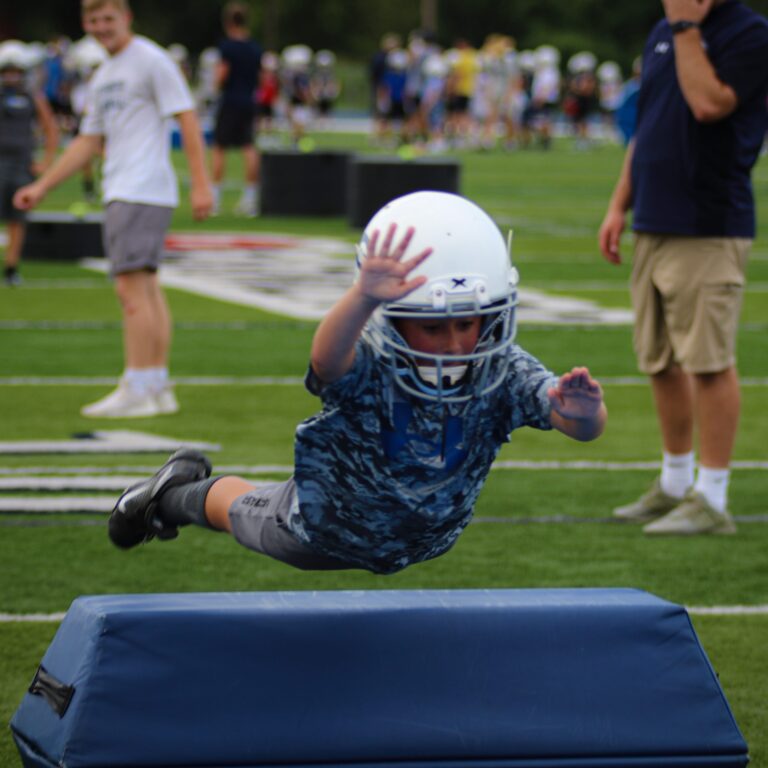
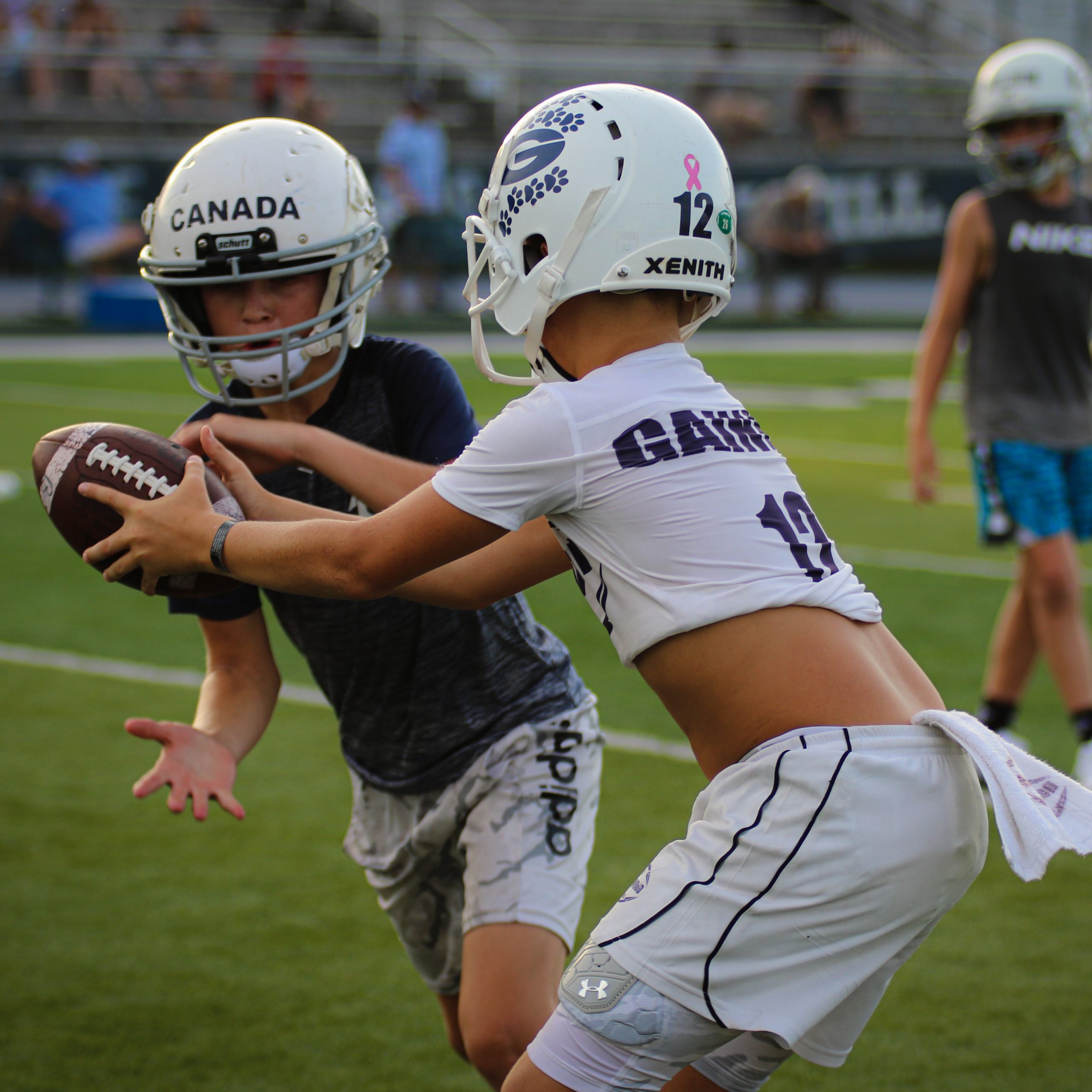
The young athletes get to go through several drills that the high school uses for their practices. This is also the time the youth coaches get to evaluate the incoming athletes for their draft to be held a few days later. For some of the kids, this is their first time putting on the synonymous white helmet, some with G’s on them, still shiny white out of the box. The “veterans” of the Pittbulls carry battle scars and pride stickers. Familiar faces roam about evaluating different drills, former Varsity Coaches Nathan Staton, Daniel Lunney, and Josh Nation keep a keen eye on the activities. Last names intertwined in Greenwood sports history like Canada, Meeker, Burton, and Golden are called out throughout the drills.

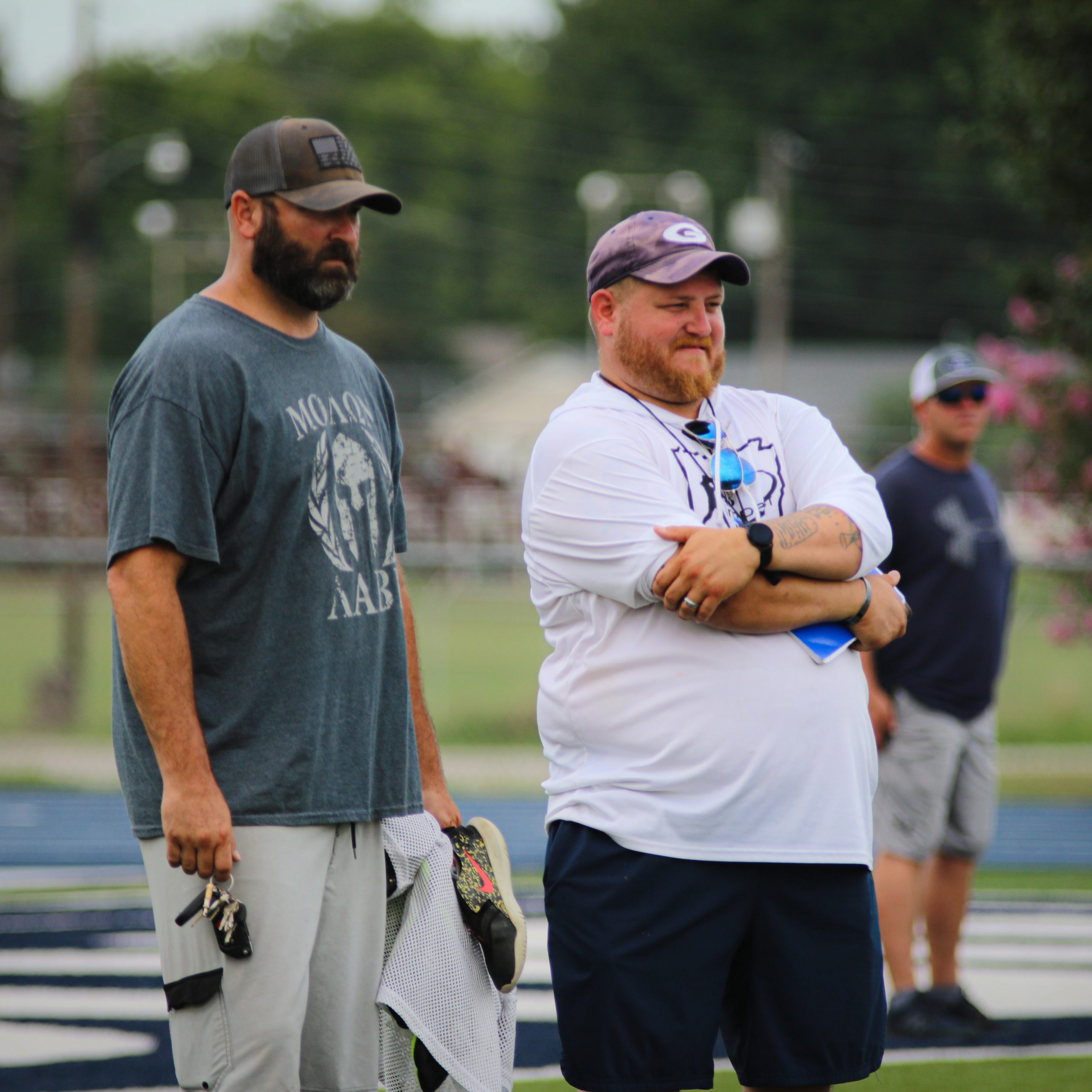
6th Grade Coaches Stacy Canada and Dale Gaines look on to one of the defensive drills

With the heat index being in the 100’s the usual crack of the pads was muted as they were not in full pads. But that time is coming.

Bulldog Defensive Coordinator telling the youth athletes how to do a drill

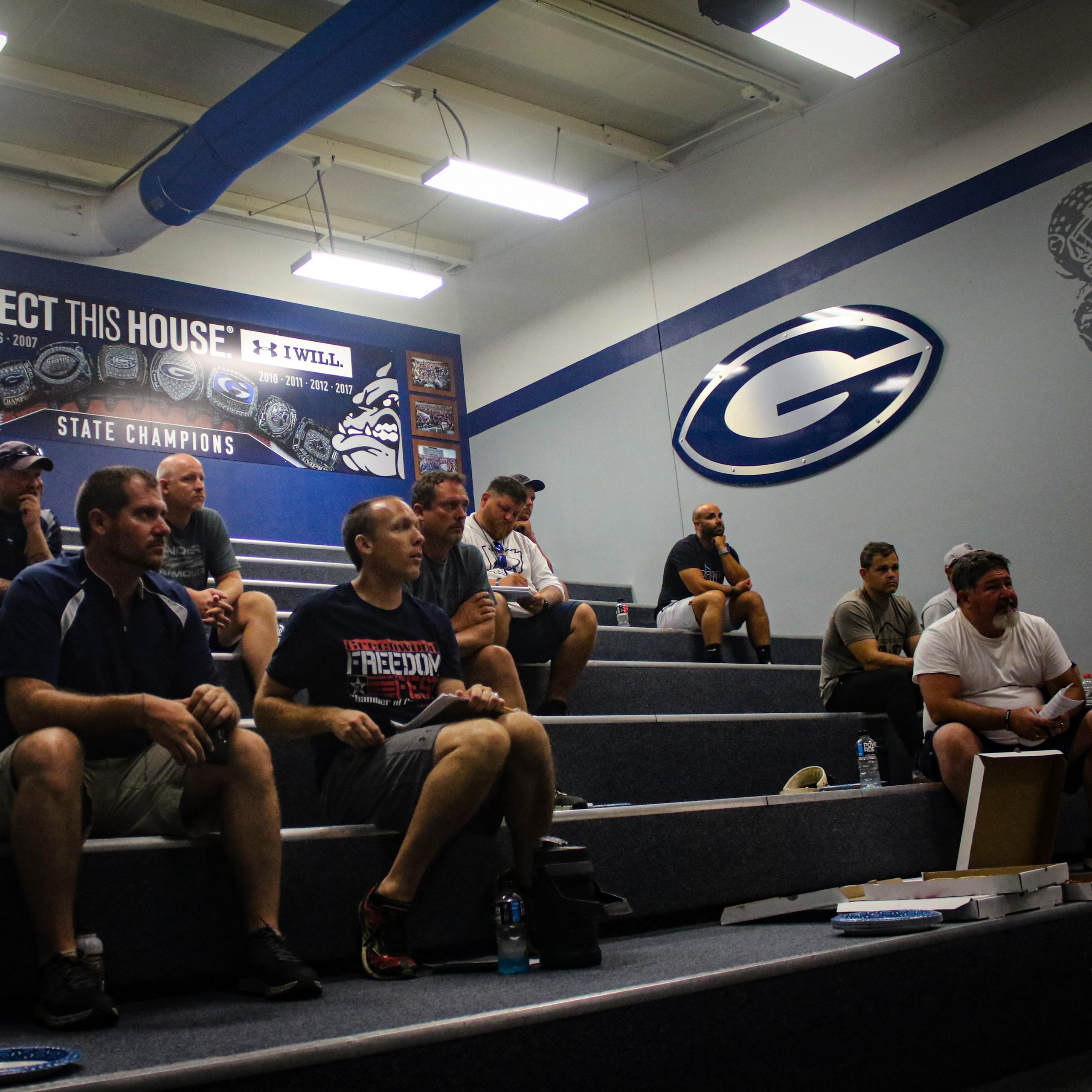
After the PAD Camp, the best part is the Coaches Clinic put on by the High School Coaches. Night one consists of Head Coach Chris Young going over Pittbull Coaching philosophies and then going over offensive positions with the Varsity position coaches. Night two they go over Defense. Several things are covered in the one-hour session, proper stance, proper footwork, and drills to go through with your athletes. Something that sets the Pittbulls apart from other youth organizations is the tie-in with the High School. The reasoning is after 6th grade the athletes go into the School system, they are wanting kids that had fun in football and are prepared to hit the field in 7th grade as Bulldogs.

Pittbull Coaches going through class time.

The upcoming season is approaching fast, and these youth athletes are carrying on the High School program’s mantra of “Never Satisfied”

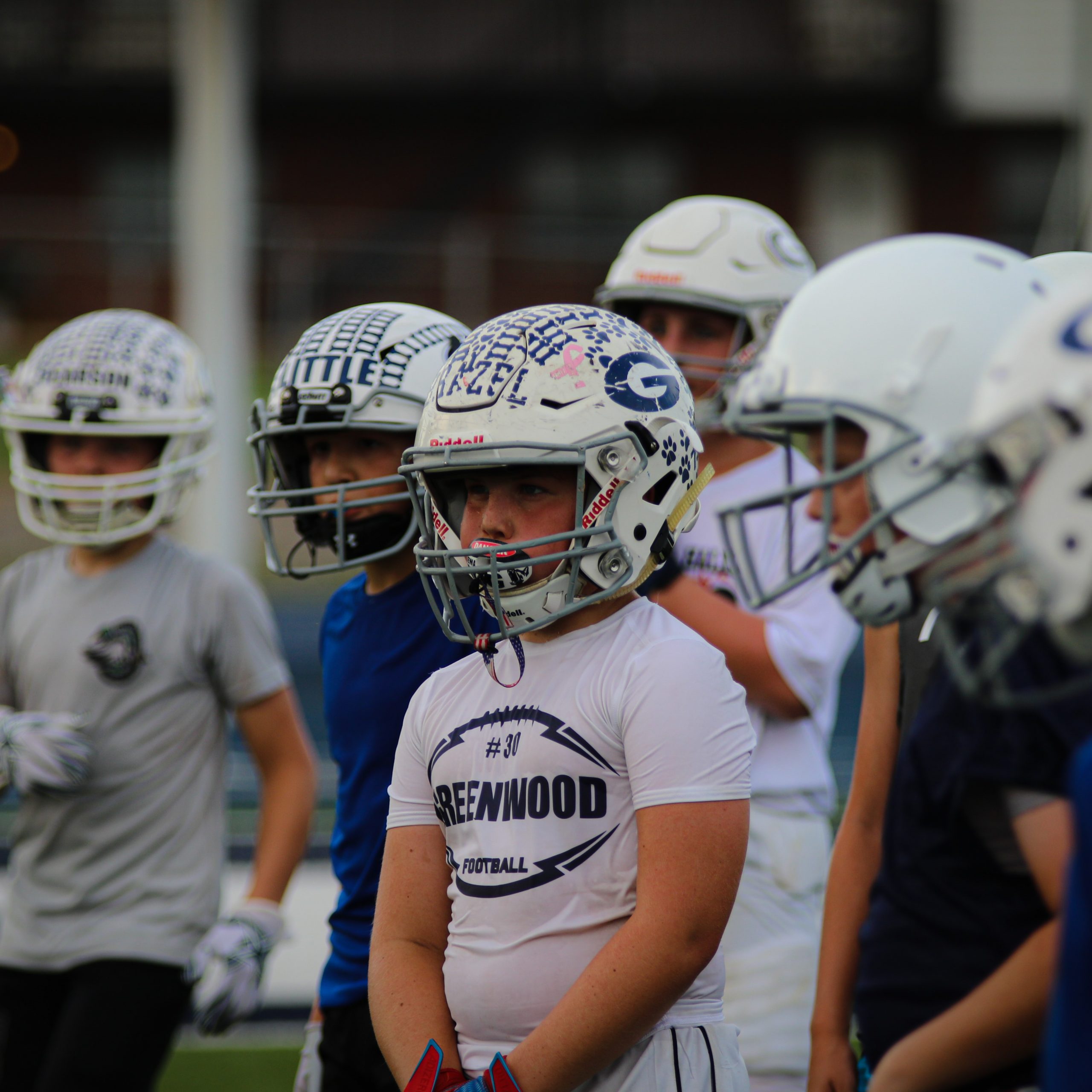
5th and 6th grade players watching a drill
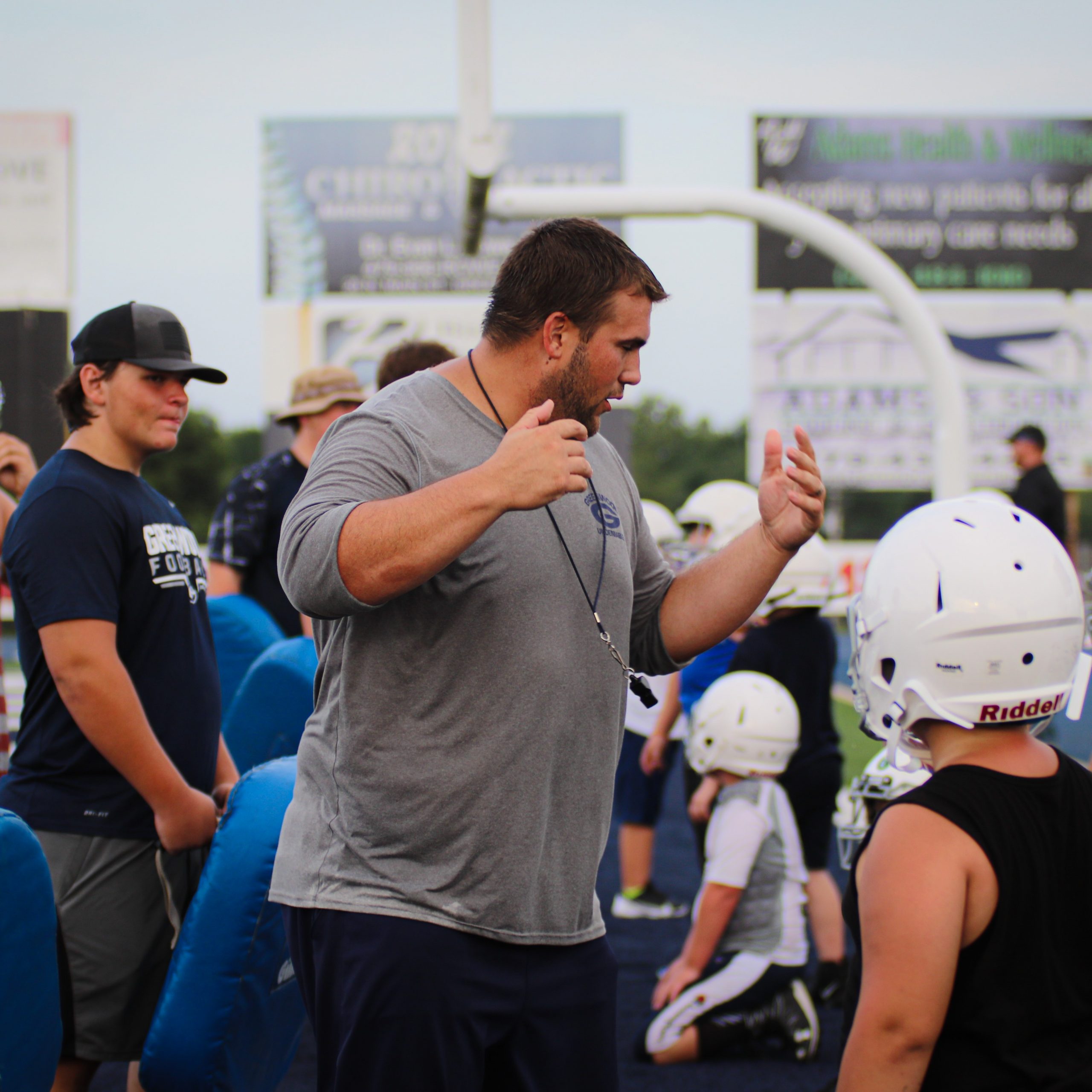
Bulldog Co-Offensive Coordinator Austin Moreton instructs the Lineman
Bulldog Co-Offensive Coordinator Stephen Hogan directs traffic to the next drill
Bulldog Safeties Coach Thessing going over proper stance