



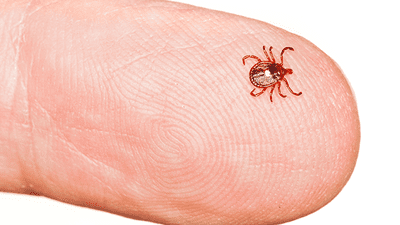
By Rebekah Hall University of Arkansas Division of Agriculture
When spending time outdoors in the Natural State this summer, it’s important to prevent tick bites and the diseases they can carry. According to the Arkansas Department of Health, ticks cause more human disease than any other insect in Arkansas.
“Not all ticks transmit diseases, but it is crucial to protect against ticks because some tick species can cause dangerous illnesses,” said Heather Wingo, extension immunization educator for the University of Arkansas Division of Agriculture. “Taking steps toward prevention is truly the best defense against tick-borne illnesses.” Wingo said tick-borne illnesses prevalent in Arkansas include Rocky Mountain spotted fever, which is the most common; Ehrlichiosis; Tularemia; Lyme disease; Southern Tick-Associated Rash Illness, or STARI; and Heartland virus, an emerging tick-borne illness.
“Alpha-gal syndrome is also a tick-borne illness that has been getting attention in the media recently due to the increase in diagnosed cases,” Wingo said.
When and where can you encounter ticks?
Wingo said most people are likely to encounter ticks outdoors in grassy, brushy or wooded areas, or when near animals.
“Many people even get ticks in their yards without realizing it,” Wingo said. “It’s also important to know that tick bites can happen year-round, but ticks are most active during the warmer months from April to September.”
How can you prevent tick bites?
Wingo suggested using the following ways to prevent tick bites:
· Avoid wooded and brushy areas with high grass and leaf litter. “Since hiking is a prime activity this time of year, it’s also helpful to walk in the center of trails,” Wingo said.
· Treat clothing and gear with products containing 0.5 percent permethrin. Another option is to use insect repellents registered with the U.S. Environmental Protection Agency that contain DEET, picaridin, IR3535, oil of lemon eucalyptus, para-menthane-diol or 2-undecanone. “If you are not sure about which insect repellent is best for you, the EPA has a helpful search tool,” Wingo said. “Always follow the instructions of insect repellent products, and if using sunscreen, apply sunscreen first and insect repellent second.”
· Apply pesticides to control ticks. While pesticides are an option, Wingo said you should not rely on spraying to reduce your risk of tick bites. “If you are unsure about this option, you should check with your local health department or county extension office about the best time to apply pesticides in your area, the best type of pesticide to use, and any rules and regulations regarding pesticide application on residential properties,” Wingo said.
· Make outdoor spaces inhospitable to ticks. Wingo said there are some simple landscaping techniques that can help reduce tick populations, such as removing leaf litter, clearing tall grasses and brush, mowing frequently and removing trash from your yard. “Other options include keeping playgrounds, decks and patios away from yard edges and trees, stacking wood neatly in dry areas, and creating a three-foot barrier of wood chips or gravel between lawns and wooded areas to restrict tick migration into your yard.”
As a precaution, it’s smart to regularly check for ticks after being outside, Wingo said.
What do you do if you find a tick on your body?
If someone finds a tick on themselves or their child, they should remove it as soon as possible by using a pair of clean tweezers to pluck it off, Wingo said.
“Try to grasp the tick as close to the skin’s surface as you can to avoid squeezing the tick’s body, and pull the tick away from the skin,” Wingo said. “After disposing of the tick, make sure to thoroughly clean the bite area and your hands with soap and water, rubbing alcohol or hand sanitizer. If you find one tick on your body, be sure to check for other ticks.” The U.S. Centers for Disease Control and Prevention recommend disposing of the live tick by placing it in a sealed container, wrapping it tightly in tape, flushing it down the toilet or putting it in alcohol.
“If you develop a rash or fever within several weeks of removing a tick, see your doctor,” Wingo said. “You will need to tell your doctor about the recent tick bite, when the bite occurred, and where you most likely picked up the tick.”
Wingo said it can be helpful to take a picture of the tick to help identify it before disposing of it. She also suggested documenting the tick bite itself to remember it for a potential doctor’s appointment.
Are there vaccines for tick-borne illnesses? Pfizer and Valneva are currently developing a new vaccine to help prevent Lyme disease, Wingo said.
“Currently, Phase 3 trials have been completed for the vaccine, and Pfizer is planning to submit it to the U.S. Food and Drug Administration for regulatory approval to start developing vaccine recommendations on who should get this shot and how often,” Wingo said. “It’s currently showing 70 percent efficacy in preventing Lyme disease in people older than five.”
The potential new vaccine would be a series, with three shots administered initially, followed by an annual booster to maintain prevention against the illness, Wingo said. To learn more, check out the Cooperative Extension Service fact sheet on Tick-Borne Diseases in Arkansas or the Arkansas Department of Health’s Tick-borne Illness Information page.
The mention or use of product or trade names is for informational purposes only and does not imply endorsement by the University of Arkansas Division of Agriculture or a preference that excludes other suitable products.
To learn about extension programs in Arkansas, contact your local Cooperative Extension Service agent or visit uaex.uada.edu. Follow us on Facebook and Instagram. To learn more about the Division of Agriculture, visit uada.edu. To learn more about ag and food research in Arkansas, visit the Arkansas Agricultural Experiment Station at aaes.uada.edu.
About the Division of Agriculture
The University of Arkansas Division of Agriculture’s mission is to strengthen agriculture, communities, and families by connecting trusted research to the adoption of best practices. Through the Agricultural Experiment Station and the Cooperative Extension Service, the Division of Agriculture conducts research and extension work within the nation’s historic land grant education system.
The Division of Agriculture is one of 22 entities within the University of Arkansas System. It has offices in all 75 counties in Arkansas and faculty on three campuses.
Pursuant to 7 CFR § 15.3, the University of Arkansas Division of Agriculture offers all its Extension and Research programs and services (including employment) without regard to race, color, sex, national origin, religion, age, disability, marital or veteran status, genetic information, sexual preference, pregnancy or any other legally protected status, and is an equal opportunity institution.