

78.2 F
Fort Smith
Saturday, July 4, 2026
Home Blog Page 404

New Look, Familiar Faces: Magazine Police Department Makes Big Changes

By Brandy Young

If you drive through the city of Magazine often, chances are you have become accustomed to seeing the red and black Rattler wrapped police truck. It was a bold choice to deck out a law enforcement vehicle with red snakeskin print and Rattler logo. It certainly caught the eye of anyone who passed by. But residents will no longer see the “Rattler Truck” around town.
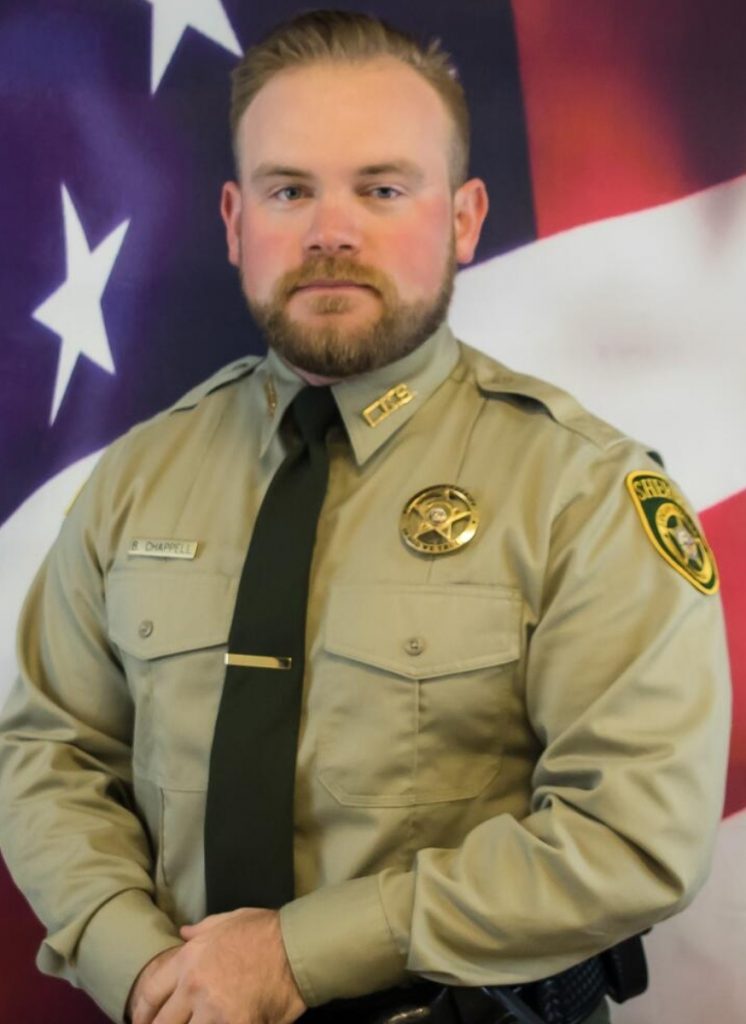
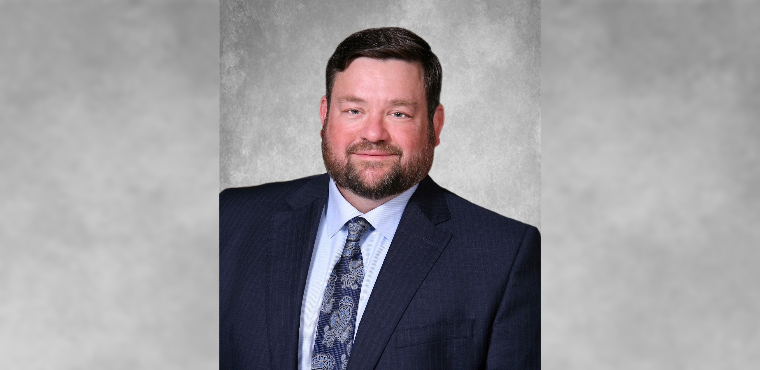
Sgt. Brett Chappell

Recently, the Magazine Police Department has undergone a change in command. The City of Magazine entered into an inter-local agreement with the Logan County Sheriff’s office and is now a department of the Sheriff’s Office. The city will benefit from this partnership as the officers will have access to a larger agency with established policies, procedures, training, and supervision. City Council member Wayne Corbitt is happy with the partnership. “It has been great so far,” stated Corbitt.  He expressed one of the main benefits will be the resources available to the city in terms of manpower and equipment that a small community might not be able to afford without such an agreement.
Brett Chappell was hired this spring as a sergeant with the Sheriff’s office and will serve as the Magazine Police Chief. He will continue to work out of the office at City Hall, attend council meetings, and work with the mayor. As a sergeant, he will also have supervision authority within the Sheriff’s Office. Sgt Chappell says the inter-local agreement is “a real game changer. In Law Enforcement there is nothing more important than communication and unity.  We have that now, along with many other benefits,” says Sgt. Chappell. “It is very difficult for one person to serve a city/school and do it justice alone. With the Sheriff’s office, I now have the backing if Investigators, Narcotics Officer, and all full-time and part-time officers. We are all on one team and that is what it takes to be successful.”

Sgt. Chappell is a Magazine native and a Magazine High School Graduate. He started his career in Law Enforcement with the Logan County Sheriff’s office in 2015 where he served five years as a Patrol Deputy and then two years with the Booneville Police Department where he rose to the rank of sergeant. Sgt. Chappell continues to live in Magazine and his daughter attends school at Magazine Elementary. “Having the opportunity to serve the City of Magazine is truly a dream come true for me,” says Sgt. Chappell. “My family and I have deep roots in Magazine, and I truly care about the community.” He is also looking forward to working closely with the Magazine School District. “Since serving in Law Enforcement, one of my favorite things has always been working with the Magazine School District.  Now I have the chance to do that on a daily basis and work with our kids.”

Jim Elkins, who has been serving as the city’s part-time deputy, has also been hired on by the Sherriff’s Office. He will continue to be assigned to Magazine and provide excellent service to the citizens and community.

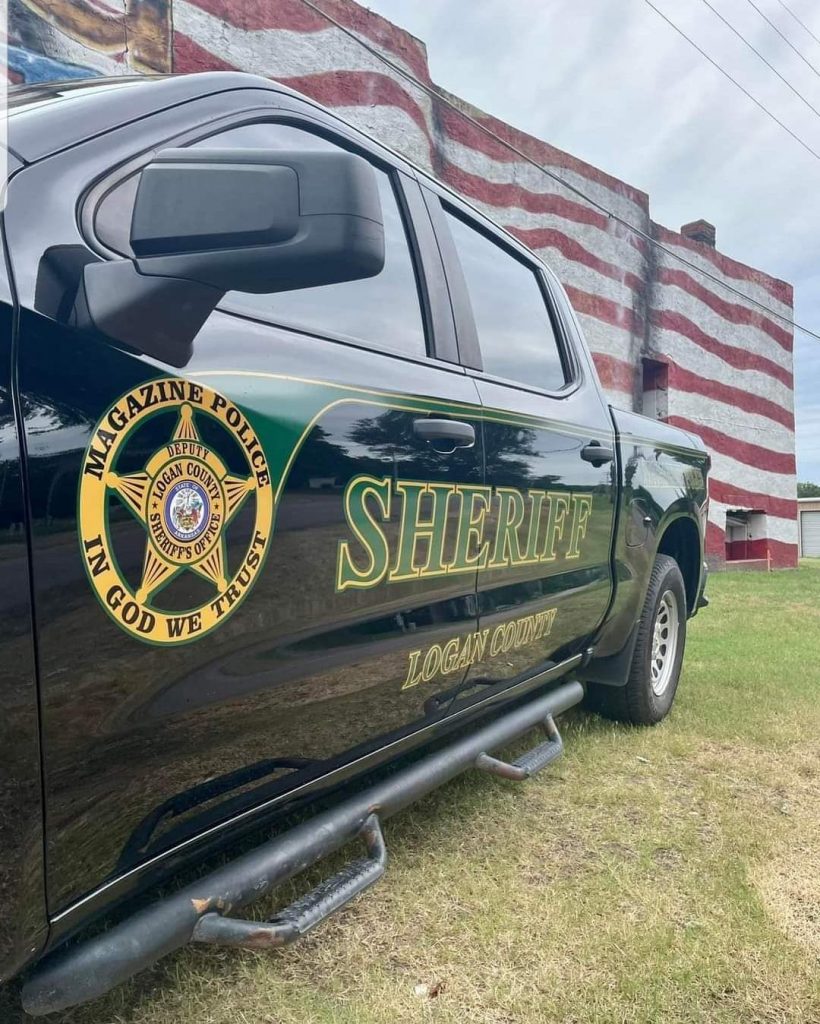
It was important to the Sherriff’s Office to give the city police truck a new look to reflect the change in leadership. It now is emblazoned with the Logan County Sherriff’s Office logo but includes the Magazine Police Department badge as well. It will also include the school Rattler on both sides of the bed soon. There are some who prefer the bold rattler design, but the Sherriff’s Office wanted to show continuity with all its patrol vehicles.  The new graphics are also now more reflective at night, which will add to the safety of the officers and community.

While the outside has changed, you will see the same familiar faces on the inside, ready to serve where they are needed.
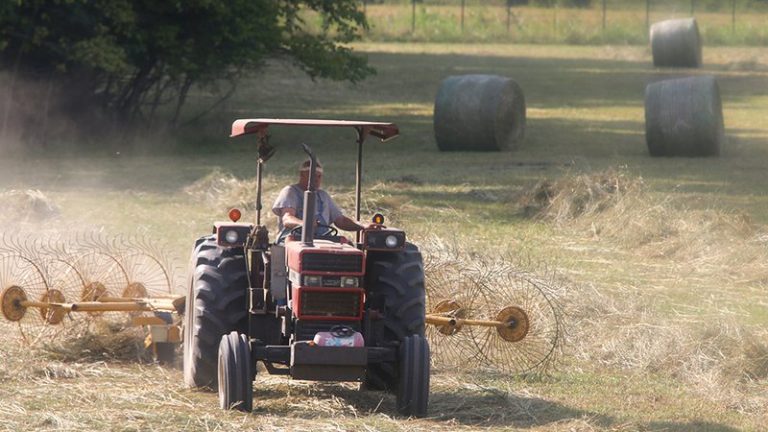
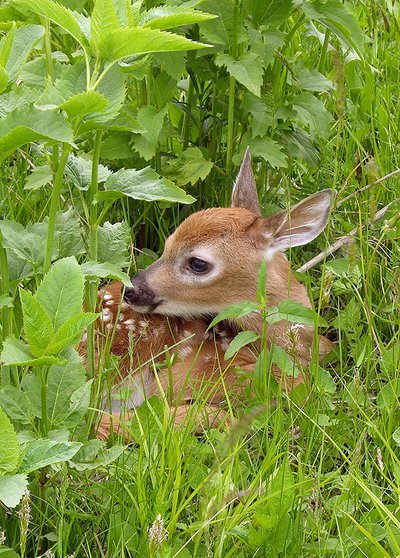
Haying your Pasture with an Eye for Wildlife

Ted Zawislak Statewide Private Lands Supervisor

Nothing changes the landscaping of your property overnight like hay cutting your fields. Within a few days or a weekend, the landscape has changed drastically for wildlife that used those grasslands. Here are some common sense haying ideas to benefit wildlife and minimize the effects on young animals or smaller species that depend upon the cover the grasses provide.

Timing is everything 

Time your hay-cutting with nesting season in mind. For increased wildlife nesting, delay haying until July 15 or later. This will allow ground-nesting birds time to hatch their broods. The nesting period for quail, turkey, and songbirds using pastures begins in early to mid-April and can continue through August. 

Aim high

Set your mower as high as possible to avoid ground-dwelling wildlife. Raising a mower as little as 4 inches off ground level can save terrapins and small mammals. Install Plexiglass around the leading edge and sides of a mower to prevent wildlife from being drawn into mower blades. 

Mow inside out

Cut hay starting in the middle of the field and mow towards the outer borders which will allow young and adult wildlife to stay in existing cover during the haying operation period. Animals also will be able to move to the borders as you cut instead of being trapped inside an ever-decreasing circle. This method also decreases predation of rabbits and young quail trying to cross open, recently hayed ground. 

Protect field borders

Leave uncut field borders for wildlife cover. During hay cutting operations, leave a 30-foot or wider strip of hay around the outside of a field uncut to provide food, nesting, escape, and brood cover for wildlife. Predators can find nests easier in narrow strips than in wider borders. Irregularly shaped field borders provide even more cover for wildlife. Border width can vary, but a minimum width of 30 feet is optimal. This amounts to a little over an acre of habitat for wildlife in a field having a 30-foot-wide strip that is a mile in length.

Flush them out

Flushing bars can be mounted on the front of a tractor to move wildlife from the path of dangerous wheels and cutter. You can make a flushing bar by hanging 28 inch lengths of inch chain about 2 feet apart from a piece of angle iron. The bar should be at least 10 feet in length and mounted offset on the front of the tractor. The 28-inch hanging chains should be long enough to ride just above the surface of the ground. The first chain should be located 36 inches from the tractor frame. This method has been shown to effectively scare wildlife such as rabbits, turkeys, and some fawns away before they are hit by the hay cutter.

There is no doubt that hay cutting operations change the landscape of your property for a short period of time, these steps will minimize the negative impact for wildlife. Hay cutting has some long term effects for the landscape, however, it’s the short term effects, primarily during nesting season, that can be detrimental to wildlife. For more information on managing haylands and pastures for wildlife visit https://www.uaex.uada.edu/publications/PDF/FSA-9083.pdf

Visit www.agfc.com/habitat For more information on establishing and maintaining land for wildlife habitat improvement and programs to help. Check out our social media group at https://www.facebook.com/groups/arkplb

Financial Focus: Take Steps Toward Financial Freedom

By Jeffrey O’Neal
Financial Advisor

Independence Day is an opportunity to celebrate all the liberties we enjoy in this country. Of course, there are different types of freedoms – such as financial freedom, which can open the doors to many other opportunities. What steps can you take to gain your financial independence?
Here are a few suggestions:
• Save, invest … and repeat. There’s really no shortcut to achieving financial freedom – you do have to save and invest for many years. And that means you should take full advantage of the opportunities available to you. If you have a 401(k) or similar retirement plan at work, try to put in as much as you can afford each year, and when your salary goes up, increase your contributions. Even if you have a 401(k), you may also be eligible to fund an IRA. Both a 401(k) and an IRA offer tax benefits and an array of investment options, so they are powerful retirement savings vehicles.
• Invest for growth. How much you invest is obviously a key factor in reaching your financial freedom. But how you invest is also important. If you’re going to accumulate the resources you need to retire comfortably and meet your other financial goals, you will need to devote a reasonable percentage of your investment dollars to growth-oriented vehicles, including stocks and stock-based mutual funds. Of course, these investments will fluctuate in value, so you’ll need to be prepared to accept a certain level of risk. Your individual risk tolerance will help determine how much of your portfolio should be devoted to growth investments.
• Put financial windfalls to work. Whenever you receive a financial windfall, such as a bonus from your employer, a tax refund or even an inheritance, consider putting some of it to work in your investment portfolio. Over time, these windfalls can add up.
• Reduce your debts. It may be easier said than done, but try to reduce, or eliminate, as many debts as you can. The less money you have to pay each month on your debts, the more you’ll have available to save and invest. Of course, some debts, such as your mortgage, can’t be easily erased, but if you can find ways to cut down on spending, you may be surprised at how much progress you can make toward debt reduction.
• Prepare for the unexpected. Life is unpredictable – and some unforeseen events could threaten your ability to achieve, and maintain your financial independence. For example, if you were unable to work for a while due to illness or injury, you might be forced to dip into your savings and long-term investments just to help meet your cost of living. You can help protect yourself from this risk by building an emergency fund containing several months’ worth of living expenses, with the money kept in a liquid, low-risk account. And you may want to consult with a financial professional to learn about other protection strategies.
It will take a concerted effort to reach your financial independence – but, like all freedoms, it offers immense benefits.
This article is provided by:
Jeffrey O’Neal,
Financial Advisor
Edward Jones
20 N Express St,
Paris, AR 72855
479-963-1321
jeffrey.o’neal@edwardjones.com
edwardjones.com/jeffrey-o’neal
Edward Jones, Member SIPC

The Field Nutrition Hosts Grand Opening

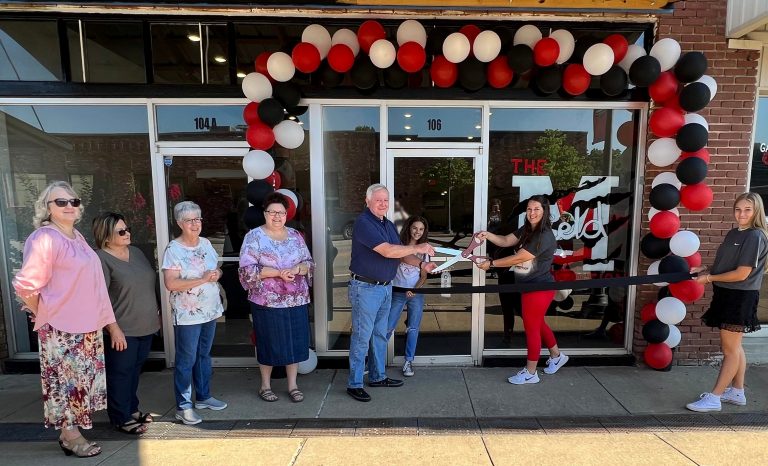
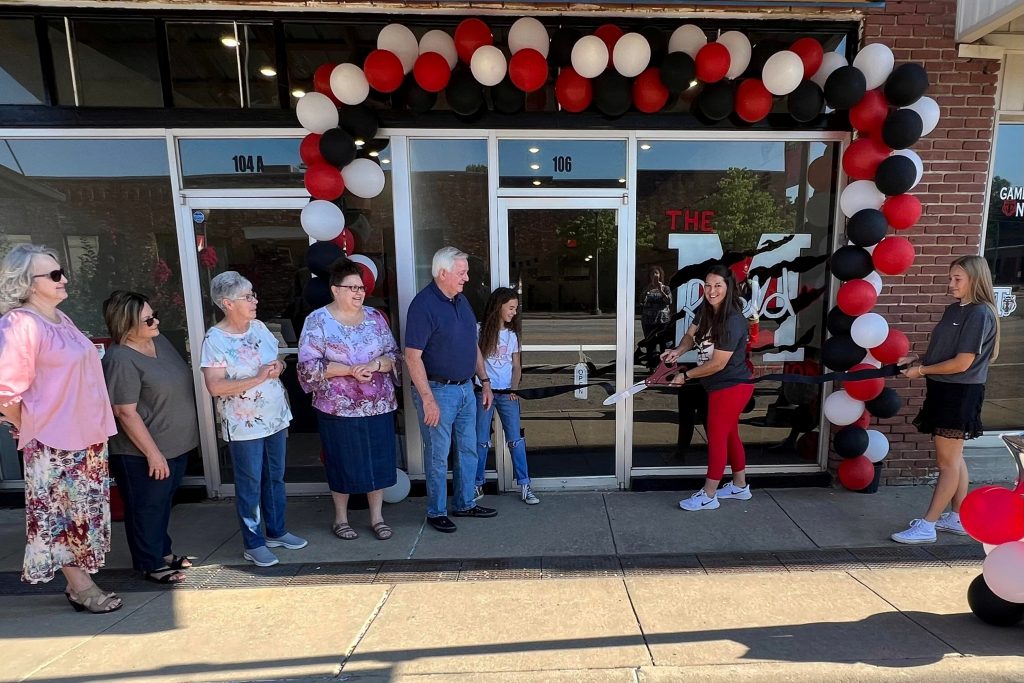
It was a big day for The Field Nutrition, its owner, the community, and the City of Mansfield. The grand opening of the specialty beverage shop was held on Thursday, June 30 at 9 a.m.

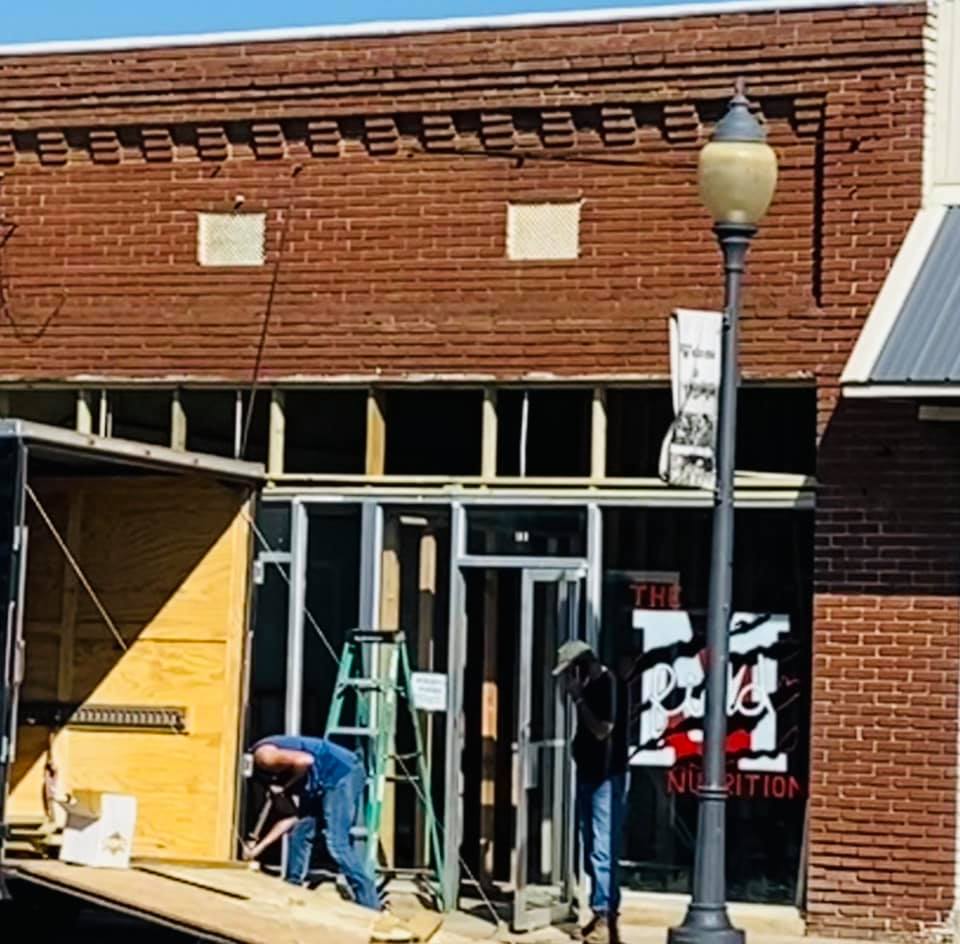
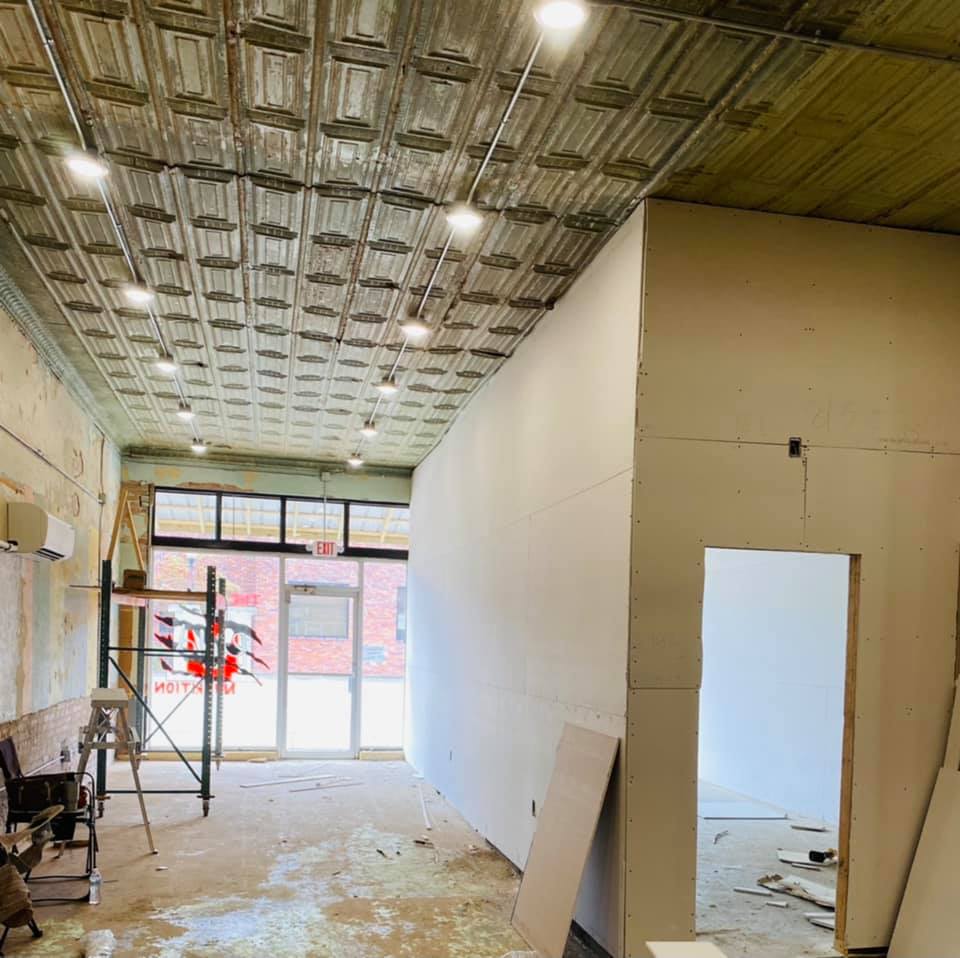
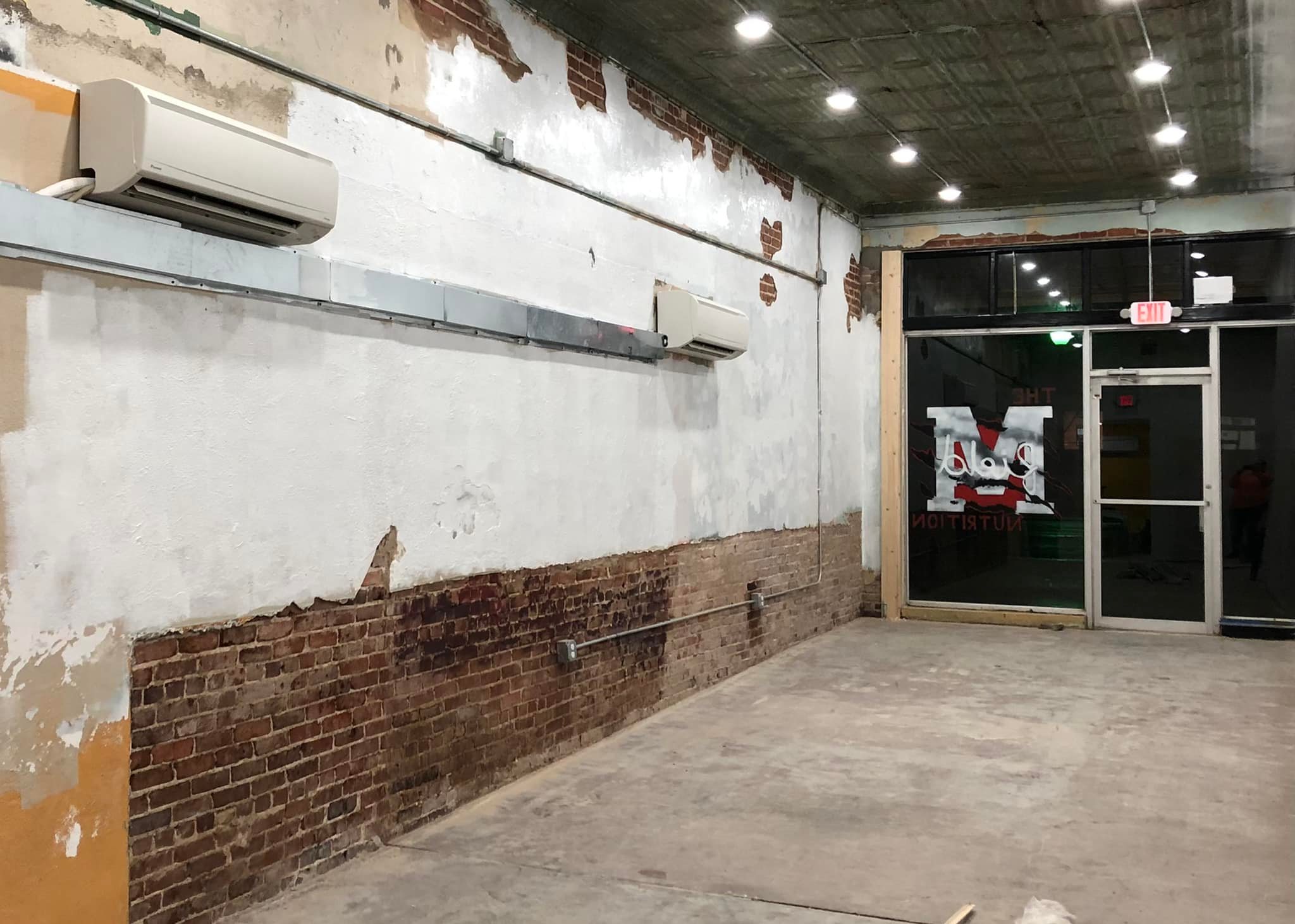
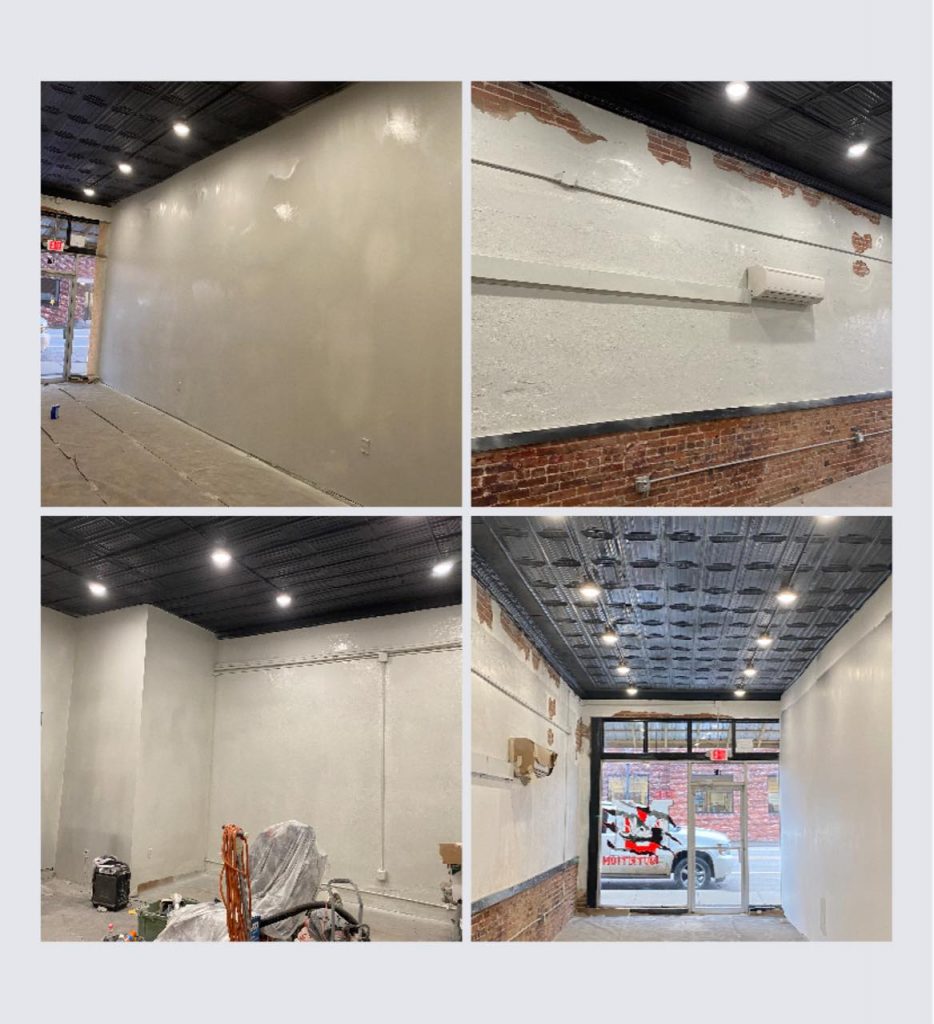
Owner Alta Smith has worked tirelessly over the past year, scrapping, painting, and repairing. With a great deal of hard work and sweat equity, opening day was one of celebration.

Family, friends, city leaders, members of the community, and the Chamber of Commerce were among those in attendance for the ceremonial ribbon-cutting.

Just inside, an elongated building full of nostalgia and beautifully restored pieces of its history classically blended in. Behind the unique counter space, the staff eager to greet customers. Constructed from crates dating from the 1950s and manufactured at Rock Island Arsenal in Illinois, the space boasts its history derived from Fort Chaffee.

It was important to Smith that the pieces of the building’s history remain a part of the future. Customers have noticed too. “Look how nice it is in here,” exclaimed Chamber of Commerce President Sheri Hopkins.

“I want to thank everyone who has been with me throughout this entire process,” shared an emotional Smith. “It’s been a long journey…We have done a lot to improve the downtown area of Mansfield, and want to encourage others to do so as well.” Smith went on to thank her family for their support throughout the remodel and opening. “…From the bottom of my heart, thank you so much.”

Mayor Black responded stating, “we wish you the best of luck.”

The Field Nutrition is located at 106 E. Howard Street in Mansfield. You can view their menu and hours of operation on their Facebook page, The Field Nutrition.

Special Prosecutor Appointed in Investigation Involving a Waldron Police Officer

A special prosecutor has been named in the investigation involving a Waldron Police officer. Emily White has been appointed in the case, and on Wednesday, June 29, she released the following statement:

At this time, I can confirm an appointment as Special Prosecuting Attorney for the 15th Judicial District, which includes Scott County, Arkansas.  My appointment is for purposes of an investigation and prosecution, if necessary, of an incident involving the Waldron Police Department and a vehicle pursuit, which started in Huntington and ended in Scott County on February 16, 2022.  The investigation into these events of February 16, 2022, remains in progress.  Arkansas State Police continues to assist me with this investigation, and I anticipate making a file decision within the next sixty (60) days. 
Because the investigation remains open, I will refrain from further comment. 

This is an update to a story first published in February 2022 after the Huntington Police Department released an incident report as the arresting agency in the case of Robert Lee Deer, Jr.

The investigation has reportedly been ongoing since the arrest of Deer, 49, of Van Buren. Deer was booked into the Sebastian County Detention Center on February 17, 2022, at 1:36 a.m. and charged with assault on a certified law enforcement officer and fleeing.

Deer was traveling through Huntington when Officer Mark Harris attempted to make a traffic stop. Deer failed to stop and the Mansfield Police Department joined in pursuing Deer. That chase continued into Scott County. Officer Harris alerted Scott County of the chase and was informed that the Scott County Sheriff’s Office had set up spike strips in the area near Packsaddle Church. “As we passed the position of the spike strip, a Waldron Police unit driven by Officer Omar Gonzalez got behind the van, taking over the pursuit…I was advised that the van missed the spike strip as we continued to head south coming into the Waldron City Limits.”

According to Harris’ report, Deer made several turns in the city limits but eventually returned to Highway 71. A Scott County Deputy joined in the pursuit. Deputy Spearman attempted to pass and slow Deer, who was driving a 1999 Ford F350 van. As the pursuit neared Echo Road, Stearman again attempted to get ahead of, and slow Deer. The chase would end after Deer collided with a dirt embankment.

“I exited my unit and approached the rear driver’s side of the van and pulled a less than lethal pepper ball gun. The driver had opened the door and I ordered him to get out of the vehicle and go onto his stomach down on the ground. The driver came out of the driver’s side door and laid on his back not listening to my commands. As I instructed the driver to turn to his stomach and show me his hands, he reached for his waistband, in what seemed like an attempt to get something out of his waistband. I concentrated on his hands as he rolled to his stomach and put his hands underneath him. The driver continued to disobey orders to show us his hands and I deployed my JPX Pepperball to the subject’s face, also striking Officer Gonzales with some of the pepper. The driver then placed his hands to his back as all officers were affected by the pepper deployed. At this time, other officers had arrived on scene. I had observed that the driver had placed his hands behind his back after the pepper had been deployed. So, I placed my one free hand on his back to ensure that he did not attempt to get up and escalate the situation and was waiting for another officer to produce handcuffs and place on the subject. At that time, I was still under the effects of the pepper off-spray and when other officers moved in to place handcuffs on the subject, I moved from the area to clear my airway. I turned back to the subject and saw three officers trying to place handcuffs on the driver as he once again refused to place his hands to his back. Once the subject had handcuffs placed on him…Officer Fletcher and I walked the male to my unit and checked him for weapons and placed him in the backseat of my unit. I identified the driver as Mr. Robert Deer by his ID that was located on his person during the weapons search. I then asked Mr. Deer if he knew why I was attempting to stop him, he stated ‘no’. I told Mr. Deer that he had a tailpipe dragging casing sparks and he replied yes, he knew that because it was broken. When asked why he did not stop in Mansfield, Mr. Deer replied that he had broken up with his girlfriend and when I turned on my lights he got depressed and didn’t want to stop. I then assisted Officer Fletcher in searching the van and did not find anything that seemed to cause Mr. Deer not to want to stop. Once the vehicle search was completed, I then transported Mr. Deer to the Sebastian County Detention Center where he was decontaminated from the pepper ball. As I was doing my booking paperwork, I noticed Mr. Deer’s right eye was swollen and there was blood around the area of his face. The following day, Officer Fletcher contacted me and advised that she and her chief had reviewed her video footage of the pursuit and found what appeared to be misconduct that could have led to the injuries sustained by Mr. Deer. I was asked by Chief Robb of the Mansfield Police Department to burn him a copy of my camera footage of the incident so that he could see a different perspective of his officer’s conduct in the event that occurred. A copy of the incident was given to the Mansfield Police Department as well as my City Attorney.”

Freedom of Information Act requests were made to all of the departments involved. Both the Mansfield Police Department and the Scott County Sheriff’s Office stated that because their department was not the arresting agency, no incident reports were made. The City Attorney for Waldron, Mark Johnson, responded and denied the FOIA request on the basis that the information requested was part of an ongoing investigation.

Resident News is monitoring this story and will continue to follow it and bring you updates.

AG ALERT: Rutledge Warns of Skyrocketing Energy Prices During the Summer

0

As summer begins, Arkansas is likely to experience heat waves causing energy bill increases for many. Arkansans have already seen a tremendous rise in energy prices due to previous severe weather, inflation, supply chain issues, the cancellation of the Keystone XL pipeline, and the halting of domestic oil and gas drilling. Attorney General Leslie Rutledge is urging all Arkansans to take precautions to prepare their home and finances with the squelching summer months to come.

“Arkansans should expect skyrocketing price increases this summer, and that includes everything from energy prices to survive the sweltering southern heat to materials that better equip your house to reduce those energy costs,” said Arkansas Attorney General Leslie Rutledge. “President Biden has stopped our nation’s ability to be self-sufficient in energy and Arkansans will feel the impact this summer with high energy bills.”

Attorney General Rutledge released the following tips to keep energy costs low throughout the summer months:

  • Use a programmable thermostat to automatically raise the temperature when no one is home. Some newer models can connect to smartphones, providing access regardless of location.
  • Seal cracks or holes around the home by weather-stripping doors and windows and adding insulation to walls, attic and crawlspace to prevent loss of air conditioning.
  • Set ceiling fans to spin counterclockwise to recirculate cold air.
  • Make sure air vents are unobstructed.
  • Close the vents and doors to rooms that are not being used.
  • Keep air filters clean and replace regularly.

Other tips and resources are available at EnergyEfficiencyArkansas.org, a partnership between Arkansas utility companies and the Arkansas Energy Office.

There are resources available for Arkansans needing assistance with energy bills. Visit the Arkansas Department of Energy and Environment website for more information about the Low-Income Home Energy Assistance Program (LIHEAP). Arkansans may apply for LIHEAP’s help beginning July 11, 2022.

For more information about other consumer-related issues, please visit ArkansasAG.gov  or contact the Arkansas Attorney General’s office at consumer@ArkansasAG.gov or (800) 482-8982.

Cattle producers urged to monitor cattle for ticks; take preventative measures

By Mary Hightower
U of A System Division of Agriculture

Arkansas cattle producers are being urged to check their herds for unusual ticks and take measures to prevent transmission of theileriosis or other tick-related diseases.

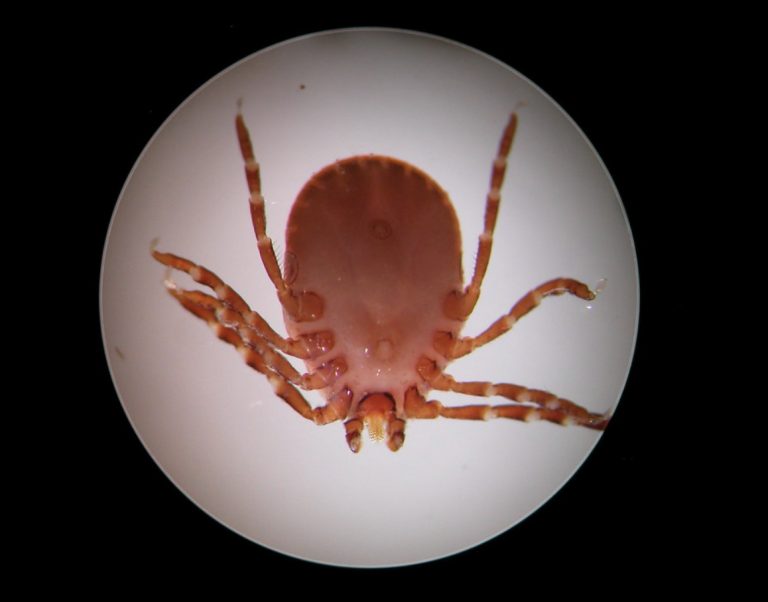
The warnings follow the recent finding of additional Asian longhorned ticks in northwest Arkansas by scientists with the University of Arkansas System Division of Agriculture. The invasive tick can transmit the Theileria orientalis parasite, which attacks blood cells. The Ikeda genotype of this organism can be fatal to cattle.

COLLECTING — Extension program tech Elizabeth Smith holds a vial of ticks collected from cattle at Savoy, Arkansas. (UofA System Division of Agriculture photo by Kelly Loftin)

There is no treatment for the theileriosis this organism causes and survivors of the initial infection carry the Theileria parasite for life. Asian longhorned ticks are very small. The adult female is only about the size of a pea when it is full of blood. Their size and quick movement make them very hard to detect.

“If they find a tick that doesn’t look familiar, they should take it to the county agent and bring all the information they can about when they found it, what animals it’s from and what pastures the animal has been in,” said Kelly Loftin, extension entomologist for the Division of Agriculture.

“We would want to know if the host animal was a cow or calf, or a recent introduction to the herd, or whether it’s been there a month or so,” he said, and “We want to know where the cow came from, if they just brought it home.”

Jeremy Powell, veterinarian and animal science professor who conducts research for the Arkansas Agricultural Experiment Station, said that without effective treatments, prevention is the best medicine.

“The best thing a cattle producer can do is minimize the risk by really focusing on parasite control,” he said. Powell recommended using insecticidal ear tags or using insecticide-infused back rubbers cattle can walk under. He said ear tags are in use at the Division of Agriculture’s Savoy Unit with classes of acaricides being rotated to prevent resistance.

“Keep pastures clipped,” he said. “Wooded areas are a great place for ticks to ambush a potential host. Fence those off.”

Both Loftin and Powell said awareness by those in agriculture of these ticks and the diseases they could transmit is key “so people can be looking out for it.”

To learn more about Division of Agriculture research, visit the Arkansas Agricultural Experiment Station website: https://aaes.uada.edu. Follow on Twitter at @ArkAgResearch. To learn more about the Division of Agriculture, visit https://uada.edu/. Follow us on Twitter at @AgInArk. To learn about extension programs in Arkansas, contact your local Cooperative Extension Service agent or visit www.uaex.uada.edu.

About the Division of Agriculture

The University of Arkansas System Division of Agriculture’s mission is to strengthen agriculture, communities, and families by connecting trusted research to the adoption of best practices.

Through the Agricultural Experiment Station and the Cooperative Extension Service, the Division of Agriculture conducts research and extension work within the nation’s historic land grant education system.

The Division of Agriculture is one of 20 entities within the University of Arkansas System. It has offices in all 25 counties in Arkansas and faculty on five system campuses.

The University of Arkansas System Division of Agriculture offers all its Extension and Research programs to all eligible persons without regard to race, color, sex, gender identity, sexual orientation, national origin, religion, age, disability, marital or veteran status, genetic information, or any other legally protected status, and is an Affirmative Action/Equal Opportunity Employer.

4 Types of Prints You Should Use in a Quilt

The summertime is a great time to start a new hobby and learn a new skill, like quilting. If you’ve recently decided to take up quilting, you know that there’s a lot to learn. One subject you’ll need to learn about is the different types of prints to use in a quilt. Keep reading to learn more about the four types of prints you should use when quilting.

Large Print

You’ll need to select fabric with a large print to be the focal point of the blanket when making a traditional quilt. Large scale prints feature large prints that can be around five inches big or bigger, with several inches of space between them. They come in any design or direction, from specific scenery that must face a certain way to geometric or natural prints that flow in any direction. Many large prints are also colorful since they’re the focal point of your quilting project.

Medium Print

When making your quilt, you’ll also need medium print fabric. Medium prints feature designs slightly smaller than large prints with more space between them. You should match the colors of your medium print to your large one and use one that goes in any direction. This way, your eye has something to look at as it finishes looking at the focal point.

Small Print

Small prints will help balance your quilt between the large and medium prints and are often geometric or abstract. Some are monochromatic and look like blender fabric, but others use more than one color for a more dynamic look. Their designs can be close together or spaced apart. Either type of small print will allow you to continue the color scheme and add texture without overwhelming the eye.

Blender Fabric

Blender fabric is essentially the same as small print fabric, except that it’s always monochromatic, and the print is normally far apart. Their prints can be anything from abstract or geometric to natural or floral. This makes them appear like solid colors from a distance but adds texture when viewed closely. Know that you can use blender fabrics to transition between various prints in your quilt.

The four types of prints you should use in a quilt are large, medium, small, and blender. When used together, these different prints will make your quilt dynamic and beautiful. As you learn more about quilting, you’ll be able to experiment with other kinds of prints and fabric.

Magazine Graduates Compete at All-Star Games

By Brandy Young

The Arkansas Activities Association held their 2022 All-Star Weekend June 24-25. Magazine is proud to have 2 outstanding athletes representing their school and community. 

Kylie Robinson is the granddaughter of Tommy and Donna Robinson of Magazine. Kylie was selected for the All-Star West Softball team.  She played short-stop for the Lady Rattlers. The All-Star softball game was held on Friday, June 24. The West defeated the East in the first game 9 to 1 in Game 1. Game 2 ended in a tie at 7 all.  Kylie will be attending Arkansas Tech University in Russellville this fall.

Ashton Droemer is the son of Dusty and Amber Droemer of Blue Mountain. Ashton was selected for the All-Star West Football team.  He played safety and corner for the Rattlers. The All-Star football game was held on Saturday, June 25. The East had a strong team this year and defeated the West 54 to 9. Ashton will be attending the University of Arkansas at Fort Smith this fall. 

Congratulations to these outstanding student athletes.

State and Local Police on Guard Against Drunk Drivers Before and During Long July 4 Holiday

The Independence Day holiday will be a prolonged celebration this year, as the nation’s birthday occurs on a Monday.  Many Arkansas families will start their travel plans Friday with varied destinations over the following three days.  With increased traffic volume anticipated, comes the risk of tragedy often attributed to a drunk driver.

  Law enforcement officers across the state are aware of these risks and know firsthand what can happen when a driver mixes alcohol with a holiday celebration.  All too often the end result is injury or death.  This is why Arkansas State Troopers, sheriff’s deputies and local police officers will increase their patrols to be on guard against impaired drivers, getting them off the roadways before anyone can be hurt.

  “We want Arkansans to enjoy our nation’s birthday celebration, but not at the expense of making state highways, county roads, and city streets unsafe,” said Colonel Bill Bryant, Director of the Arkansas State Police and the Governor’s Highway Safety Representative.  “Unfortunately, far too many drivers make the wrong decision to get behind the wheel of a vehicle after consuming one or two alcoholic drinks, or using drugs, placing other motorists in harm’s way.  Our state troopers along with other law enforcement officers will be prepared to stop and arrest these dangerous drivers to ensure the safety of all.”

   From 2016 to 2020, there were 1,390 drivers killed in motor vehicle traffic crashes over the July 4th holiday period.  Thirty-nine percent (542) of the drivers killed were alcohol impaired (with a blood alcohol concentration of .08 or higher), and more than half (51%) were between the ages of 21-34.

 With many holiday festivities wrapping up late in the evening, nighttime hours are especially dangerous.  Over the 2020 Independence Day holiday period, of the 201 people who died in alcohol impaired motor vehicle traffic crashes, 85% of the crashes were at night (6 PM – 5:59 AM).

 This Fourth of July, the Arkansas Highway Safety Office and NHTSA are working together to urge drivers to designate a sober driver before drinking any alcohol.  If you plan on drinking, do not plan to drive. 

  The Arkansas Highway Safety Office recommends these safe alternatives to drinking and driving:

• Designate a sober driver or plan to use public transportation or a ride service to get home safely.

• If you see a drunk driver on the road, call 9-1-1.

• If you know someone who is about to drive or operate a motorcycle or any other vehicle while impaired, take their keys and help them make other arrangements to get to their destination safely.

• Buckle up, always. Your seat belt is your best defense against the drunk driver. 

For more information on impaired driving, visit https://www.nhtsa.gov/risky-driving/drunk-driving or call the Arkansas Highway Safety Office at (501) 618-8136.

Learn more about Arkansas’ ongoing Toward Zero Deaths campaign intended to eliminate preventable traffic fatalities, visit highway safety office web site https://www.tzdarkansas.org/