



By Curtis Varnell
Carbon City, Coal Hill, and Scranton all speak to us of the days when the term black gold referred to coal instead of petroleum. All three towns were centers for the extraction of bituminous and semi-anthracite coal that fueled the westward expansion of our country and provided the industrial energy production for the two world wars of this century.
The River Valley region running from Russellville westward into Oklahoma contains a large basin of low-sulfur, high energy coal. Discovered early in the history of our state, by the late 1800’s the region was one of the top coal-producing regions in the country.
The first recorded mine opening was in 1840 just south of Clarksville at Spadra. At about the same time, a vein was discovered near Paris and in Sebastain county near Greenwood. During the early years, the coal was primarily mined locally and used by blacksmiths and as heating fuel for homes. By the 1870’s, railroad expansion using coal-burning steam engines created a tremendous demand for the fuel and extraction began in earnest. Large companies bought up mineral rights and began to develop mines and shafts following the coal veins deep beneath the earth. Extracted by the train car loads, the fuel was transported across the U.S. and stockpiled for use by industry. From 1880 to 2006, over 106 million tons of coal was extracted from Arkansas with the peak production of 2.6 million tons in 1907 alone. On January 11, 1905, William Jenks bought up a tract of land just east of Greenwood for what was the unheard-of price, at that time, of 2.5 million dollars and began the construction of the Fidelity Coal mine. Frank McGuire of Scranton, Pa. was brought in as superintendent of the mines and miners flocked in to fill the jobs that were open. The town of Liberty sprang up virtually overnight to accommodate the needs of the miners. This scene was repeated throughout the region as more and more mining companies flocked into the River Valley. Monkey Run, the Jewell, Red Rooster, and the Black Diamond are just a few of the colorful names given to the mines that were strewn throughout the valley. The average worker loading coal in 1918 made $7.50 per day, a sum that was considered and excellent salary for the standards of the day.
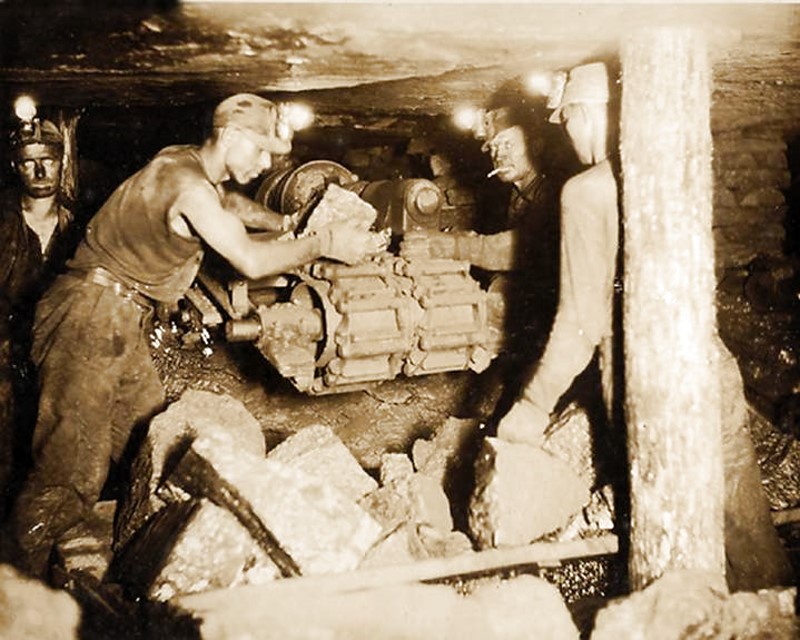
Most of the early mines were subsurface and coal was extracted by sending tunnels deep beneath the earth. Coal cars, powered at first by mule, pulled coal cars along tracks laid through the major branches. To extract the coal, the miners had to follow the plane of the coal bed and remove the 6-24-inch layer of coal from between layers of encompassing rock. Basic equipment required by the miner would include a head lamp, a pick, and a shovel. The work was difficult and hazardous with numerous cave-ins and rock falls. Newspapers are full of injury reports and deaths resulting from mining. Nancy Sinatra and Lee Hazelwood composed a song, Arkansas Coal, in the 70’s and it discusses a Paris coal-miners life (https://www.youtube.com/watch?v=PzCm70yTWvk&t=4s).
To increase profit, many mines established their own company towns, company stores, and even company hospitals. Scranton, AR., named for the Pennsylvania coal town, was created to extract the coal in that area. Other company towns were created at Liberty, at Carbon City, Hartford, and at Coal Town located between Russellville and Dardanelle.
To protect their interest, coal-miners formed into unions demanding better working conditions and pay. The disagreements between labor and owners became so intense that national guard troops had to be called in to prevent open warfare but that is another story.
Coal production slowed to a standstill after WWII and many of the mines closed. The mining towns decreased in size and some disappeared all-together. Only a few mines, those of the surface extraction type, operate in Arkansas today. Tons of coal still sit beneath the surface of the River Valley, waiting for the time when technology develops that will enable its use without the unwanted side-effects of smoke, acid rain, and water pollution.